
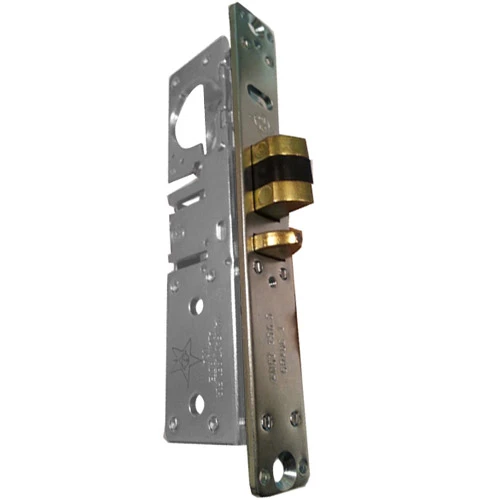
Adams Rite 4510: Fix a Storefront Door That Won't Latch
Posted by Kent on 15th Aug 2026
A glass storefront door that will not stay shut is the most common service call in this trade. The owner pushes it closed, it looks fine, then a customer leans on it and it swings open. Or it never catches and somebody wedges a rubber chock under it. The part responsible is a small mortise deadlatch buried in the lock stile, usually an Adams Rite 4510 standard deadlatch, the standard-duty latch on aluminum entrances across the country.
Why a storefront door uses a deadlatch instead of a normal lock
A narrow aluminum stile has nothing to bore. No wood, no room for a cylindrical lockset, just a thin channel of metal beside the glass. So the door gets a slim lock case pocketed into the edge of the stile, mortise mount, holding one beveled latchbolt.
The 4510 is a latch, not a bolt. It holds the door shut against wind, against a closer, against traffic, and it retracts every time somebody pulls the handle. It is not the security lock. If the door has to hold against a pry bar overnight, you want the deadbolt: the Adams Rite MS1850 for a narrow-stile glass door. Most storefronts run both.
The anti-friction latchbolt
Look at the latch face and you will see a second small tongue ahead of the main bolt. That is the anti-friction latchbolt. Under closer pressure a plain latch scrubs against the lip of the strike, binds, and stalls short of the pocket. The anti-friction tongue hits first and starts the latch retracting before the bolt touches metal. It is why a tired closer and a worn latch produce the same complaint.
The deadlocking plunger, and the failure that gets stores robbed
Beside the latchbolt sits a smaller spring-loaded plunger, and that plunger is the whole security story on this lock. When the door shuts, the flat face of the strike pushes the plunger in, and a depressed plunger blocks the latchbolt from being pushed back. Door closed, plunger in, latch deadlocked. That is what stops somebody carding the latch open in four seconds.
Two ways it quits. The plunger wears down or its spring gives up, so it no longer holds the latch. Or the door shifts enough that the plunger stops landing on the flat of the strike and drops into the cutout with the latch. Either way the latch is free to push back, and the door reads locked while being open to anyone who has watched one video on it. I have carded doors like that open for owners who swore the place was secure.
Storefront door won't latch: deadlatch, strike, or sagging door
Diagnose before you order. Three different problems, and only one of them is a new lock.
Worn deadlatch
The plunger test above is the first check. Second: with the door open, push the latchbolt all the way in and let go. It should snap back crisp and square. Lazy, gritty, or hanging halfway means the spring or the case is done. Sidewalk grit builds up in there and a repaint will seize one solid, so clean it first. Usually it is worn, not dirty.
Misaligned strike
Rub a marker across the latch face and close the door a few times. The mark shows where the latch is landing. High, low, or riding the edge means the strike moved or the frame did. Where the plunger lands matters as much, and that is what everyone forgets to check. A strike off by a little drops the plunger into the pocket and kills the deadlocking while the door still latches normally. Nothing feels wrong. Everything is wrong.
Sagging or dropped door
Read the gap between door and frame down the whole edge. Even top to bottom is a good door. A gap that tapers means the door dropped on a worn pivot. Grab the free edge and lift. If it moves, you found it. Fix the pivot first, because a new deadlatch in a door that hangs wrong will chew itself up inside six months.
Ordering the right 4510, and the mistake almost everybody makes
The 4510 is not one part. It comes in variants built for different backsets and different faceplate shapes, and they are not interchangeable. Ordering the wrong one is by far the most common mistake on this lock. It arrives, the prep in the stile does not match, and now you are drilling aluminum or shipping it back.
Do not guess off an old part number worn illegible. Measure the existing latch and the pocket it sits in, or photograph the lock edge with the door open, then call 877-365-5625 before you order. We will match it, and that call beats a return. Every 4510 we stock ships complete with its strike plate. Use it. A strike worn where the plunger rides will defeat a brand new latch.
What goes on the outside
The deadlatch is the latch and nothing else. No pull, no paddle, no cylinder, and buyers are surprised by that every week. On these doors the trim is usually an Adams Rite 4560 or 4565 lever handle, a 4568 or 4569 Eurostyle handle, or a 4590 paddle when the owner wants a push instead of a grip. Order it with the latch and the door goes back in service the same day.
Finishes we stock
Three, and they cover most storefront out there. 628 clear anodized aluminum matches mill-finish silver framing, the strip-mall default. 313 dark bronze matches the bronze-tone entrances that went up on half the commercial buildings in the 80s and 90s. 335 black is the newer look. The faceplate shows on the door edge, so match the frame.
Adams Rite is ASSA ABLOY, and the 4510 is made in the USA, Buy American Act compliant, with the full manufacturer warranty. The BAA line is not filler. Buy for a school district or a federal facility and your purchasing office will ask.
Common questions
How do I tell if my deadlatch is worn out or my strike is just off?
Hold the plunger in with your thumb and try to push the latchbolt back. If the latch retracts, the deadlatch is worn and needs replacing. If it stays locked, the lock is good and the problem is strike alignment or a dropped door.
Does the 4510 come with a strike plate?
Yes, it ships complete with its strike plate. Use the new one. A strike worn at the spot where the plunger rides will defeat a brand new latch.
Which 4510 do I order for my door?
Call 877-365-5625 with the door in front of you, because the 4510 comes in variants for different backsets and faceplate shapes and the wrong one will not fit your prep. Measure the old latch, or send a photo of the lock edge with the door open. We match it off that.
Do I need a deadbolt too?
Most storefronts run both. The deadlatch holds the door shut through the business day; the deadbolt secures it overnight. If that door only has a latch, read our piece on the Adams Rite MS1850 deadbolt.
Lock Depot stocks the Adams Rite 4510 with flat faceplate in 628 clear anodized, 313 dark bronze, and 335 black, on the shelf today. Browse the rest of the line on the Adams Rite hub, or call 877-365-5625 with three things: the finish of your framing, the backset off your old latch, and whether you need the handle or paddle with it.