
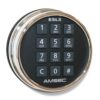
AMSEC ESL5 vs ESL10-XL Safe Lock: Backlit or Splash-Proof
Posted by Kent on 18th Nov 2026
Two AMSEC electronic locks, two different rooms
A customer calls with a dead or dial-worn AMSEC safe and a simple question: "which keypad lock do I put on it?" The answer is usually one of two. The ESL5 is AMSEC's entry-level electronic safe lock. The ESL10-XL is the mid-range one. Both are UL Listed Type 1, and both are sold as replacements for an old mechanical dial. What separates them is the keypad and the cable, and those two things decide which one belongs on your safe.
I already covered the dial-to-keypad swap itself in the ESL10 retrofit piece. This one is about choosing between the two models before you buy.
What the ESL5 listing says
The AMSEC listing for the ESL5 in chrome describes a direct-replacement electronic keypad lock that fits most AMSEC safe models, naming the BF, BFX and CSC series. The details worth knowing:
- UL Listed Type 1.
- Backlit keypad, for safes that sit in a dark closet or basement.
- Spring bolt mechanism.
- A stealth mode that silences the keypad beeps.
- A 15-minute penalty lockout after four wrong entries.
- Lock body weight of 2 lbs, with a lifetime limited warranty on the lock body.
The same lock is stocked in three finishes: chrome, black nickel, and black rubberized. The model is the same in all three. Only the finish of the keypad changes.
The listing's own advice for a BF or BFX safe is that the ESL5 is a direct drop-in, with the same footprint and the same bolt pattern as the dial it replaces. That is the kind of claim you still verify on the bench, as I will get to below.
What the ESL10-XL listing says
The ESL10-XL in brass is pitched at commercial use. Its keypad is splash-proof, so humidity and the occasional spill do not kill it, and the listing points to restaurants and warehouses. It is UL Listed Type 1 as well, with the same 2 lb weight and a lifetime limited warranty on the lock body. It lists compatibility with BF, BFX, BWB, CSC, DSF and MS lines, a wider list than the ESL5 shows.
The "XL" in the part number is a size code. The listing reads it as extended length, a longer cable for thicker safe doors. That is the part that most often trips people up, and it is easy to check with a tape measure.
Side by side
| ESL5 | ESL10-XL | |
|---|---|---|
| AMSEC's label | Entry-level | Mid-range |
| Keypad | Backlit | Splash-proof |
| UL rating | Listed Type 1 | Listed Type 1 |
| Bolt | Spring bolt | Not stated on the listing |
| Cable | Not stated on the listing | XL, extended length for thicker doors |
| Named safe lines | BF, BFX, CSC | BF, BFX, BWB, CSC, DSF, MS |
| Finishes we stock | Chrome, black nickel, black rubberized | Brass (the one we checked) |
Where the listing is silent, I leave the cell silent. I am not going to guess a cable length or a bolt style that AMSEC did not publish on the page.
How I would pick
Home or office safe in a dry spot: ESL5. A gun safe in a bedroom closet, a document safe in a home office, a basement safe. The backlit keypad earns its keep in those places, because nobody is turning on the light to open a safe at 2 a.m. and the dial it replaces had no light at all. The stealth mode is real value for someone who does not want the neighbors or a family member hearing every key press.
A business, a back room, a wet or dirty environment: ESL10-XL. A restaurant office safe near a kitchen, a warehouse cash safe. The splash-proof keypad is the whole reason to pay for the step up. A keypad that dies in a humid back room means a locked safe and a service call.
A thick-door safe: check the cable first. If the safe has a heavy door, measure the run from the keypad location to the lock body before you buy either. The XL cable exists because standard length does not reach on some doors. Do not assume the entry-level lock will clear it.
Before you order either one
Three checks, in order. Each one takes a minute and each one has cost somebody a return.
- Read the safe's model plate. Both locks name the series they fit. If your safe is not on the list, call before you order. A "most models" claim is not a promise for your model.
- Pull the old lock and look at the bolt work. If a dial replaces cleanly and the bolt throw lines up, the swap is quick. If you are changing lock families, the pattern needs to match. The listing says drop-in for BF and BFX, and that is where I would start.
- Test with the door open. Program the code, cycle it five or six times with the door open, then close and test. A safe that locks you out with the door swung shut is a drill job. Never close the door until you have watched the bolt retract on the new lock several times.
Write the new code down somewhere other than the safe. With the 15-minute lockout after four wrong entries on the ESL5, a forgotten code costs real time even before it costs a locksmith visit.
Safe locks sold with a safe
If you are buying a new AMSEC safe rather than retrofitting, the listings for the BFX6032 and NF6036 both show the electronic lock installed at the factory. On the NF6030 vs SF6030 gun safe piece I walked through the ratings that matter more than the lock does. A good keypad on a thin box protects nothing. Choose the safe on its burglary and fire ratings first, then pick the lock for the room it lives in.
Common questions
Is the ESL5 UL listed?
Yes. The listing states UL Listed Type 1, the same as the ESL10-XL.
Can I silence the beep on the ESL5?
Yes. The listing describes a stealth mode that silences the keypad beeps.
What happens after wrong entries?
On the ESL5 the listing states a 15-minute penalty lockout after four wrong entries. I do not have the lockout behavior for the ESL10-XL from its listing, so ask us before you rely on it.
Does finish matter for security?
No. On the ESL5 the chrome, black nickel and black rubberized versions are the same model. Match the finish to the safe's hardware.
Not sure which lock fits your safe? Send us the model plate and we will tell you which one the listing supports.