
Corbin Russwin ML2003 vs ML2002 vs ML2032
Posted by Kent on 13th Oct 2026
Classroom, classroom intruder, institution
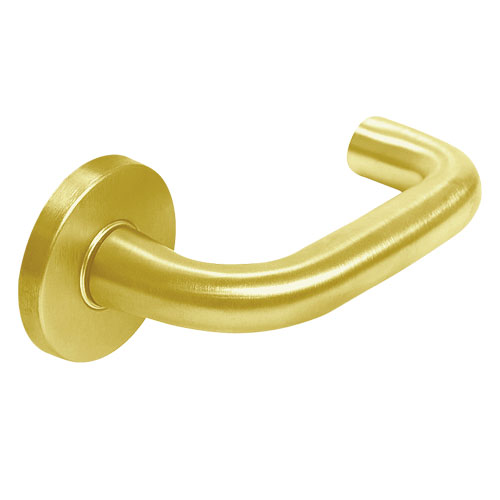
The Corbin Russwin ML2000 mortise lock covers a long list of functions. Three get confused more than any others, because all three are used on school and institutional doors: the ML2003 classroom, the ML2002 classroom intruder and the ML2032 institution. A fourth, the ML2069 institution privacy, sits next to them. The catalog lists each as an ML2000 Series Grade 1 mortise lockset with Lustra lever trim, shown here in bright brass.
ML2003: the classroom
ML2003-LWA-605 has the outside lever locked or unlocked by key, and the inside lever always exits free. This is the standard for classrooms and offices that lock from the corridor. A teacher locks or unlocks from outside with a key. Anyone inside leaves without one.
What it does not do is let the teacher lock the door from the inside without stepping into the hall. If the room has to be secured in an emergency, the teacher has to open the door and use the key. That is the gap the next function closes.
ML2002: classroom intruder
ML2002-LWA-605 adds key-locking from both sides. In the catalog description, a teacher can secure the room from inside or out without ever locking anyone in, so it is built for lockdown-ready classrooms. The inside lever still lets a person out, and the key lets staff lock the door without opening it.
The decision between ML2003 and ML2002 is a policy decision. If your district's plan expects a teacher to lock the room from inside during a lockdown, the ML2002 is the hardware that supports it. If it does not, the ML2003 is simpler. Ask the person who writes the safety plan, not the person ordering hardware, and get the answer in writing before the order goes in. Swapping a hundred classroom locks after the fact costs far more than asking once.
ML2032: institution
ML2032-LWA-605 is a different animal. Both levers stay locked and key-operated at all times, holding the door secure from either side, for institutional and high-security openings. There is no free exit. Anyone who wants through from either side needs a key.
That is correct for a detention cell, a secure ward or a records vault. It is the wrong lock for a classroom, and it is the wrong lock for any door where occupants must leave without help. Egress codes apply. Check with the authority having jurisdiction before you put it on a door people use to leave.
ML2069: institution privacy
ML2069-LWA-605 is the institution privacy function. A thumbturn inside throws the lock for bathrooms and bedrooms, with an emergency release that lets staff trip it from the hall. Use it on rooms where the occupant needs privacy and staff must always be able to get in.
Side by side
| Function | Inside | Outside | Use |
|---|---|---|---|
| ML2003 classroom | Always free | Key locks and unlocks | Classrooms, offices |
| ML2002 classroom intruder | Key locks from inside too | Key locks and unlocks | Lockdown-ready classrooms |
| ML2032 institution | Locked, key-operated | Locked, key-operated | Secure and institutional openings |
| ML2069 institution privacy | Thumbturn | Emergency release from the hall | Restrooms, patient and resident rooms |
What the catalog says about the whole line
Each of these pages describes the mortise case the same way: a full mechanical lock body inside the door, meant for the strength and long service life specifiers expect on heavy commercial and institutional openings. The LWA in the part number is the Lustra lever trim and the 605 is bright brass. If the building uses another finish, the finish code changes and the function does not, so confirm the finish against the rest of the openings before you order.
How I would sort a building
Walk the floor plan and sort every door into one of three piles before you order anything. Rooms staff lock from the corridor and never need to lock from inside, such as offices and workrooms, get the ML2003. Rooms where staff may need to lock down from inside, such as classrooms, get the ML2002. Rooms where nobody should come or go without a key in hand, such as secure storage or a detention area, get the ML2032. Bathrooms and bedrooms get the ML2069. Once the piles are right, the order writes itself, and the keying chart gets simpler because each pile shares a purpose.
Count the doors in each pile and add a few spares. Mortise locks are not something you want to wait on when one fails in the middle of a school year.
Mistakes I see
- Ordering the ML2003 and calling it lockdown-ready. It cannot be key-locked from inside. The ML2002 can.
- Putting an ML2032 on a door people use to leave. It is key only on both sides.
- Not keying new classroom locks into the building master. A teacher key that does not open the next room is a problem in an emergency.
- Treating privacy as a classroom function. The ML2069 is for bathrooms and bedrooms.
Common questions
What is the difference between the Corbin Russwin ML2003 and ML2002?
Both give free exit from inside. The ML2002 can also be key-locked from inside, so a teacher can secure the room without stepping into the hall.
Is the ML2032 safe for classroom use?
No. Both levers stay locked and key-operated, so it suits institutional openings, not rooms people leave freely.
What grade are ML2000 locks?
The catalog lists these as Grade 1 mortise locksets.
What does LWA mean?
The catalog lists it as the Lustra lever trim.
For the wider function list see our ML2000 function by room guide, and the ML2020 privacy article. The line is on our Corbin Russwin page, or tell us the door.