
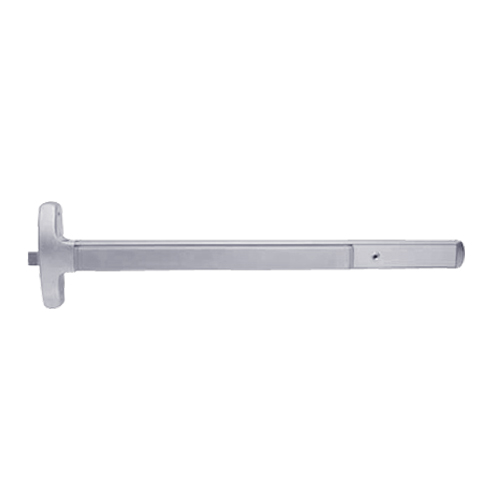
Falcon 24 vs 25 Series: Same Grade 1, Different Price
Posted by Kent on 21st Sep 2026
Falcon 24 vs 25: Why Two "Grade 1" Exit Devices Have a Price Gap
Two quotes land on the same desk for the same aluminum storefront door. One calls out a Falcon 24 Series exit device. The other calls out a Falcon 25 Series. Same finish, same exit-only function, and a real price gap between them. A GC or a facilities buyer who has never ordered either one wants to know what they're actually paying for before they sign a PO.
Here's the honest answer, straight from the manufacturer's own listing: both the 24-R-EO-US26D-3 and the 25-R-EO-US26D-3 are rim-mounted, EO (Exit Only) trim, satin chrome finish, and both are independently tested to ANSI/BHMA A156.3 Grade 1, the top durability tier for exit hardware. Neither is fire-rated in this configuration. That's not a typo repeated across two listings. Falcon's own spec sheet groups the 24 and 25 Series together under one Grade 1 rating.
What actually separates the two
On paper, in the documentation Lock Depot carries, the answer is: not much. The 24 runs a few hundred dollars more than the 25 in the same finish and function. We don't have a cut sheet in front of us that lists a different strike tolerance, a different dogging cylinder, or a different warranty term between them, and I'm not going to invent one to make this article sound more useful than it is. If your project spec calls out a specific difference by part number or feature, ask us and we'll chase down the actual Falcon engineering bulletin before you order. That's a phone call, not a guess.
What I can tell you from twenty-some years of writing up hardware schedules: this pattern isn't unique to Falcon. Manufacturers run parallel Grade 1 lines at different price points all the time, and the gap is sometimes a older casting tooling still being amortized, sometimes a slightly different OEM run, sometimes just channel pricing for a distributor tier. Unless the spec forces your hand, the honest move is to buy the one that matches what the architect wrote down and save the debate for the SKUs where the difference is documented.
When the model number is not optional
If the project spec, the closeout submittal, or a historical building standard names the Falcon 24 specifically, order the 24. An inspector or an architect reviewing a submittal against a spec sheet will flag a substitution even when the replacement is objectively the same grade, and getting bounced back on a punch list costs more than the price difference ever will. If you're doing an open replacement with no spec constraint (a broken device on a door nobody wrote a spec for ten years ago), buy on price. The 25 Series carries the identical Grade 1 rating for less money, and there is nothing dishonest about telling a customer that.
Both series build out past exit-only, too. Falcon offers night latch and vertical rod trims on the same platform, so if your door needs a keyed outside lever instead of a blank outside face, say so before you order. Don't assume EO is the only configuration available; it's just the one most schools and offices end up specifying because the door is exit-only by design (back corridor, stairwell discharge, service entrance).
For a narrow-stile aluminum storefront door instead of a hollow-metal or wood door, the rim device family still works, but you may be better served by a narrower-profile device. That's a separate conversation, and one worth having with us before the device arrives and doesn't clear the stile width.
Ordering more than one door
Most schools and offices don't buy one of these at a time. If you're replacing devices across a corridor or matching a new addition to an existing wing, order every unit from the same series and the same production run if you can, and specify the finish by its US code (US26D, not "chrome") on the purchase order. Two devices in "satin chrome" from different orders can drift slightly in tone once they've been on a door a few years, and a mismatched pair on a double-door opening is the kind of thing a building manager notices every single day. If you're buying five or fifty, tell us the count up front. It changes nothing about the price per unit at this catalog, but it lets us confirm the whole order ships together instead of trickling in over three separate boxes.
One more thing worth saying plainly: neither the 24 nor the 25 ships with a cylinder for the EO configuration reviewed here, because exit-only means there's no outside key cylinder to begin with. If your door needs a keyed outside lever, you're looking at the night latch trim on the same platform, not this part number. Confirm the function code before the device leaves our dock.
Common questions
Is the Falcon 25 actually Grade 1 like the 24?
Yes. Falcon's own product listing groups both the 24 Series and 25 Series under the same ANSI/BHMA A156.3 Grade 1 certification. It is not a lesser-grade device sold at a lower price; it's the same durability class.
Can I use either one on a fire-rated door?
Not in the EO configuration reviewed here. Both are listed non-fire-rated as sold. If you have a rated opening, tell us before you order. Falcon builds fire-listed exit hardware, but it is a different part number and a different set of trim restrictions, and substituting the wrong device on a rated door is a code violation the next inspection will catch.
What's the real difference between the 24 and the 25 if the grade is the same?
We don't have documentation in front of us that names one, and we won't guess. If a project spec or an engineer's letter calls out a specific distinction, bring it to us and we'll track down the manufacturer bulletin rather than repeat a claim we can't back up.
Do these come in other trim besides exit-only?
Yes. Both series build out in night latch (keyed outside lever) and vertical rod trims on the same platform. Tell us the door configuration, handing, and whether you need outside operation before you order, since the outside trim changes the part number.
Which finish should I order to match my other hardware?
Satin chrome (US26D/626) is the most common commercial finish and matches most lever trim and closers on the same door. If the rest of your storefront hardware runs satin stainless or anodized aluminum, match that instead. Send us a photo of the existing hardware if you're not sure.
Either way, both devices are in stock and ready to ship. Check the full Falcon hub for the rest of the exit device line, and see our Falcon 25 write-up for more on when it's the right call and when it's worth stepping up to a Von Duprin.