
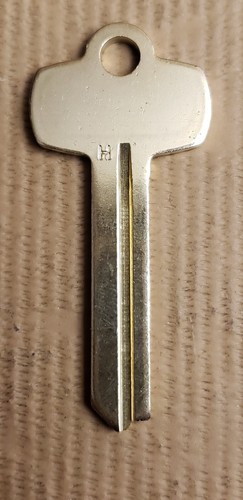
GMS SFIC Key Blanks: Picking the Right Keyway Letter
Posted by Kent on 22nd Sep 2026
The blank that doesn't cut is the blank that wasn't the right letter
A customer hands you an SFIC core and asks for two cut keys by end of day. You reach for the blank tray, grab what looks close, and the key turns rough or won't seat past the third pin. Best-keyway blanks are not interchangeable by shape alone. The bow, the warding, and the milling all track a specific letter, and cutting the wrong one wastes a blank and the customer's patience.
GMS makes a full run of Best-format key blanks in nickel silver, one SKU per keyway letter, and stocks enough of the common ones that a locksmith working a rekey job doesn't have to guess or wait on a manufacturer backorder.
How the Best letter system actually works
Best-format interchangeable cores use a letter code to separate keyway families so operating keys and control keys from one building don't accidentally work in another. The letter is stamped into the bow and cut into the blank's warding, and it is not cosmetic: a B-keyway blank will not seat correctly in an A-keyway core, even though the two blanks look nearly identical on the rack.
GMS ships the letters a shop actually moves: A, B, C, D, E, F, G, J, K, L, R, plus the construction-master letters TA, TB, TC, TD, TE, and a few less common codes like DD, H, M, and WH. The GMS mortise cylinder we've covered before runs the same letter logic on the cylinder side; the blank is the other half of that job.
The A keyway (the one you'll cut most)
The GMS KBBA is the A-keyway blank, and A is the keyway most SFIC cores ship in when a building hasn't specified otherwise. It's compatible across core brands that share the A warding, including Kaba Ilco, Best, and Arrow interchangeable cores, which is why it's the blank most shops keep the deepest stock of.
Reading the letter off the core before you cut
Don't guess the letter from the core's finish or the building's age. Pull the core and check the keyway stamp, or check the bitting card if the building kept one. If neither is available, a control key from the property manager will seat in the correct letter and nothing else — that's the fastest field test. Cutting a blank on a hunch and finding out at the door is how a service call turns into two trips. The same identification problem comes up on the cylinder side of a rekey job, which is why our KSP SFIC core guide walks through reading a core's keyway before ordering a replacement.
Construction-core letters are a different animal
The TA through TE letters aren't a separate keyway family so much as a staging system. A GC installing doors during a build wants every sub on site to open every door on one temporary key, without handing out the building's real operating keys. Cores set up on a construction letter get pulled and swapped for permanent cores once the building turns over, and the construction blank never has to match anything the owner will use long-term. If you're bidding new construction alongside interchangeable cores, stock a handful of the T-letters before the framing crew shows up, not after.
Nickel silver, and why that matters for a blank you're about to cut thin
GMS cuts these blanks from nickel silver, which holds a cleaner edge under a key machine's cutter than the softer brass alloys some off-brand blanks use. A blank that burrs or deforms mid-cut throws your depths off on the next key in the batch, which matters more on interchangeable-core work than on a standard pin tumbler, because IC keys have to clear both the operating shear line and, on a control key, the second shear line that releases the core. A clean blank is cheap insurance against a bad batch.
Stock the letters your service area actually uses
Nobody needs all eleven primary letters plus six construction codes on the truck. Pull your last twelve months of rekey tickets and see which letters actually came up — most shops find they're cutting three or four letters for 80 percent of the work, with the rest sitting as occasional-use stock. Buying deep on the letters you don't use ties up a locksmith's inventory budget on blanks that go stale in the drawer.
Pro tip from the counter: label the blank tray by letter, not by "SFIC" as one bucket. The five seconds it takes to read a label beats the five minutes it takes to recut a key after grabbing the wrong letter under a customer's eye.
Common questions
Will a GMS blank cut and turn in a Best-brand core?
Yes, for the shared letters. GMS cuts to the same Best-format warding and bitting spec, so an A-keyway GMS blank seats and cuts the same as a Best-branded A blank in a Best, Arrow, or Kaba Ilco core using that letter.
How do I tell which letter a core is without a bitting card?
Pull the core and read the keyway stamp on the plug face, or test-fit a known control key from the property's records. Guessing from the core's finish or age is not reliable.
Can I use a construction-letter blank as a permanent operating key?
No. Construction cores and their blanks (TA-TE) are meant to be pulled once the building turns over. Leaving a construction core in place defeats the purpose of switching to a permanent, building-specific keyway.
Why did my cut key bind halfway into the core?
Most often it's the wrong letter, not a bad cut. A blank from an adjacent letter can look right and even start into the keyway before the warding stops it. Re-check the letter against the core stamp before you blame the machine.
Do GMS blanks work with a GMS CIC LFIC core in the same job?
The GMS CIC Large Format Interchangeable Core line uses a different keyway family than the SFIC Best-letter blanks covered here, so match the blank to the specific core's stamped keyway rather than assuming one GMS product line covers both.