
IEI 232SE vs 212iLM: Surface-Mount or Mullion-Mount Keypad
Posted by Kent on 18th Sep 2026
The mounting style is the real spec on a retrofit
Most keypad shopping starts with users and features. On a retrofit, the question that actually decides the sale is simpler: where does this thing physically go, and does it need a hole cut for it? We already covered the IEI 212W as the standalone keypad for a door with no access control system. The 212W is a flush-mount unit; it needs a standard single-gang electrical back box set into the door frame or wall. That is a fine answer on new construction. It is a much bigger job on an existing storefront where nobody wants to cut into the frame.
Two other IEI keypads solve exactly that problem, in two different physical situations: the 232SE surface-mounts on almost any flat surface, and the 212iLM-AL is built specifically to mount on a narrow aluminum door mullion. Picking between them comes down to what kind of frame you are actually looking at.
232SE: no backbox, no cutting, mounts almost anywhere
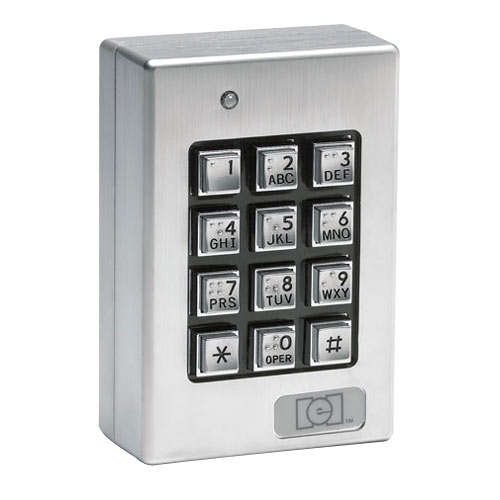
The IEI 232SE is a sealed-environment keypad in a brushed metal housing that mounts directly to a standard single-gang electrical box or, just as often, straight onto a flat surface with no box at all. That second option is the retrofit win: if the wall or frame you are working with was never prepped for a keypad, you are not cutting anything to add one.
It carries an all-metal, Braille alpha-numeric keypad, a vandal-resistant design, and two features the flush-mount 212W does not have: tamper loop and door position monitoring. Both matter on an exterior door someone might try to pry the keypad off of, or a door you want to know is actually closed after someone codes through. Rated -20°F to 130°F, indoor or outdoor, supports up to 120 users.
212iLM-AL: built for a narrow aluminum storefront mullion
The IEI 212iLM-AL solves a different physical problem entirely. A narrow-stile aluminum storefront door frame does not have room for a standard electrical box, and most surface-mount hardware is too wide to sit flat on the mullion between two panes of glass. The 212iLM is built at 1.71" wide, specifically to fit that mullion, with no backbox required at all. It mounts directly to the frame or to a flat surface if you need it somewhere else.
It is rated for medium-high traffic and rough duty environments, with fully encapsulated electronics for outdoor exposure, backlit hardened keys so it reads in low light, an audible sounder, and a dedicated door bell relay. If your opening is a glass storefront entrance with narrow aluminum stiles, the 212iLM is built for that frame in a way a general-purpose surface unit is not.
What all three keypads share
The 212W, 232SE, and 212iLM all run on the same 12-24 VAC/VDC auto-adjusting power input, all support both 212 and 232 functionality modes, and all include a relay output to drive a strike or maglock directly without a separate access control panel. None of them need wiring back to a head-end system; they are standalone. The difference between them is entirely physical: what surface they sit on, and whether that surface needs a hole cut into it first.
Picking between them
Start with the frame, not the feature list:
- Existing standard electrical box, new construction, or you do not mind cutting one in: the 212W flush-mount is the cleanest install.
- Existing door or wall with no box, and you do not want to cut into it: the 232SE surface-mounts directly, plus you get tamper and door position monitoring the 212W does not have.
- Narrow aluminum storefront mullion between glass panels: the 212iLM is the only one of the three actually sized to fit there.
See the full keypad and access-control line on the IEI hub.
Common questions
Can the 232SE mount inside an existing single-gang electrical box if I have one?
Yes. It mounts directly to a standard single-gang box in addition to mounting on a bare flat surface, so having an existing box does not rule it out; it just is not required the way it is on the flush-mount 212W.
Will the 212iLM fit a wide storefront frame, or only a narrow mullion?
It is built at 1.71 inches wide specifically for narrow mullion applications, but its surface-mount design also works on a flat wall or wider frame if that is where you need it. The narrow width is what makes it the right pick for a tight mullion; it is not a limitation on a wider surface.
Do any of these three keypads need a separate power supply?
They accept 12-24 VAC or VDC and auto-adjust to whichever you feed them, but you still need to provide that power from a transformer or existing low-voltage supply. None of them run on batteries.
Does the door position monitoring on the 232SE require a separate door contact?
The 232SE's specification lists door position monitoring as a built-in feature of the unit. Confirm the wiring detail against your specific access control setup before assuming it replaces a dedicated door contact switch on a monitored opening; call us if you want that checked against your panel.
Is the 232SE actually more secure than the flush-mount 212W?
It adds tamper loop detection and door position monitoring that the 212W does not list, which is a real security improvement on an exposed exterior door. Whether that matters for your opening depends on the traffic and how visible the keypad is; a low-traffic interior door may not need it.
Flush, surface, or mullion, we will match the keypad to the actual opening. No automated phone trees. Call 877-365-5625.