
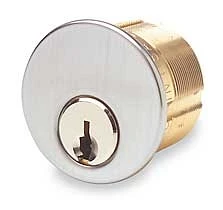
Ilco Mortise Cylinder: Matching Length, Cam, and Keyway
Posted by Kent on 13th Sep 2026
Pull an old mortise cylinder off a storefront door and the replacement decision comes down to three things that have nothing to do with brand loyalty: the length, the cam, and whether the new one gets keyed alike with what's already out there or cut different. Get any one of those wrong and the new cylinder either doesn't reach the lock's cam mechanism or doesn't turn it, and you're back at the counter with a part that looked identical on the shelf.
Length first: measure the old one, don't guess from the door thickness
Ilco stocks mortise cylinders across a length range built around the same 5-pin format, and the length is the single most common ordering mistake. The 7325SC1 runs 2" long, built for a mortise lock body set deep in a thick door or where the cylinder has to clear an interior trim plate. The 7185SC1-26D-KD is 1-1/8", the length that fits most standard commercial mortise lock bodies without modification. The 7205SC1-26D splits the difference at 1-1/4". None of these are interchangeable by eye. Pull the old cylinder, measure it end to end with the cam attached, and match that number. Don't measure the door and estimate: the cylinder length is set by the lock body's cam pocket depth, not the door thickness.
The cam is the part that actually turns the lock
Every one of these Ilco cylinders ships with a standard cam, the small tab on the back of the cylinder that engages the lock body's mechanism when the key turns. A standard cam works with the mortise lock bodies most commercial doors use. It does not work with an Adams Rite-style narrow-stile aluminum storefront lock, which needs its own cam geometry to reach the lock's actuator inside the thin door stile. If the door is aluminum storefront rather than a hollow-metal or wood commercial door, confirm the cam type before ordering rather than assuming a mortise cylinder that fits a hollow-metal door will also turn an Adams Rite prep. The cylinder can be the right length and keyway and still fail to actuate the lock if the cam doesn't match the body.
Keyway: match what the building already runs
All three of these cylinders are cut for a Schlage C keyway, which is the keyway most commercial buildings standardize on because it's widely stocked and widely serviced. Ordering the wrong keyway is the second most common mistake behind length: a cylinder that's the right length and cam but the wrong keyway either won't accept the building's existing keys or forces a full rekey of every door on that system just to bring the new cylinder in line. Confirm the keyway against an existing key from the building before ordering, not against what the old cylinder's label claims: labels wear off and get swapped over decades of service calls.
Keyed alike or keyed different, and why the SKU spells it out
The 7325SC1 ships keyed alike in pairs, meaning two cylinders ordered under that part share the same key, the right call for a double-door opening where both leaves should open on one key. The 7185SC1-26D-KD and 7205SC1-26D both ship keyed different, each cylinder cut to its own unique key, which is correct for a standalone door that doesn't need to share a key with anything else. Read the SKU suffix before ordering: KA means keyed alike, KD means keyed different. Ordering the wrong one on a multi-door job means cylinders that look correct on delivery and don't share keys the way the job required.
Finish is the last decision, and it's cosmetic
These cylinders ship in satin chrome among other finishes, and the finish has zero bearing on length, cam, keyway, or keying. Match the finish to the existing lock trim on the door so the replacement doesn't stand out, and don't let a finish preference override getting the length and cam right. A cylinder in the correct finish that's the wrong length still doesn't turn the lock.
Common questions
How do I know what length mortise cylinder I need without disassembling the lock?
Pull the existing cylinder out and measure it end to end including the cam. Ordering off the door thickness alone is a guess; the cylinder length is set by the lock body's cam pocket, which doesn't track directly with door thickness.
Will a standard-cam mortise cylinder work on an aluminum storefront door?
Not necessarily. Narrow-stile aluminum storefront locks, the Adams Rite family among them, often need their own cam geometry to reach the lock's actuator. Confirm the cam type against the specific lock body before ordering.
What does the KA or KD suffix on the SKU mean?
KA means keyed alike: cylinders ordered under that code share the same key. KD means keyed different: each cylinder is cut to its own unique key. Check this before ordering more than one cylinder for the same opening or system.
Do I need to match the exact keyway, or will a close one work?
Match it exactly. A Schlage C keyway cylinder only accepts Schlage C-cut keys; a close-but-different keyway either won't take the building's existing keys or requires rekeying everything to line up, which defeats the point of a straight cylinder swap.
Can I get a longer or shorter length than what's listed here?
Ilco's mortise cylinder line runs a range of lengths built around the same 5-pin format beyond the three covered here. Measure the old cylinder first, then confirm the exact length is in stock before ordering.
For sizing the interchangeable-core side of a rekeying job instead of a straight cylinder swap, see Best SFIC Cores: Rekey a Building in Seconds With a Control Key. The full Ilco mortise cylinder range is on the Ilco hub.