
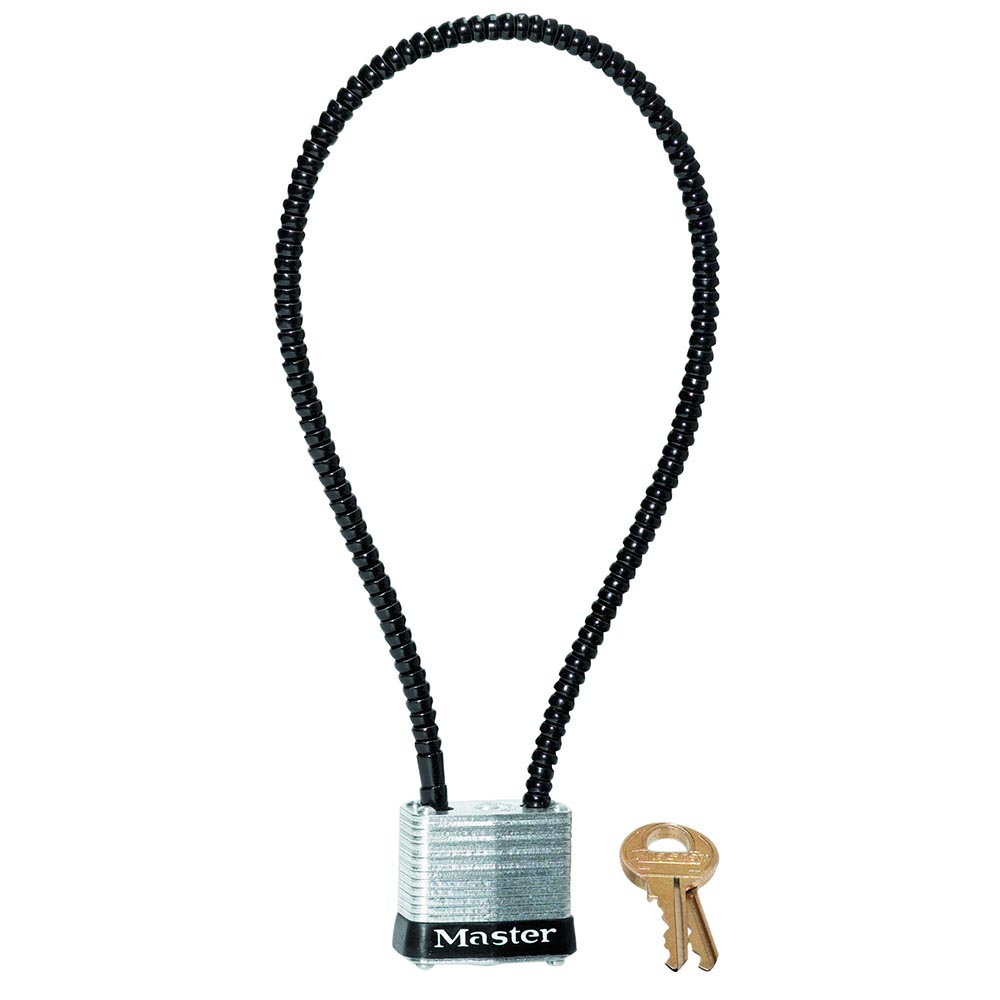
Master Lock Gun Locks: 90DSPT, 94DSPT, or the CA-Legal 107DSPT
Posted by Kent on 2nd Oct 2026
Which gun lock actually fits what you own
A trigger lock that shipped in the box with a used handgun looks like compliance. It probably is not the lock your state, your insurer, or common sense wants on that gun once it leaves the store. Lock Depot stocks three Master Lock gun locks built for three different jobs, and buying the wrong one means buying it twice.
Start with the gun, not the lock. A trigger lock clamps over the trigger guard. A cable lock threads through the action or the magazine well and locks back on itself. That single difference decides which one you can even use.
Trigger locks: keyed or combination
Both the Master Lock 90DSPT and the 94DSPT are trigger locks. They clamp over the trigger guard on a handgun, rifle, or shotgun and block access to the trigger until the lock comes off. Neither stops someone from carrying the whole gun out the door; that job belongs to a safe. What they do is satisfy the "secured with a locking device" language most states and most insurance policies ask for, and they stop a kid or a houseguest from pulling the trigger on a gun they found in a drawer.
90DSPT: keyed, four pins
The 90DSPT is the standard trigger lock: a 4-pin tumbler cylinder, a steel and zinc body, and rubber pads so the jaws don't mark the finish. Keyed means you carry a small key on the ring with your house keys. Fine for one owner who will not lose a key. Wrong for a house with three adults who each need access without hunting down whoever has it that day.
94DSPT: resettable combination, no key
Its sibling the 94DSPT clamps the same way but replaces the key with a resettable keyless combination. Set your own code, change it whenever you want, and nobody loses it in a coat pocket. The trade runs the other direction from a key: the code is only as private as the number of people who know it. Good for a household lock everyone needs to open. Wrong for a lock you specifically do not want a second person opening.
Master Lock lists both as fitting a wide range of firearms, handguns, rifles, and shotguns alike, and the 94DSPT's clamp adds an adjustable ratchet mechanism so it seats correctly across different trigger guard sizes instead of gapping on a smaller frame. That range matters for a gun counter stocking one lock model against a mixed inventory instead of guessing which size to keep on the shelf for a compact carry pistol versus a full-size hunting rifle.
107DSPT: a cable, not a clamp
The 107DSPT works on a different principle. A 14-inch braided steel cable ends in a 1-1/8" laminated steel 4-pin tumbler lock, and the cable threads through the action or magazine well instead of clamping over a trigger guard. Two things follow from that. First, a cable reaches shapes a trigger lock cannot: an AR-pattern rifle with no conventional trigger guard geometry, a shotgun with a loading gate open, a break-action gun with the barrel hinged down. Second, this is the part Master Lock built to meet California Penal Code Section 12088, the state's firearm safety device requirement. Selling to a customer in California, or handing a compliant lock across an FFL counter, means this part number, not either trigger lock.
Ordering several 107DSPT units for a counter or a transfer desk and want them keyed alike? Say so on the order. Keying gets set before the lock ships, not after the box arrives.
The cable design also earns its keep outside a household setting. A hard case for air travel with a firearm needs the gun secured and unloaded inside a locked container, and a case without built-in locking hasps needs a lock the cable can loop through the zipper pulls or the case's own cable channel. The armored steel cups on the 107DSPT's cable are built to resist exactly the kind of cutting attempt a checked bag takes on in transit, which is a different stress test than a gun sitting in a nightstand at home.
Picking between the three
| Lock | Mechanism | Best for |
|---|---|---|
| 90DSPT | Keyed trigger lock, 4-pin cylinder | One owner, standard handgun or long gun |
| 94DSPT | Resettable combination trigger lock | A household that needs shared access with no key to lose |
| 107DSPT | Cable lock, keyed, 14" reach | Odd-shaped actions, California-compliant sales, FFL counters |
What none of these replace
A trigger or cable lock stops an unauthorized trigger pull. It does nothing about someone carrying the whole firearm out of the house once they are inside it. If the real risk is a break-in, the gun belongs in a locked container, with the trigger or cable lock as a second layer, not the only one. That is the same instinct behind buying padlocks as a system instead of one at a time: match the hardware to the actual threat, not to whatever shipped free in the box. Most calls that start "which gun lock do I need" turn out to be a safe question wearing a lock question's clothes. Settle that first.
Common questions
Do I need a cable lock instead of a trigger lock for an AR-15?
Usually yes. Most AR-pattern rifles do not present a trigger lock's jaws with a clean trigger guard to clamp onto the way a handgun does. The 107DSPT's cable threads through the action or magazine well instead, so it does not depend on trigger guard shape.
Is the 107DSPT the only one that's California-legal?
It is the part built to meet California Penal Code Section 12088. If a sale needs California-compliant documentation on the lock itself, order that part number rather than substituting a trigger lock, and confirm current state requirements before you ship.
Can I get multiple 90DSPT or 107DSPT units keyed alike?
Yes, for the keyed units. Tell us at checkout and how many share a key; keying alike gets set before the order ships. The 94DSPT resets its own combination at the lock, so keying alike does not apply to it.
Does a trigger lock stop someone from stealing the gun?
No. It stops the trigger from being pulled while the lock is on. Theft of the whole firearm is a storage problem, solved with a safe or a locked cabinet, not a trigger lock.
Will the clamp on a 90DSPT or 94DSPT scratch a blued or stainless finish?
Both locks pad the jaws with rubber specifically to prevent that. Wipe grit off the trigger guard before clamping down; sand or dust trapped under a rubber pad is what actually causes a mark.