
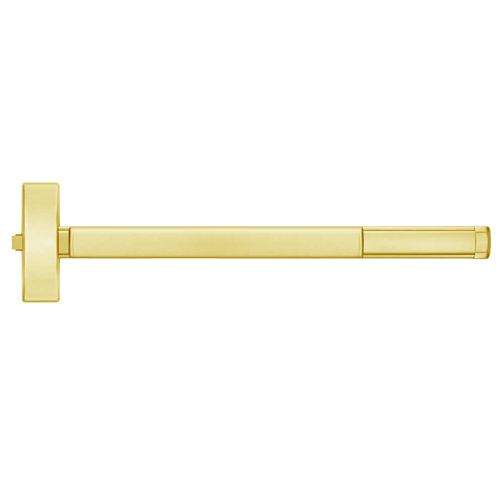
PHI 2101 vs 2102 vs 2103 vs 2105: Apex 2100 Function Prep
Posted by Kent on 1st Oct 2026
PHI 2101 vs 2102 vs 2103 vs 2105: Picking the Right Apex 2100 Exit Device Function
A PHI Apex 2100 rim exit device does not come in one flavor. Order the wrong function prep for a mullion opening and you either hand the building an exit device with no outside operation at all, or the wrong kind of outside operation for how the room actually gets used. The model number changes the function, not just the finish, so before you place the order, know which one of the four you actually need.
PHI 2101: prepped for cover plate, exit-only from the outside
The PHI 2101 is prepped for a cover plate, which means there is no outside trim at all, cylinder or lever. From outside the door, there is nothing to turn, push, or key. This is the correct choice for an opening that only ever needs to be pushed open from the inside, a secondary exit, a mechanical room door, or any opening where outside entry is handled some other way entirely, like a separate keyed door down the hall. Do not spec the 2101 on any door where someone legitimately needs to get in from the outside; it has no path to do that.
PHI 2102: prepped for dummy trim, a pull with no locking function
The PHI 2102 is prepped for dummy trim, a fixed pull or lever on the outside that lets someone grab the door and open it, with no cylinder, no lock, and no way to secure it from that side. This is the right call on a pair where one leaf is the active door and the other is mostly decorative or rarely used, a vestibule door that stays unlocked during business hours, or anywhere the building wants a handle on the outside but has no intention of ever locking that specific opening. If the door needs to be secured at any point, the 2102 is the wrong prep; a dummy trim by definition cannot lock.
PHI 2103: prepped for key retracts latchbolt, a classroom-style function
The PHI 2103 is prepped so a key retracts the latchbolt from outside, letting an authorized person in with the correct cylinder while the inside push bar always provides free exit. This is the panic-hardware version of a classroom function: staff or maintenance can key in, but there is no separate lock and unlock step, the key itself does the retracting. It fits a storeroom, a supply closet, or a classroom-style door where the building wants controlled outside entry without a full storeroom-function lever set bolted on top of the exit device.
PHI 2105: prepped for key controls thumb piece, a storeroom-style function
The PHI 2105 is prepped so a key controls a thumb piece outside, which the person then presses to operate the latch, rather than the key itself retracting the bolt directly. Functionally this reads closer to a storeroom or entry function: the key unlocks the thumb piece's ability to work, and the thumb piece does the opening. Where a facility wants that extra step, key first, then operate, over the more direct 2103 behavior, the 2105 is the closer match. Both give an authorized person outside entry with free exit inside at all times; the difference is entirely in how the outside hardware behaves once it is unlocked.
Choosing between the four on a real opening
Work it from the buyer question, not the spec sheet. Nobody needs outside access at all: 2101. Someone needs a handle to pull but the door is never locked: 2102. Authorized staff need a key that opens the door directly with one motion: 2103. The building wants a key-then-operate two-step, closer to how a traditional storeroom lever behaves: 2105. All four share the same Grade 1, UL-listed panic-hardware body and the same non-handed design, so switching between them later means swapping the outside trim prep, not replacing the whole device. Every one of these is a non-fire-rated device sized for a specific door width, confirm the width on the opening before ordering, since PHI cuts these to the door, not universal. Finish matters here too, and not just for looks. These devices are stocked across bright brass, satin brass, satin bronze, oil rubbed bronze, bright chrome, satin aluminum, and satin stainless steel, so match the exit device finish to whatever else is already on the frame, the closer, the kickplate, before the order goes in. A mismatched finish on a mullion pair is the kind of thing a GC will not catch at walkthrough and a facilities manager will notice every day after.
Common questions
Do any of the 2100 series preps come with a cylinder included?
No. Cylinder and trim are sold separately on all four function preps. Order the rim cylinder that matches the building's existing keyway alongside whichever 2101, 2102, 2103, or 2105 the door needs.
Can I upgrade a 2101 to a keyed function later without replacing the whole device?
Not directly. The function prep is machined into the device at the factory, so moving from a 2101's cover plate to a keyed function like the 2103 or 2105 means ordering a different device, not retrofitting the one already installed.
Is the PHI 2100 series fire-rated?
No, these are the non-fire-rated Apex 2100 devices. If the opening is on a rated door assembly, look to PHI's fire-rated exit device line instead; a non-fire-rated device does not meet code on a labeled door.
What is the difference between the 2103 and the 2105 in practice on the door?
On the 2103, turning the key directly retracts the latchbolt, one motion and the door opens. On the 2105, the key unlocks a thumb piece that the person then has to press separately to operate the latch, a two-step motion closer to how a storeroom lever function feels.
Are these Apex 2100 devices compatible with a Von Duprin trim swap?
Trim compatibility across brands should be confirmed against PHI's own cross-reference documentation before ordering, not assumed from case size alone. Our PHI Apex 2100 as a Von Duprin-compatible device piece covers the base device swap; function-specific trim is a separate check.