
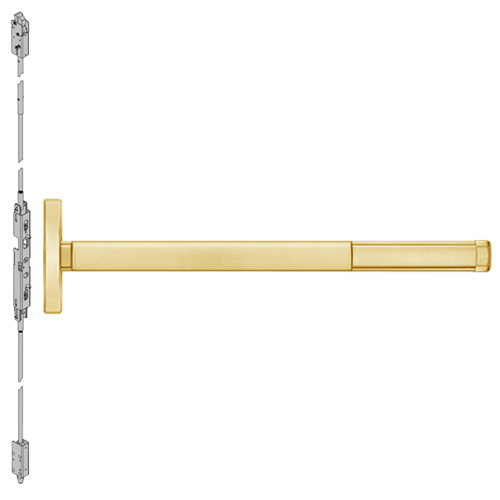
PHI 2600 vs 2700: Narrow or Wide Stile Concealed Rod
Posted by Kent on 17th Sep 2026
A concealed vertical rod device is the cleanest-looking exit device you can put on a pair of doors. No surface rod running down the face, no rod covers to dent or paint over. But PHI cuts the 2600 and 2700 as two different chassis, and ordering the wrong one means the device shows up on the truck and doesn't sit right in the stile. Here's how to tell them apart before you order, not after.
PHI 2600 vs 2700: what actually changes
Both are Apex 2000-family concealed vertical rod exit devices, both non-fire-rated, both certified to ANSI/BHMA A156.3 Grade 1, both UL listed for panic hardware. The difference PHI builds into the part number is the stile width the device is cut for:
- 2600 Series: cut for a narrow-stile door. This is the one you order for an aluminum storefront door, where the stile is only a few inches wide and there's no room for a wide chassis.
- 2700 Series: cut for a wide-stile door. PHI's own catalog name calls this the "wood door" version, but the spec sheet is explicit that what changes is stile width, not door material. It fits a wide-stile hollow metal door the same way it fits a wide-stile wood door.
Order the 2600 for the narrow-stile door and the 2700 for anything wide-stile, and don't lean on the word "wood" in the catalog name to make that call. Order-of-trust rule on our own listings is the same one we'd give any locksmith: read the spec table, not the marketing name, when the two don't quite line up. A wide-stile hollow metal door takes the 2700 too.
Shared specs, so you know what you're getting either way
Order either series and you get the same lockbody-grade hardware:
- Top latchbolt: stainless steel, deadlocking, 3/4" throw
- Bottom bolt: steel, independent action, 5/8" throw, with adjustment range to suit door undercut
- Dogging: 1/4-turn hex key dogging standard
- Handing: non-handed, so one part fits either swing
- Touchbar height: 39-15/16" from floor, standard
- Strikes: top S519 surface-applied, bottom S460 flush-mounted
The PHI 2601-605-36 is the narrow-stile version prepped for a cover plate. It's exit-only, no cylinder or trim included, which you order separately based on whether the opposite side needs a pull, a lever, or nothing at all. If that opening needs a dummy trim instead, the 2602-605-36 is the same 2600 chassis prepped for it.
On the wide-stile side, the PHI 2701-605-36 is the cover-plate prep, and the 2702-605-36 is the dummy-trim version. Both ship in the 36" door-width cut, meaning a 2'-7" to 3' door, with the top rod adjustable to fit standard door heights on either series.
Why "concealed" is worth the extra step
A surface vertical rod device is faster to install and cheaper, but the rod runs down the face of the door where it takes abuse from carts, dollies, and kids swinging on it. Concealed rod hides both rods inside the door, so nothing on the face can catch or bend. That's why hospitals and schools spec it even though it costs more and takes longer to fit. It's the difference between a device that looks the same in year one and year ten, and one that's had its rod covers replaced twice already.
The tradeoff is retrofit difficulty. A concealed rod device generally has to be ordered to match the door's existing prep, or the door has to be re-mortised to accept it. If you're not certain the opening was ever prepped for a concealed device, measure it or call before you order. A mis-cut door costs more to fix than the hardware itself.
Getting the cylinder and trim right
Neither the 2600 nor the 2700 includes a cylinder or outside trim. That gets ordered to match what the building already uses: mortise cylinder format, keyway, and finish. If the door needs a key to get back in from outside, specify the trim style, pull, lever, or knob, and the cylinder separately, matched to the existing keying system. If it's exit-only with no way back in, the cover-plate prep is what you want and there's nothing else to add.
One more thing worth checking before you order either series: confirm the door's actual stile width with a tape measure rather than trusting what the plans say. Storefront systems from different manufacturers vary enough in stile dimension that a device cut for one narrow-stile spec can bind on another. Fifteen minutes with a tape measure beats a device that arrives and doesn't seat.
Common questions
Can I put a 2600 on a wide-stile door if that's what's in stock?
No. The 2600 is cut to the narrow-stile chassis dimensions and won't sit correctly in a wider stile, so you'll fight the prep the whole install. Order to the stile width you actually have, not to what's on the shelf.
Does the 2700 handle a fire-rated opening?
No. Both the 2600 and 2700 covered here are non-fire-rated. If the opening is on a rated door, you need PHI's fire-rated concealed vertical rod line, which is a different part number. Don't substitute this series and assume it passes inspection.
Do I need two devices for a pair of doors?
Generally yes, one per leaf on a pair, unless one leaf is inactive and gets flush bolts instead. Confirm which leaf is active before ordering two exit devices you don't need.
What's the difference between the cover-plate prep and the dummy-trim prep?
Cover-plate prep is for an exit-only door with nothing on the outside face but a flat plate. Dummy-trim prep accepts a non-functional pull or lever on the outside for appearance, still with no way to open the door from outside. Pick based on whether the outside face needs to look like it has a handle.
Questions on stile width, fire rating, or which trim to pair with either series: see the full PHI lineup, and if the opening needs a rim exit device instead of concealed rod, the PHI Apex 2100 rim device breakdown covers that alternative. Call 877-365-5625 with your door width and stile dimension and we'll confirm the right cut before you order.