
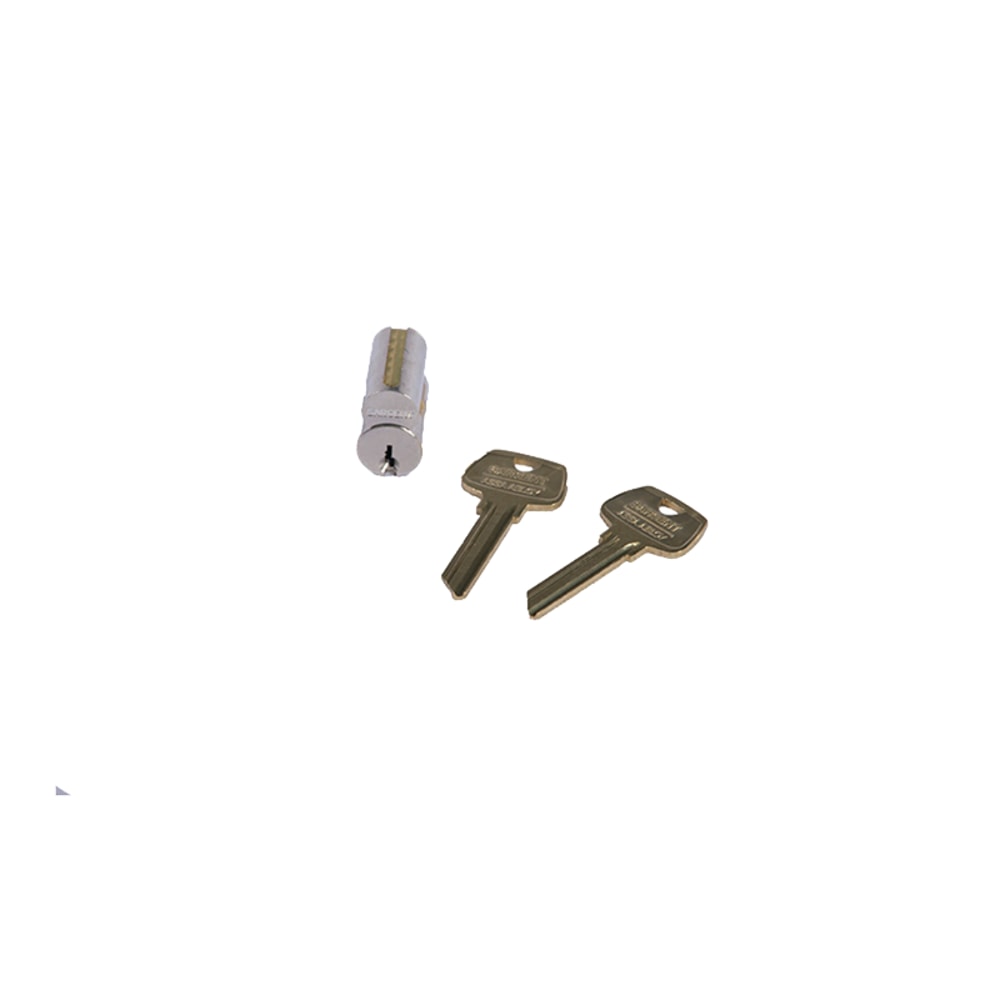
Sargent 6300 LFIC Core: Picking the Right Keyway Letter
Posted by Kent on 3rd Oct 2026
Sargent 6300 LFIC Core: Picking the Right Keyway Letter
A customer hands me a bag of cores off a job and asks for "a Sargent replacement." That's not enough to order against, and it never has been. The Sargent 6300 is a 6-pin LFIC core — Large Format Interchangeable Core — and Sargent stamps a two-letter keyway code onto every one of them. Order the wrong code and the core drops into the housing fine, turns fine on the bench, and still won't take the customer's key. That's the callback nobody wants to explain.
LFIC Is Not the Same Housing as an SFIC Core
If you've been ordering Best-format SFIC cores for years, don't assume a Sargent core drops into the same pocket. Sargent, along with Corbin Russwin, builds to the large-format interchangeable core standard — physically bigger than the small-format 6/7-pin core convention Best, Falcon, and Arrow share. An LFIC core will not seat in an SFIC housing and the reverse is just as true. Before you order a 6300, confirm the lock body itself is cut for large-format IC, not small-format. That's a five-second check on the lock's own spec sheet, and it's the check that gets skipped when someone's in a hurry.
The Keyway Code Is the Part That Actually Matters
Every 6300 core carries a keyway designation — HA, HB, LA, LB, RA, and a longer alphabet beyond that. That code is the physical key profile the core cuts to, and it is not interchangeable with a different code just because both are "Sargent." Two 6300 cores can sit next to each other, look identical, and still refuse each other's keys because the warding inside cuts a different key blank entirely.
Here's the part that actually saves a trip: don't guess the code from memory. Pull an existing core from the building (or have the customer do it) and read the stamp on the face, or check the building's own master-key system chart if one exists. A property manager who "thinks it's an A keyway" is guessing, and guessing on a keyway code is how you end up back on site with the right core and the wrong key profile. If nothing on hand identifies the code, that's a call to whoever cut the original system, not a coin flip on the order form.
Keyed Alike or Keyed Different
Once the keyway is confirmed, the second decision is simpler: keyed alike (KA) or keyed different (KD). A core marked 6300-LA-15-KD is cut to its own unique bitting inside the LA keyway family — the right call for a single office or storage room that doesn't need to share a key with anything else in the building. A KA order, by contrast, gets combinated to match an existing master key system so one key keeps working across several doors. If you're replacing a single core because it's worn out or a key walked off, KD is usually the safer default unless the building's locksmith of record confirms the system and hands you the bitting to match.
What You're Actually Buying
The Sargent 6300-HA-15 and its siblings are ANSI/BHMA Grade 1 genuine Sargent OEM cores, sold uncombinated the way most SFIC and LFIC cores ship — your locksmith combinates on-site or the core arrives pre-cut to a bitting you specified. That's normal for interchangeable-core hardware and not a defect; it's the entire point of an IC system, since the core is meant to be pulled and swapped without touching the lock body. Finish on the SKUs here is Satin Nickel (US15/619), matching most of the commercial trim you'd already have on a Sargent-equipped door.
Ordering more than one core for the same job is where the keyway code pays for itself twice over. A facilities manager doing a floor-by-floor rekey doesn't want to stop and re-verify the keyway on every door — confirm it once against a pulled sample, write it on the work order, and every core on that project ships to the same code. Skip that step and you can end up with half a floor on one keyway and half on another because two different techs guessed independently. It's a five-minute check against a callback that costs an afternoon.
One more thing worth flagging before you place a bulk order: interchangeable-core systems exist specifically so a building can rotate cores without rekeying the lock bodies themselves. If a tenant moves out or a key gets handed back late, pulling that door's core and dropping in a fresh KD core is faster than replacing the whole lockset, and it's the reason a property manager should keep a couple of spare 6300 cores in the correct keyway on the shelf rather than ordering one-off every time a door needs attention.
If your customer's building runs Sargent hardware and someone in the field guessed at a small-format core instead, that mismatch is usually why the "replacement" core never worked. Confirm large-format first, keyway code second, KA/KD third, and the order goes out right the first time. If the door itself is due for more than a core swap, see how we sort storeroom vs. office function on Sargent's cylindrical line, or browse the full Sargent hardware catalog for the lock body the core is going into.
Common questions
Is a Sargent 6300 core the same size as a Best SFIC core?
No. The 6300 is a large-format interchangeable core (LFIC); Best, Falcon, and Arrow use the small-format SFIC convention. The two are not interchangeable, and a large-format core will not seat in a small-format housing.
How do I find out which keyway code my building uses?
Pull an existing core and read the stamp, or check the building's master-key system paperwork if one exists. If neither is available, contact the locksmith of record who cut the original system rather than guessing.
What's the difference between a KA and a KD core?
Keyed alike (KA) cores are combinated to match an existing master key system, so one key continues to work across several doors. Keyed different (KD) cores are cut to their own unique bitting and don't share a key with anything else — the right call for a standalone door.
Do Sargent 6300 cores ship pre-cut?
They ship uncombinated like most interchangeable-core products. A locksmith combinates the core to the customer's specified bitting, or the core arrives cut to a bitting already provided at order time.
Can I swap a 6300 core myself without a locksmith?
Pulling and reinserting an interchangeable core with the correct control key is a standard field operation, but combinating a fresh core to a new bitting is locksmith work. If you only need to swap an already-cut core between two compatible housings, no recombination is required.