
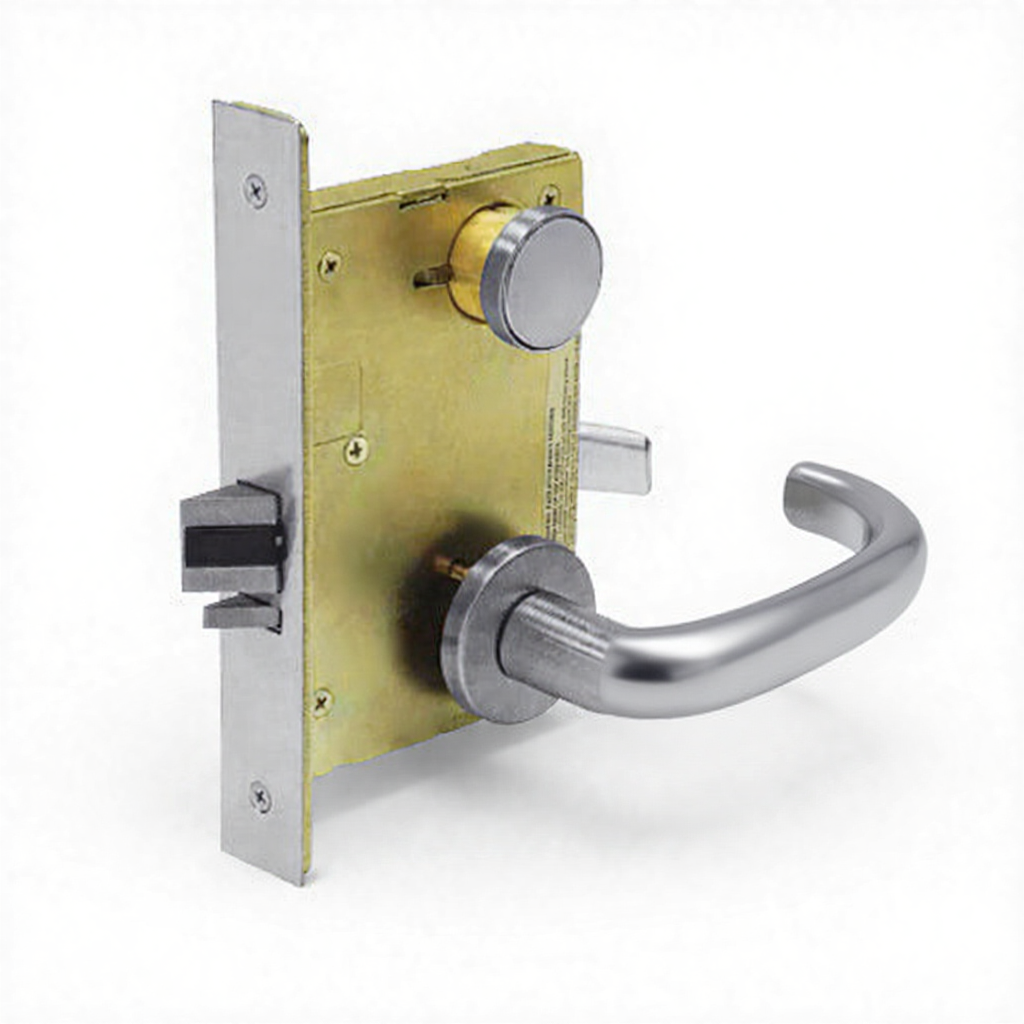
Sargent 7800: A Mortise Knob for a Non-Public Door
Posted by Kent on 16th Sep 2026
Not every door needs a lever
Lever hardware is the default now, and for public doors, that's the right call. Code generally requires lever or push-type operation on any door along an accessible route, and a round knob fails that test. But a mechanical room. A roof access stair. An electrical closet the public will never touch. Those doors aren't on the accessible route, and plenty of buildings, especially older ones matching existing trim, still spec a knob back there on purpose. Check your local code before you order, this varies by jurisdiction and I'm not going to pretend otherwise, but where a knob is still legal, the Sargent 7800 Series is the one to reach for.
Same lockbody you already trust, different trim
Here's the part that actually matters to a locksmith stocking a truck: the 7800 Series uses the same Grade 1 mortise lockbody as the 8200 lever series we've written up before. It isn't a cheaper, lighter case built down to a knob price point. It's the identical mortise case with OB knob trim instead of a lever, and that trim is field reversible. If a building already has 8200 mortise cases installed and one door needs to stay a knob for whatever reason, historic match, a tenant who specifically doesn't want levers on a back room, an insurance requirement I've genuinely seen once, you're not ordering a different lock family. You're ordering the same case with different trim.
Pick the function first, then the finish
Three functions cover almost every back-of-house door.
Storeroom (7804): outside knob is always locked and only retracts the latch with the correct key; the inside knob is always free. This is the one for a supply closet or a utility room staff need key access to from the corridor side but never lock from the inside.
Passage (7815): both knobs always free, no locking function at all. Order this for a door that exists to separate spaces, not to secure anything, a mechanical room where the real security is the outer building envelope, not this particular door.
Privacy (7865): push-button locking from the inside with an emergency release from outside. This is the single-occupant restroom function, not the storeroom function, and swapping the two is a mistake I still see on submittals.
There's a fourth worth knowing about even though it doesn't come up as often on a back-of-house door: Classroom (7837), locked or unlocked from outside by key, always free from the inside. It's the same logic as the 8200 lever's classroom function we covered in our school-corridor piece, just on a knob instead of a lever. If a building's non-public doors still run knobs but the district wants lockdown capability on an interior storage room off a classroom wing, this is the function that matches what the teacher's actual classroom door does.
All four ship in Satin Chrome (26D) here and take a Sargent six-pin conventional cylinder where the function calls for one, so keying them into an existing Sargent system is a normal keying job, not a special order.
Not every job is chrome
The office function also ships as the 7805-OB-10B in Oil-Rubbed Bronze (10B), for jobs where chrome is the wrong finish entirely. Before you assume every door on a hardware schedule matches, check the finish call-out against what's actually installed on the rest of that corridor. A chrome knob dropped into a run of oil-rubbed bronze door hardware is the kind of thing a building owner notices on a walk-through, even if nobody can articulate why it looks wrong.
Where I'd still tell you to spec the lever instead
If there's any chance that door becomes public-facing, or an inspector could plausibly call it part of an accessible route, don't save the few dollars on a knob. Order the 8200 lever instead and skip the argument entirely. The knob is for the door that's genuinely staff-only, forever, not the door that's staff-only until the building gets reconfigured next year.
The failure mode that's actually about the knob, not the lock
Knobs strip their retaining screws faster than levers do. Same case, same latch, same cylinder, but a knob gets gripped and twisted with more wrist force than a lever ever sees, and after ten or fifteen years of a janitor cart banging past it, the knob starts spinning loose on the spindle before the lock itself ever fails. Worth knowing before you tell a customer the whole unit needs replacing. Sometimes it's just the knob. I've pulled the trim off a twenty-year-old 7800-series case, replaced a stripped spindle and a set of screws, and left the original mortise lockbody right where it was. The customer paid for a repair, not a demo and a new prep.
Common questions
Can I swap a lever onto this same mortise case later?
Yes, that's the point of sharing the 8200 lockbody. Trim swaps to a lever without replacing the case, since the trim is field reversible and both series use the same mortise body.
Is a knob lock code-legal on any commercial door?
Not on a door along an accessible route, in most jurisdictions. Back-of-house, non-public doors are usually where knobs still pass. Confirm with your AHJ before you order for anything you're not sure about.
What's the difference between storeroom and privacy function?
Storeroom locks from the outside and stays free inside, controlled by a key. Privacy locks from the inside with a push-button and an emergency release outside. They solve different problems, one is key control, the other is occupant privacy, so don't order by habit.
Does the 7800 Series take the same cylinder as our other Sargent stock?
Yes, a standard Sargent six-pin conventional cylinder on the functions that need one, so it keys into an existing Sargent master system the normal way.
See the storeroom-and-office cylindrical comparison in our 10 Line breakdown, or browse the rest of the mortise and cylindrical lineup on the Sargent hub.