
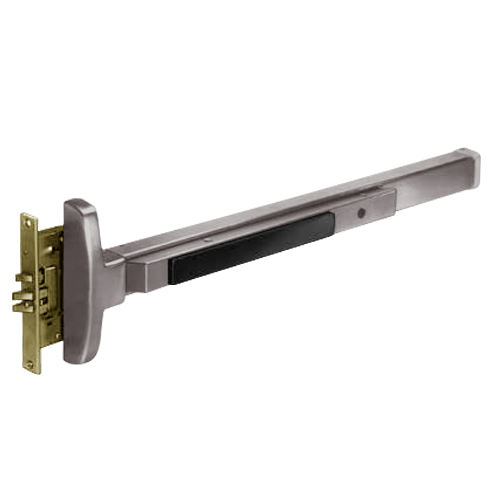
Sargent 80 Series: Narrow-Stile Exit Device for an Aluminum Door
Posted by Kent on 8th Aug 2026
If you already run Sargent hardware in a building and you've got an aluminum door that needs a panic bar, you don't have to jump brands. The Sargent 80 series is Sargent's exit-device line, and the 8300 narrow-stile version is built for exactly the aluminum-stile door that a full-size device won't fit. Same keying family as your Sargent locks, right body for the door. Here's how to spec it.
Narrow stile is the whole point
An aluminum storefront or entrance door has a narrow vertical stile — not much width to mount hardware. A standard-width exit device case hangs off it with nowhere to land. The 8300 narrow-stile device has a slimmer case sized to sit clean on that aluminum stile. If your door is aluminum-and-glass, this is the Sargent to look at, not the wider 8800 rim device meant for hollow-metal and wood. Match the device to the stile width or it won't fit flat, simple as that.
Mortise exit, what it buys you
The 8300 is a mortise-lock exit device: the latching mechanism seats into a mortise pocket in the door edge, same principle as a mortise lockset. On a narrow aluminum door that gets steady traffic, the mortise latch is a tougher, better-seated latch than a surface rim device gives you. More parts, more prep, but a cleaner and stronger install on the right door. For a door that gets used all day, the mortise version holds up.
EO or keyed entry, and the hand
The 8310E in this listing is exit-only: push to get out, nothing on the outside. Right for a back or emergency exit. If people need to key in from outside, you order the device with the outside trim and cylinder up front, not as an afterthought. And these are handed, LHR is left-hand reverse, the common storefront configuration. Stand outside, note the hinge side and which way it swings, and give us the hand. Wrong hand on an exit device means the latch and the push mechanism face the wrong way and the door won't work.
Fire label check and finish
Same rule as any exit device: if the door carries a fire label, you need the fire-rated version, and a fire-rated device can't be dogged open. Check the frame first. Finish-wise, 32D satin stainless matches most aluminum storefronts and is the workhorse; bronze and brass options exist if the building's hardware runs darker. Match the frame and the other doors.
Common questions
Why the 8300 and not the 8800 Sargent device?
The 8300 is narrow-stile, sized for an aluminum door's slim stile. The 8800 is a wider rim device for hollow-metal and wood. Aluminum-and-glass door: 8300.
Can it use my existing Sargent keys?
Yes, order it for your Sargent core type and it keys into your existing system. That's the main reason to stay with Sargent on a Sargent building.
Is it handed?
Yes. Give us the door's hand (LHR is common on storefronts). Wrong hand and the device faces backward.
Do I need the fire-rated version?
Only if the door has a fire label. Fire-rated exit devices can't be dogged open and must latch every time. Check the frame for a label first.
Lock Depot stocks the Sargent 80 series narrow-stile exit device in EO and keyed trim, handed, keyed to your Sargent system. Start at the Sargent hub, or if you're speccing Sargent mortise locks on the same building, read Which Sargent 8200 Mortise Lock for a School Corridor. Or call 877-365-5625 with the door's hand, fire label or not, and your Sargent core type, and we'll spec the device.