
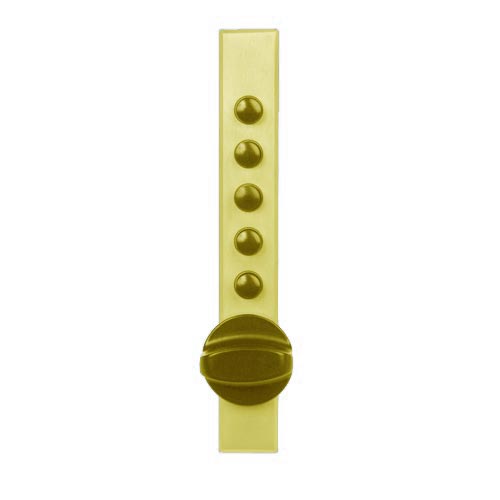
Simplex 9661 vs 9671: Matching a Cabinet Lock to Your Door Gauge
Posted by Kent on 2nd Oct 2026
The lock is right; the door thickness is what gets missed
A mechanical pushbutton lock on an electrical cabinet or a utility enclosure sounds like a five-minute order: pick a Simplex cabinet lock, install it, done. What actually stops the job cold is a deadbolt that won't fully throw into the strike, because the lock was built for a different sheet-metal thickness than the door it landed on. Simplex sells two versions of the same 9600-series cabinet lock for exactly this reason, and the part number is the whole spec.
Two locks, one difference: door gauge
The Simplex 9661C10 is built for 14 to 20 gauge sheet metal doors, the range most electrical enclosures, telecom cabinets, and light equipment doors fall into. The 9671C10 is built for 1/8" sheet metal, a heavier gauge you'll find on industrial enclosures, some outdoor equipment cabinets, and anything spec'd for a harder environment. Everything else about the two locks matches: same 9600 Series mechanical pushbutton mechanism, same standard deadbolt function, same Bright Brass finish as stocked here. Order by the number that matches your door, not by whichever one shows up first in a search.
Why gauge matters on a deadbolt
A cabinet deadbolt throws a fixed distance into a strike mounted on the frame. Order the wrong gauge lock for the door and one of two things happens: the bolt doesn't reach far enough into the strike on a door thicker than the lock expects, so it looks locked but backs out under a shove, or the lock's body sits proud of a thinner door than it was built for and never seats flush. Neither failure shows up on the bench. Both show up in the field, usually after someone's already blamed the lock.
How to check before you order
Sheet metal gauge runs backward from what most people expect: a higher gauge number is thinner metal, not thicker. 14 gauge is roughly 0.075", 20 gauge is roughly 0.036", and 1/8" is 0.125", noticeably heavier than either. A caliper on the door edge settles it in ten seconds. If the cabinet came with manufacturer specs, the gauge is usually printed right on the cut sheet or the enclosure's data plate; check there first before pulling out a caliper.
Don't guess from the cabinet's overall size. A tall server rack enclosure and a small telecom pedestal can use the same gauge steel, and a cabinet that looks heavy-duty from the outside sometimes has a surprisingly thin door because the strength is built into the frame, not the panel. The door is the only piece that matters for this decision; measure it directly rather than sizing up the whole enclosure by eye.
Why mechanical, not electronic, on this kind of door
An electronic keypad or a smart lock is a fine choice on a door someone walks past daily and a technician can service on a normal schedule. A lot of the doors these cabinet locks end up on are not that door. A telecom pedestal at the edge of a parking lot, a utility meter cabinet behind a building, an equipment enclosure at a remote site: these get visited rarely, sit outside in weather, and are exactly where a dead battery turns into an emergency service call instead of a five-minute fix. Both the 9661C10 and 9671C10 skip that failure mode entirely. There's no battery to die at 2am and no wiring run to fail after a decade outdoors, which is a real part of why Simplex mechanical locks show up as often on remote infrastructure as they do inside a building.
What both locks share
Both use vandal-resistant solid metal pushbuttons rated for indoor or outdoor mounting, and both set and change their combination at the keypad itself, without pulling the lock off the door. Neither needs a code sheet mailed to a facilities office or a technician dispatched to reprogram a controller; whoever manages the site changes the code on site, in minutes. Both ship as a 1-year warranty item with the template and mounting hardware included in the box, so it's a standard install, not a custom fabrication job.
This is the same mechanical-pushbutton family covered in our guide to the Simplex door-hardware pushbutton locks, scaled down for an enclosure instead of a room. The core logic doesn't change: a fixed set of buttons, a mechanical code, no power anywhere in the loop. What changes on the cabinet version is the problem it solves. A door lock is sized to a backset and a door thickness range measured in inches. A cabinet lock is sized to sheet-metal gauge measured in fractions of an inch, and getting that one number wrong is the entire difference between a lock that throws correctly and one that doesn't.
Only Bright Brass (US3/605) is stocked on this pair right now. If a job spec calls for a different finish, call us before ordering and we'll confirm what's available.
Common questions
How do I know if my cabinet door is 14-20 gauge or 1/8"?
Measure the door edge with a caliper: 14 gauge runs about 0.075" thick, 20 gauge about 0.036", and 1/8" measures 0.125", clearly heavier than either. If the enclosure has a manufacturer data plate or cut sheet, the gauge is usually printed there.
What happens if I order the wrong gauge lock for my door?
The deadbolt either won't reach far enough into the strike on a thicker door, so it looks locked but isn't secure, or the lock body won't sit flush on a thinner door than it expects. Neither failure is obvious until someone tests the door under real pressure.
Do these cabinet locks need batteries or wiring?
No. Both the 9661C10 and 9671C10 are all-mechanical pushbutton locks. The combination sets and resets at the keypad, with no power source anywhere in the mechanism.
Can I change the combination after it's installed?
Yes, at the keypad, without removing the lock from the door. That's true on both gauge versions.
Are these rated for outdoor cabinets?
Both are built weather-resistant for indoor or outdoor installation, which is why they show up on outdoor telecom and utility enclosures as often as indoor equipment rooms.