
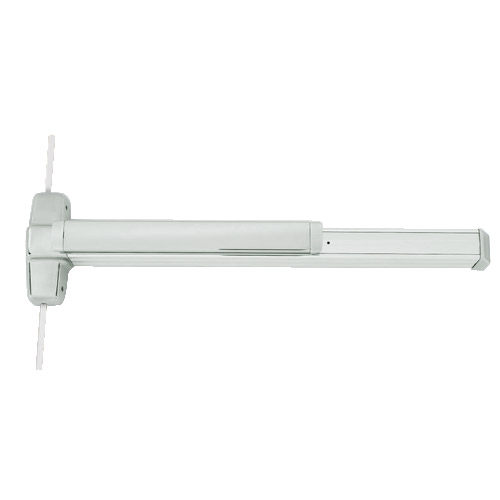
Von Duprin 9927: Surface Vertical Rod for a Pair of Doors
Posted by Kent on 10th Aug 2026
You have a pair of doors and no center post. Two leaves meet in the middle, people walk through both, and there is nothing down the center to latch a rim device into. A rim exit device like the 99 needs something to catch, so on an open pair it needs a removable mullion, and a mullion is one more thing to pull out every time a wide load comes through. The other answer, the one that latches each leaf top and bottom on its own, is a surface vertical rod device. The Von Duprin 9927 is that device. Let's spec it right.
What "surface vertical rod" actually means
Inside the number, the 27 is the tell. Von Duprin uses 98 and 99 for rim devices, 9827 and 9927 for surface vertical rod, and 9847 and 9947 for concealed vertical rod. Vertical rod means the device drives two rods, one up to a strike in the frame head and one down to a strike at the floor. Push the bar, both latches pull at once, the door swings. Let go and both re-latch. On a pair, each leaf carries its own device and latches to the frame and floor independently, so you get two working doors and no post in the middle.
Surface means the rods run on the face of the door in a guarded channel, bolted on. Concealed means they run hidden inside the door and the door has to be factory-prepped for them. My opinion after years of service calls: on a retrofit or any door you might have to service in the field, buy surface rod. When a concealed rod binds or a bottom latch gums up, you are into the door to fix it. A surface rod, you can see it, adjust it, and swap a strike without pulling the leaf. The concealed version looks cleaner, and on a showcase lobby that matters, but you pay for it in service time.
Pick the outside trim by how the door gets used
The letters after 9927 set what happens on the outside face:
- EO, exit only. No outside trim at all. Blank outside, push to get out. The 9927EO is the right call on a rear egress pair nobody needs to key back into, a stair discharge, a warehouse man-door pair.
- NL, night latch. A key cylinder outside retracts the latch so an authorized person can pull the door open. This is your choice when staff come in the back with a key.
- L or other lever trim. A keyed lever outside for regular entry, locked or unlocked by function.
- DT, dummy trim. A pull with no working latch retraction, for the inactive leaf or a pull-only face. The 9927DT pairs with an EO or keyed active leaf.
Fire-rated changes the rod setup
The plain 9927 is a non-fire-rated panic device. If your opening is a fire door, you need the fire-rated version, and on a fire pair the bottom rod usually changes. Von Duprin builds fire SVR devices as less-bottom-rod with an auxiliary fire latch in many pairs, because a bottom rod and floor strike that collects grit is the first thing to stop latching, and a fire door that will not latch fails its whole job. Do not convert a standard 9927 into a fire device in the field. Tell us the door is fire-rated and its label hourly rating up front, and we send the right fire device and the correct strikes for it.
Size and finish
The last number is the height range. A 3 covers a door up to about 3 feet wide and the standard 7-foot leaf; a 4 covers the wider leaf. Measure the leaf width and the door height before ordering, because a rod that is short cannot reach the top strike. Finish rides on the end: US26D satin chrome is the standard commercial pick, and US28 clear anodized aluminum matches an aluminum storefront pair. Match it to the door and any pulls already on the opening.
Common questions
Why a vertical rod device instead of a rim device with a mullion?
A rim device needs a mullion to latch into on an open pair, and the mullion has to come out for wide loads. A surface vertical rod device latches each leaf top and bottom on its own, so you get the full clear opening with no post to remove.
Surface rod or concealed rod?
Surface rod runs on the door face and is far easier to adjust and service. Concealed rod hides inside the door and looks cleaner but needs a prepped door and puts you into the leaf to service. For retrofits and anything you will maintain in the field, buy surface.
Which trim do I order for a pair?
Decide the active leaf first. The everyday leaf takes keyed or lever trim (or EO for egress only); the inactive leaf takes EO or dummy trim. Two identical devices without an active/inactive plan is the common ordering error.
Is a standard 9927 okay on a fire door?
No. A fire door needs the fire-rated device, and the bottom rod arrangement usually changes on a fire pair. Give us the fire label and rating and we send the correct fire version and strikes.
Lock Depot stocks the Von Duprin 9927 surface vertical rod device in EO, night latch, lever, and dummy trims, with the strikes and rods to match. Start at the Von Duprin hub, or if your opening is a single hollow-metal fire door, read Von Duprin 98/99: Exit Device for a Hollow-Metal Fire Door. Or call 877-365-5625, tell us single or pair, which leaf is active, and whether it is fire-rated, and we build the opening so both leaves latch on the first try.