
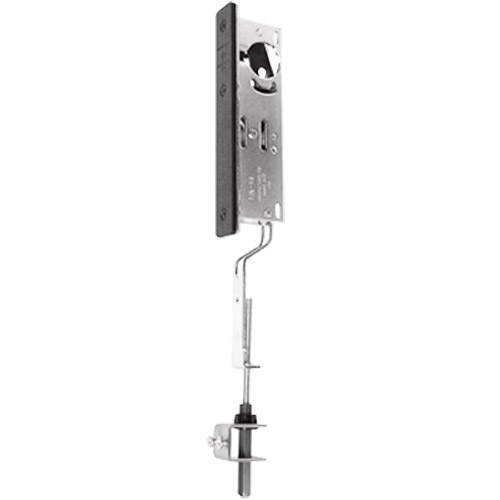
Adams Rite 1870 Flushbolt: Aluminum, Hollow Metal, or Wood
Posted by Kent on 19th Sep 2026
Pairs of doors have an inactive leaf, and the inactive leaf needs a top-and-bottom bolt that holds it dead still so the active leaf's lock actually has something to close against. Get the wrong flushbolt for the door material and it either won't mortise in cleanly or it works loose inside a year. The fix isn't complicated. It just requires knowing which door you're actually working on before you order.
One job, three door materials
The Adams Rite 1870 series secures the inactive leaf of a double-door pair, cylinder-operated so key control stays on one side. The core function is identical across the line: flush-mount design, clean look, no visible bolt sticking off the door face. Where the series splits is the door it's built to sit in.
1870, standard configuration: aluminum storefront doors
Spec the base 1870-20 configuration for a standard aluminum storefront door pair. It mounts mortise-style with a flat faceplate and comes in a run of anodized finishes, including clear anodized aluminum and dark bronze anodized, so it matches the stile finish without a special order. This is the part most jobs need, since aluminum storefront is the most common pair-of-doors configuration a commercial locksmith runs into.
1870HM: hollow metal doors
The 1870HM is the same cylinder-operated mechanism built for a hollow metal door instead of an aluminum stile. Same mortise, flush mount, same finish options. If the inactive leaf is a hollow metal slab rather than storefront aluminum, this is the correct part number, not the base 1870. Ordering the wrong one for the door material is the single most common flushbolt mistake I see on a punch list; the bolt looks right in the box and doesn't seat correctly once it's in the door.
1877: wood doors, armored faceplate
Step up to the 1877 when the inactive leaf is a wood door. It carries an armored faceplate instead of the standard flat one. Wood moves more than metal or aluminum over a season, and that armored plate holds its shape and mortise pocket better against seasonal swelling and shrinking than a thinner flat plate would on a door that's constantly expanding and contracting with humidity. I've pulled 1870-series bolts out of wood doors that were never upgraded to the armored plate and watched the mortise pocket work loose exactly the way you'd expect.
Why cylinder-operated matters here
Every configuration in the series is cylinder-operated, meaning key control for the inactive leaf's bolt stays with whoever has the key, not with anyone who happens to be on the inside. On a storefront or office suite where the inactive leaf gets opened occasionally, for moving furniture through, for a delivery, for seasonal access, that's the right call. Nobody accidentally leaves the inactive leaf unbolted because a flat thumbturn was easy to bump. It takes a key, on purpose, every time.
Made in the USA, same-day stock
All three configurations are manufactured in the USA and Buy American Act compliant, which matters on federal and many state and municipal jobs where BAA sourcing is a spec requirement, not a preference. Lock Depot carries them in stock, shipping same day on orders placed before 3 PM EST, with the full Adams Rite manufacturer warranty behind every unit.
One thing worth flagging before you order: the product photos are representative of the series and may not show the exact finish, handing, or configuration of the specific part number you're buying. Confirm the SKU against the door material and finish before it ships, not after it arrives.
Configuration numbers on Adams Rite flushbolts (the digits after the series number, before the finish code) track the mechanical variant within that series, not the finish or door material. Two SKUs in the same series can carry different configuration digits for reasons like bolt projection or top-versus-bottom mounting hardware included. I won't decode a specific configuration digit here without the manufacturer's own breakdown in hand for that exact part number; if the job has a specific configuration requirement, confirm it against the cut sheet or call it in rather than assume the digit means the same thing across every series.
Pairing it with the rest of the opening
A flushbolt only does its job if the active leaf's hardware is sized correctly too. If the pair is an aluminum storefront with a paddle-operated exit, our Adams Rite 4591 paddle piece covers getting the handing right on the active leaf so the two halves of the opening actually work together.
Lock Depot stocks the 1870-20 for aluminum doors, the 1870HM for hollow metal, and the 1877 for wood doors, all ready to ship. Full lineup on the Adams Rite hub.
Common questions
How do I know which 1870 variant matches my door?
Match it to the inactive leaf's material: base 1870 for aluminum storefront, 1870HM for hollow metal, 1877 for wood. The mechanism is the same across all three; the body and mortise are built for the specific door material.
Does the flushbolt lock go on the active or inactive leaf?
The inactive leaf, the one that normally stays closed and isn't opened for daily traffic. It holds that leaf fixed so the active leaf's lockset has a solid strike to close against.
Why cylinder-operated instead of a simple thumb-lever bolt?
Key control. A cylinder-operated flushbolt only releases with a key, so the inactive leaf doesn't get bumped open accidentally from the inside, and access to it stays deliberate rather than incidental.
Can I get a finish that matches my storefront hardware?
Yes. The 1870 series ships in multiple anodized finishes, including clear anodized aluminum and dark bronze anodized, to match common storefront and hollow metal finish standards.
Is the 1877 stronger than the base 1870?
It's built differently, not simply stronger. The 1877's armored faceplate is designed for wood doors that move seasonally, where a standard flat plate would be more likely to work loose over time.