
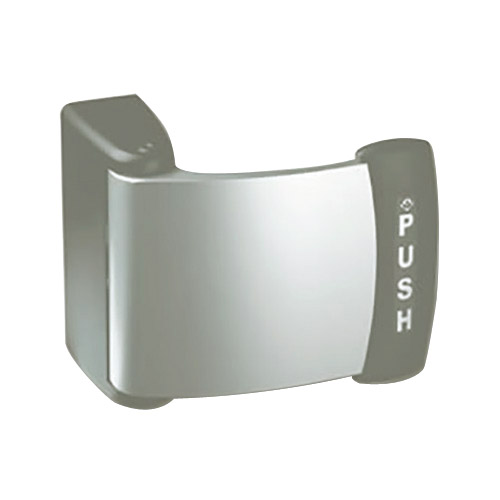
Adams Rite 4591 Paddle: Handing a Storefront Exit Correctly
Posted by Kent on 9th Sep 2026
The paddle is trim, and trim does nothing on its own
A storefront exit paddle bolts to the face of an aluminum door and pushes a tailpiece. That is all it does. It has no latch, no lock, no bolt of any kind. The part doing the actual work sits inside the stile, and the paddle is just a lever that talks to it.
This trips people up constantly. A shop orders a 4591-01-00-US26D paddle because the old one snapped, bolts it on, and nothing latches. The paddle was never the problem. The deadlatch behind it had a chewed up latch bolt and a spring that gave up two winters ago, and now there is a technician standing at a jewelry store at 4:45 on a Friday with a shiny new paddle and a door that still will not secure.
Match the paddle to the deadlatch behind it. The 4510 is standard duty and covers most retail entrances with moderate traffic. The 4900 is heavy duty, thicker latch bolt, built for a door that gets slammed six hundred times a day. The 4300 is the electrified Steel Hawk, and that one brings its own headaches around power transfer and fail mode. If you are not sure which is in the door, pull the lock stile faceplate and read it before you order anything.
Adams Rite paddle handing is where the job goes sideways
Here is the one that costs money. Handing.
Stand outside the door. Outside, on the sidewalk, facing the door the way a customer walks up to it. Now look at where the hinges or pivots are. Hinges on your right and the door pulls toward you is a right hand. Hinges on your right and the door pushes away from you is a right hand reverse. Storefront exit doors almost always swing out toward the sidewalk, so nearly everything you are handing on a commercial aluminum entrance is a reverse hand. Left hand reverse or right hand reverse.
That word reverse is the whole game. I have watched experienced guys call a hand from inside the store, because that is where they happened to be standing when they took the measurement, and they get the exact opposite of what they need. The paddle arrives, the pivot is on the wrong end, the push direction is backwards, and now it is a return, a restock, and a second trip. Two days minimum. On a storefront that has been propped open with a wooden wedge the whole time.
Write the hand on the work order. Say it out loud to whoever is ordering. And if there is any doubt at all, take a photo from the sidewalk with the hinges visible and send it in. A photo settles a handing argument in about four seconds.
4590, 4591, 4591M, 4591MA
Four part numbers in the same family, and the counter rarely explains the difference.
The 4590-01-00-313 is the flatter, lower profile paddle. Older look. It sits closer to the door face and suits narrow stile doors where you do not have room for something that projects.
Step up to the 4591 and you get the fuller paddle, the one most people picture, with more surface to hit with a shoulder or an elbow when your hands are full of coffee and a laptop bag.
Then there are the M bodies. The 4591M-02-00-US26D and the 4591MA-02-00-US26D are separate body variants with their own mounting footprints. They are not blind swaps for a plain 4591 and they are not blind swaps for each other. Here is the only rule you need at the counter: if the door already wears an M or an MA, order that same suffix back. If you are starting fresh, confirm the suffix against the deadlatch series and the stile you measured, because the mounting hole pattern is what decides whether the paddle lands on solid metal or hangs over the glass stop.
Do not guess between them on a permitted job. Pull the hardware schedule, or pull the old paddle and read the stamp on the back of it. I have seen a restaurant chain eat a full reorder on a twelve door package because somebody assumed the suffixes were cosmetic and ordered whichever one was in stock.
Finish codes and matching the rest of the door line
313 is dark bronze anodized. This is the most common storefront color in strip malls built from about 1985 forward, and it is the one people call brown. 628 is clear anodized aluminum, the plain silver look. 335 is black anodized. And US26D is satin chrome, which is a BHMA number rather than an anodizing number, so it shows up on paddles and cylinders but not usually on the door frame itself.
Here is the part that matters. A 313 dark bronze paddle from a current production run will not always match a 313 dark bronze pull that has been baking in the sun since 1998. Anodizing fades. The new part reads noticeably darker and the customer will absolutely notice, usually about a week after you are paid. Tell them up front. If they want a perfect match, the answer is replacing the paddle and the pull together, not chasing a color code that has already drifted.
Measure the stile before you order
Aluminum entrance doors come in narrow stile, medium stile, and wide stile. Measure the lock stile face from the edge of the door to the edge of the glass. Narrow runs roughly an inch and three quarters up to about two and a quarter. Medium is around three and a half. Wide can be five inches or more.
The deadlatch has to fit inside that stile, and the paddle mounting has to land on solid metal instead of hanging over the glass stop. Most 4591 paddles handle narrow and medium fine. Wide stile sometimes wants different mounting hardware. Measure it, note the backset, and note the existing cutout dimensions while you are standing there with the tape.
Order the paddle and the deadlatch together
Same person. Same day. Same order.
Mismatched trim is the most common storefront reorder we see, and it is almost always because the paddle got ordered Tuesday by whoever was standing at the door, and the deadlatch got ordered Thursday by somebody in the office who did not know the hand. One of them is wrong. Usually the second one.
So when the paddle needs replacing, pull the 4510-15-101-313 or the 4900-25-101-628 at the same time and confirm both against the same photo and the same measurement. It costs nothing extra to have both parts in the van. It costs a great deal to make a second trip.
The rest of the line lives on the Adams Rite hardware page. If the door latches intermittently rather than not at all, that is a different problem and we walked through it in the 4510 will not latch writeup. For electrified openings, start with the Steel Hawk piece instead.
Common questions
Can I use a 4591 paddle without a deadlatch?
No. The paddle has no latching mechanism at all, so it needs a 4300, 4500, or 4900 series deadlatch behind it to do anything. It is a lever with a tailpiece. Bolt it to a bare door and you have a decorative handle.
How do I tell left hand reverse from right hand reverse?
Stand outside the door, on the sidewalk, and look at the hinge side. Hinges on your right with the door swinging away from you is right hand reverse. Hinges on your left with the door swinging away from you is left hand reverse. Never call the hand from inside the building.
Will a 4591 replace a 4590 on the same door?
Sometimes, but check the existing mounting hole pattern and the stile width first. The 4591 has a larger body and projects farther from the door face, so on a very narrow stile with an adjacent pull it can crowd the opening.
What is the difference between a 4591, a 4591M, and a 4591MA?
They are distinct body variants in the same family with their own mounting footprints, so treat them as separate parts rather than interchangeable options. Match whatever suffix is already on the door, or confirm the correct one against your deadlatch series and stile measurement before ordering.
Is 313 the same as US10B?
No. 313 is dark bronze anodized aluminum and US10B is oil rubbed bronze on a brass or bronze base, and they look nothing alike side by side. Storefront aluminum uses 313. Do not cross reference the two.