
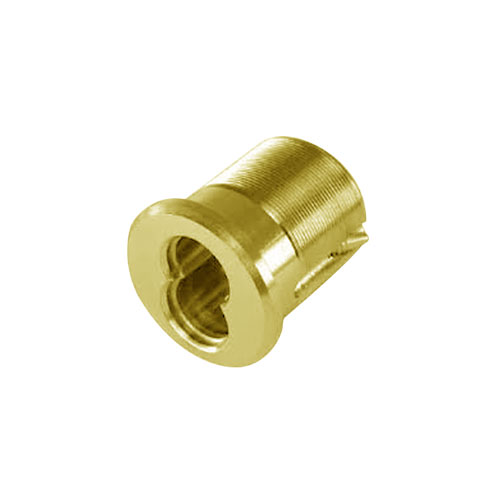
Arrow 16CR vs 16CRT: Standard or Tapered SFIC Housing
Posted by Kent on 27th Sep 2026
The Part That Decides Whether Your Core Even Fits
A locksmith stocking up on interchangeable-core housings before a school district rekey ordered a box of standard mortise housings because that is what the last order sheet said. Half the doors on the job were older Adams Rite deadlocks with a tapered mortise pocket machined into the case, and the standard housing sat proud instead of seating flush. He ended up back at the counter mid-job asking for the tapered version by name, which is the exact moment you do not want to be sorting out a housing mismatch. Two SKUs, same core, same cam, and the wrong one simply will not seat correctly in the lock body it is going into.
Both the Arrow 16CR and 16CRT are mortise cylinder housings built for Arrow's small-format interchangeable core (SFIC) system. Neither ships with a core installed. Both take a 7-pin housing, both are cross-compatible with cores from a wide range of manufacturers (not locked to Arrow-brand cores only), and both come equipped with a cam and cylinder collar, ready to accept whatever core the building's keying system uses. The difference between them is the shape of the housing body, not the core it holds.
16CR: Standard Housing for a Standard Mortise Pocket
The 16CR-27-03 is the standard mortise interchangeable cylinder housing: a 1-5/32" diameter brass body, 1-1/4" length, fitted with an Adams Rite cam and a screw-on cam collar for flexible field service. This is the housing that fits the mortise cylinder pocket on the large majority of mortise lock cases and Adams Rite deadlocks in the field. When a job sheet just says "mortise SFIC housing" with no further note, this is almost always the one being called out.
16CRT: Tapered Housing for a Tapered Pocket
The 16CRT-27AR18-03 is the tapered version of the same housing family, same 1-5/32" diameter, same 1-1/4" length, same Adams Rite cam and 7-pin core capacity, but machined with a tapered profile instead of a straight one. Some mortise lock cases and older deadlock bodies are bored with a tapered cylinder pocket rather than a straight one, and a straight-body housing will not seat flush in a tapered bore no matter how hard it is threaded in. If your existing hardware calls for a tapered cylinder, or the lock body you're working on is one you don't recognize, the 16CRT is the one to check first before assuming standard.
How to Tell Which One You Actually Need
We do not have a universal chart mapping every mortise lock case ever made to straight or tapered, and we are not going to guess at one. The reliable way to check is to pull the housing currently installed (if there is one) and compare its profile, or measure the bore in the lock case directly. If the case is unlabeled and there is no way to confirm from the part in hand, tell us the lock brand and model stamped on the case, or send a photo of the mortise pocket, and we will confirm which housing fits before you order the wrong one and have to send it back mid-job.
What's the Same Either Way
Finish options, cam type, pin count, and core compatibility do not change between 16CR and 16CRT. Both accept the same range of third-party SFIC cores. Both ship less core, so the core itself is a separate line item ordered to match the building's existing keying system. And both use the same screw-on cam design, so a locksmith carrying a mixed stock of straight and tapered housings can swap cams between them in the field without needing a different cam part for each housing shape.
Stocking Both Is Cheaper Than Guessing Wrong
For a locksmith running service calls across a district with mixed-age hardware, carrying both profiles on the truck costs almost nothing next to the labor cost of a second trip. A single wrong housing on a job site means either forcing a fit that will fail an inspection later or driving back to the shop mid-install. Stock both, confirm the bore before install on anything older than the current building standard, and the guess disappears entirely.
Common questions
Does the 16CRT accept the same cores as the 16CR?
Yes. Both are 7-pin housings compatible with the same range of third-party SFIC cores. The housing shape changes; the core interface does not.
Can I tell straight from tapered just by looking at the SKU on the box?
Yes, the model number tells you: 16CR is standard, 16CRT (the added "T") is tapered. What it will not tell you is which one your specific lock case needs. That requires checking the bore or the existing housing.
Does the core come included with either housing?
No. Both the 16CR and 16CRT ship less core. Order the SFIC core that matches your building's keying system as a separate line.
Will a tapered housing work in a straight bore if I force it?
Don't force it. A tapered body in a straight bore, or the reverse, will not seat flush and can bind the cam or leave the cylinder proud of the case, which affects how the lock latches.
What if I don't know whether my lock case is tapered or straight?
Pull the existing housing and check its profile, or send us the lock brand and model stamped on the case. We'll confirm the correct housing before you order rather than have you guess.
Shop the full Arrow Lock hardware line for mortise locks, deadbolts, and SFIC components, or read how the Arrow BM mortise lock handles function selection on an institutional door and how the D61 and E61 deadbolts split by grade on a rental door for more of the Arrow lineup this housing fits into.