
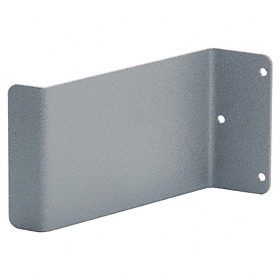
Detex ECL-2100K, ECL-600 and ECL-437K for a Loading Dock Door
Posted by Kent on 19th Nov 2026
The dock door that has to be two things in one day
A receiving door has a hard job. For most of the night it is a locked exit that must scream if somebody walks out with a case of product. At 7 a.m. a driver backs up, and the same door has to stay open for hours with nobody wearing out an alarm. A standard alarmed exit device does the first job and fights you on the second. Staff end up propping the door with a pallet, which is the failure the alarm was bought to stop.
Detex makes a version for exactly this problem, and a surface strike for frames that will not take a standard one. This article covers the three parts that matter on a dock or receiving door, and where the catalog listings leave questions you should ask before you order.
The ECL-2100K: a key turns the alarm off
The Detex ECL-2100K is described as an exit control lock with a key-retractable deadbolt and a built-in alarm. The listing puts the use case in plain words: delivery doors, loading docks and receiving areas that switch between alarmed-secure and open-for-business through the day. An authorized person uses a key at the cylinder to retract the bolt, silence the alarm, and hold the door open while the dock is active.
What else the listing gives:
- Grade 1, listed as ANSI/BHMA A156.3.
- A 100 dB alarm.
- Powered by a 9V battery, which is included.
- UL listed. The listing says UL 305 panic hardware.
- Gray finish.
- In the box: the device, mounting hardware and a template, the battery, a warning sign and instructions.
The cylinder is not in the box. The listing says a mortise cylinder is sold separately for key-override models, and a standard 1-1/8 inch mortise cylinder is required. Order the cylinder with the device and decide the keying before the door is installed. A dock key should be on the same keying system as the building, and on the key control list.
A caution: the listing title in the catalog reads "Bar Guard Kit" while the description is for the key-retractable exit device. I am treating the description and the technical specifications as correct. If you want the part for something else, a bar guard accessory for example, call us before you order.
The ECL-600: when the door cannot take a deadbolt
The Detex ECL-600 solves a different problem. The listing describes an alarmed rim panic device, battery powered with a 100 dB alarm, for hollow metal, aluminum and narrow stile doors where a deadbolt configuration is not ideal. It is Grade 1, UL listed, gray, with a 9V battery included, and the same contents list as the 2100K. Like the other, the key-override models need a separate mortise cylinder.
The catalog name says "Fire Exit Hardware" while the description says alarmed rim panic device. The description and spec list agree with each other, so I use those. The listing does not say whether the ECL-600 is fire rated. It says the ECL series is UL listed panic hardware that can be used on fire-rated openings where panic hardware is required, and to verify with the authority having jurisdiction. Do not assume a rating from the name.
On a dock door we normally pick by the door. If the leaf is a hollow metal door and you want the deadbolt style of the 2100K, use it. If it is an aluminum storefront door or a narrow stile, the rim style of the 600 is the better fit. We compared the other models in the ECL line in our ECL 230X, 230D and 600 guide.
The ECL-437K: a strike for a frame that will not cooperate
The ECL-437K is an adjustable surface-mount strike. The listing says it is for frames that do not allow a standard mortise strike: hollow metal that has been modified, aluminum storefront frames, or any frame where you do not want to cut a new strike pocket. It mounts on the face of the frame and the throw adjusts to suit the door gap.
Here the listing gives two answers. The description says it is designed for the ECL-230D. The FAQ says ECL parts are designed for specific models and tells you to check your installed model: 230D, 230X, 600 or 2100K. I would not read that as approval for every model. If you are mating a 437K to a 2100K or a 600, tell us the model and we will confirm before you order. A strike that does not catch the bolt is an open exit that looks locked.
The battery and the alarm
All of these run on a 9V battery. The listing FAQ says that under normal use, one or two alarm activations a day, you can expect 1 to 3 years of battery life, and it recommends replacing the battery every year as part of your inspection. On a dock door that sees more activations than that, plan on changing it sooner. A dead battery turns an alarmed exit into a plain one, and nobody notices until something walks out.
The alarm is a deterrent, not a lock. If your problem is the door getting propped instead of used, read our guide to stopping a propped back door.
A note on code
The key-retract feature is the part to take to your inspector. A device that lets an authorized person hold a door open is a policy decision as much as a hardware one. The listing says the ECL series is UL listed panic hardware and meets life safety requirements for alarmed exit hardware, and it directs fire-rated openings to the authority having jurisdiction. I follow that. Ask before you install, not after the walk-through.
How I would order for a dock door
- Hollow metal door, solid frame: ECL-2100K with the mortise cylinder.
- Aluminum or narrow stile door: ECL-600 with the cylinder.
- Frame that cannot take a strike pocket: add the ECL-437K after we confirm it fits your model.
- Spare 9V batteries on the shelf.
Send us the door type, the frame, and whether the opening is fire rated. We will match the parts to the door.