
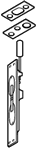
Flush Bolts and a Coordinator for a Pair of Doors
Posted by Kent on 14th Aug 2026
A pair of doors with no mullion has a problem a single door never has: the inactive leaf has nothing to latch into and no closer to tell it to shut first. Leave it unsolved and the inactive leaf rattles, the active leaf will not latch because the other one is standing proud, and on a rated pair you have blown the fire label. The fix is two cheap parts most people forget to order: flush bolts to lock the inactive leaf top and bottom, and a coordinator to make the leaves close in the right order. Don-Jo makes both, and this is what actually goes on the door.
Why the inactive leaf needs flush bolts
On a pair without a mullion, one leaf is the active leaf, the one people use, and the other is the inactive leaf, normally held shut. The active leaf's latch or exit device needs something solid to catch. Flush bolts are what make the inactive leaf that solid something. They mount into the edge of the inactive leaf and throw a bolt up into the frame head and down into the floor or threshold, pinning that leaf in place so the active leaf can latch against it.
"Flush" means the bolt mechanism sits flush in the door edge, out of the way, worked by a small lever. Manual flush bolts are set by hand: you throw them when you want the inactive leaf secured, and retract them when you need to open both leaves to move something wide through the opening.
Metal door or wood door: order the right one
Flush bolts are built for the door material, and they are not interchangeable, so this is the first thing to get right:
- Metal (hollow-metal) doors take a flush bolt sized for the steel-door edge prep, like the Don-Jo 1555 for metal doors.
- Wood doors take a wood-door version with a longer body and a different prep, like the Don-Jo 1640 for wood doors.
Order the one that matches your leaf. A metal-door flush bolt will not seat correctly in a wood door and vice versa. Tell us the door material and we send the correct body.
The dust-proof strike at the floor
The bottom bolt drops into a hole in the floor or threshold. Leave that hole open and it fills with grit, and within a season the bolt will not seat. A dust-proof strike is a spring-loaded floor socket that stays capped until the bolt pushes it down, keeping the hole clean. On any pair where the bottom bolt goes into the floor, order the dust-proof strike with the flush bolts. It is a two-dollar part that decides whether the bottom bolt still works in a year.
Why you also need a coordinator
Flush bolts solve latching. They do not solve closing order, and that is the second half of the problem. On a pair where both leaves have closers, the two leaves race to shut. If the inactive leaf is still open when the active leaf tries to close, the active leaf slams into it and neither latches. If the active leaf closes first, it blocks the inactive leaf from ever seating. The leaves have to close in a set order: inactive first, active second.
A coordinator is the bar that enforces that order. It mounts on the frame soffit above the doors and physically holds the active leaf open a beat until the inactive leaf has closed past it, then releases the active leaf to close and latch into the now-seated inactive leaf. The Don-Jo 2080 gravity coordinator does this job. On any closer-equipped pair without a mullion, the coordinator is not optional, it is the part that makes the pair work.
Rated pairs: read this before you order manual bolts
On a fire-rated pair, the rules tighten. A rated door must self-close and self-latch, so the inactive leaf on many rated pairs cannot use plain manual flush bolts that a person has to remember to throw. It needs automatic flush bolts that self-throw as the door closes, or a listed self-latching arrangement, plus a coordinator so the automatic bolts get the closing order they need to function. If the pair carries a fire label, tell us, and we spec the automatic bolts and the coordinator as a set. Do not put manual bolts on a rated inactive leaf and assume it passes.
Finish
Match the flush bolts and the coordinator to the rest of the door's hardware. 626 satin chrome is the standard commercial finish, with bright brass, oil-rubbed bronze, and prime-coat available. The flush bolt faces show on the door edge and the coordinator hides up on the soffit, so the flush bolt finish is the one that has to match the exit device and hinges.
Common questions
What holds the inactive leaf of a double door shut?
Flush bolts. They mount in the edge of the inactive leaf and throw a bolt up into the frame and down into the floor, pinning that leaf so the active leaf can latch against it. Order the metal-door or wood-door version to match your leaf.
Do I need a coordinator with flush bolts?
If both leaves have closers, yes. Flush bolts hold the inactive leaf; the coordinator makes the leaves close in the right order, inactive first, so the active leaf can latch. Without it the leaves race and neither latches.
Are manual flush bolts allowed on a fire-rated pair?
Usually not. A rated door must self-latch, so a rated inactive leaf typically needs automatic (self-throwing) flush bolts plus a coordinator, not manual bolts a person has to remember to set. Tell us if the pair is rated and we spec the automatic set.
Why does my bottom flush bolt stop working?
The floor hole fills with dirt and the bolt cannot seat. Use a dust-proof strike, a spring-loaded floor socket that stays capped until the bolt pushes it open, and the bottom bolt keeps working.
Lock Depot stocks Don-Jo flush bolts for metal and wood doors, dust-proof strikes, and gravity coordinators to build out a pair of doors correctly. Start at the Don-Jo hardware hub, or if your pair has no mullion and you are latching it with an exit device instead, read Von Duprin 9927: Surface Vertical Rod for a Pair of Doors. Or call 877-365-5625 with the door material, whether both leaves have closers, and the fire rating, and we will build the pair's hardware as a set.