
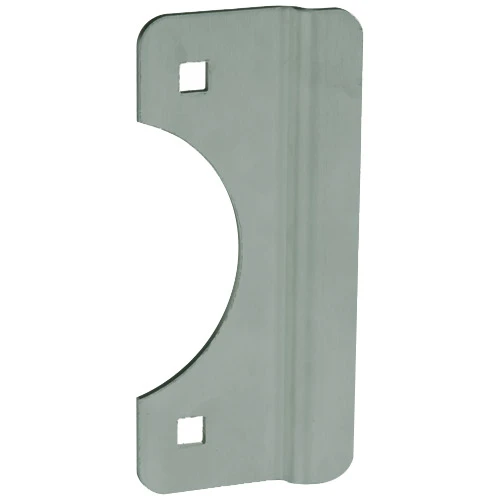
Don-Jo Latch Protector: Stop a Pry Attack on an Outswing Door
Posted by Kent on 13th Aug 2026
Look at the strike side of a commercial outswing door and you will usually find a gap. The door swings out toward you, so the latch and the space between door and frame face the outside, where anyone standing at the door can see them. That gap is where a break-in starts. A thin pry bar, a screwdriver, even a stiff piece of plastic worked into the gap can push the latch back or spread the door off the strike, and you are in without a broken lock or a mark on the glass. The fix is cheap and it is old-school locksmith work: cover the gap with a Don-Jo latch protector.
Why outswing doors are the exposed ones
An inswing door hides its latch from the outside, the door pulls in and away, and the frame stop shields the gap. An outswing door is the opposite. It pushes out, so the latch, the bolt, and the gap between door and frame all sit on the attack side. That is why exterior commercial doors, which are almost always outswing for egress, are the ones that get loided and pried at the latch. A latch protector is a steel plate that mounts over that area and closes the gap so a tool cannot reach the latch or get a bite on the door edge. It is not glamorous hardware. It is one of the highest-value dollars you can spend on a back door.
Which style: surface or pin-mounted
Don-Jo makes the latch protector in a few families, and the one that matters most on an outswing door is whether it is pinned:
- Surface latch protector (SLP/LP). A steel plate that bolts over the latch area and covers the gap. The SLP-106 is the straightforward version for a standard latch. This stops a shim or bar from reaching the latch on most doors.
- Pin-mounted latch protector (PMLP). The PMLP-111 adds pins on the back edge that seat into holes drilled in the door. Here is why that matters on an outswing door: because the door swings out, the hinges are also on the outside, and a plain plate could in theory be pried at its own edge. The pins lock the protector to the door so it cannot be peeled or pried off from the outside. On an exterior outswing door, spec the pin-mounted version. That is my default recommendation for any real security door.
What it does not fix
Be honest about the scope. A latch protector stops a latch attack at the gap. It does not upgrade a weak lock, and it does not stop someone kicking a door that has a short throw or a beat-up frame. If the door only has a spring latch and no deadbolt, the protector helps but the real fix is adding a Grade 1 deadbolt with a full one-inch throw. Think of the latch protector as one layer: it closes the easy, silent, no-damage way in. Pair it with a good deadbolt and a solid strike and you have a back door that is actually hard to beat, not just one that looks locked.
Finish and gauge
Don-Jo protectors come in heavy steel with a range of finishes. 630 satin stainless is the pick for an exterior door because it shrugs off weather and looks right on commercial steel. Silver-coated aluminum matches an aluminum storefront, and duranodic and brass-plated finishes cover darker or brass openings. On an exterior back door, stainless is worth the small upcharge.
Common questions
Why does an outswing door need a latch protector more than an inswing door?
An outswing door exposes its latch and the door-to-frame gap to the outside, so a tool can reach the latch directly. An inswing door hides the latch behind the stop. Outswing exterior doors are the ones that get pried and loided.
Surface or pin-mounted?
Pin-mounted (PMLP) on any exterior outswing security door, because the pins lock the plate to the door so it cannot be pried off. Surface (SLP/LP) is fine on lower-risk interior doors.
Does a latch protector replace a deadbolt?
No. It closes the latch gap. It does not add throw or strength to the lock itself. On a real security door, pair it with a Grade 1 deadbolt and a good strike.
How do I order the right one?
Tell us the lock type on the door (lever, mortise, or exit device), the handing, and the door material. Those set the protector size and cutout.
Lock Depot stocks Don-Jo latch protectors in surface and pin-mounted styles and the full finish range. Start at the Don-Jo hub, or if the door's lock itself needs upgrading, read Schlage B660: Which Grade 1 Deadbolt for a Commercial Door. Or call 877-365-5625 with the lock type, hand, and door material, and we will match the protector to your latch.