
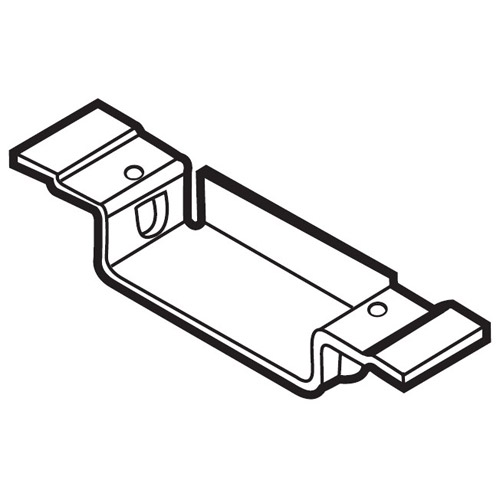
Don-Jo DCB-340 vs DCB-350: Sizing a Strike Reinforcement Plate
Posted by Kent on 16th Sep 2026
The frame problem nobody notices until the strike is loose
Swap a lockset and the door side gets all the attention. The frame side, where the latch or bolt actually lands, gets ignored until the strike plate itself starts to rattle in an oversized cutout. That happens more often than it should: an old mortise lock's strike box is bigger than the new cylindrical lock's ASA strike, or a heavier commercial strike gets replaced with a lighter residential one, and now there is a gap around the new strike plate that no amount of tightening the mounting screws will close.
A strike reinforcement plate, sometimes called a filler plate, closes that gap and gives the strike a solid, correctly sized opening to sit in. Don-Jo builds this as the DCB-340 and DCB-350, and the two parts differ by exactly one dimension: the strike opening they are cut for.
Two sizes, one job
Both parts are 16-gauge steel in a raw steel finish meant to sit behind a strike plate, not to be seen once the install is done, and both include a dust cover over the strike opening. The dust cover matters more than it sounds: an open strike box behind a plate is a pocket that collects drywall dust, paint overspray, and grit from the jamb, and that debris eventually interferes with the latch or bolt seating fully. The cover keeps the pocket clean.
The two SKUs are sized for different strike openings:
- DCB-340: 4-7/8" strike opening, sized for a full-size ANSI strike, the size you will run into replacing most commercial mortise lock strikes
- DCB-350: 2-3/4" strike opening, sized for a standard residential or light-commercial cylindrical lock strike
Measure the existing cutout in the frame before ordering. If the old strike box is the bigger 4-7/8" opening and the new lock's strike is the smaller 2-3/4" style, the DCB-350 gives the new strike a clean, correctly sized home inside that larger prep instead of leaving a visible gap around the edges. If you are going the other direction, into a frame that was never cut for a full ANSI strike, the DCB-340 gives the bigger strike the backing it needs.
Why the frame side gets skipped on a lock swap
Most lock-swap jobs get scoped from the door side: which lever, which function, which finish. The strike almost never gets its own line item, because most jobs use whatever strike ships in the box with the new lockset. That works fine when the new strike's footprint matches the old cutout. It does not work when the two lock generations used different strike box standards, which happens constantly on older commercial buildings that have been through two or three lock changes over the decades. A reinforcement plate is the five-dollar part that keeps that mismatch from becoming a callback.
It is also cheap insurance against a frame that has already been drilled and re-drilled. Repeated strike swaps loosen the wood or thin the sheet metal around the opening. A 16-gauge steel plate gives the new strike's mounting screws real material to bite into instead of a jamb that has been perforated one too many times.
A real job this comes up on
A common one: an office suite built out in the 1980s with mortise locks throughout, re-keyed and re-hardwared twice since, ends up on a locksmith's bench because the current cylindrical locks are being replaced with an interconnected or SFIC lock line for a keying-program upgrade. The mortise-era strike boxes are still in most of the frames, at the bigger 4-7/8" opening, but nobody re-cut the jambs when the building switched to cylindrical locks the first time around. The new lock's strike is the smaller 2-3/4" style. Instead of filling and re-drilling every jamb by hand, the DCB-350 gives each opening a factory-cut insert sized exactly to the new strike, and the job goes from a jamb-by-jamb carpentry problem to a part number.
The reverse job happens too, usually on a security upgrade: a building moves from light-duty cylindrical locks to full mortise hardware or a heavier exit device strike, and the existing 2-3/4" cutouts are too small for the new hardware's footprint. The DCB-340 fills that gap in the other direction, giving the bigger strike a properly sized opening instead of an oversized hand-cut hole.
What a reinforcement plate does not fix
This part covers a mismatched or worn strike opening. It does not add impact resistance against a door being kicked, and it is not a substitute for a heavy-duty or security strike box on a door that actually needs one. If the complaint is a frame that has been forced or spread, the fix is a security strike rated for that load, not a filler plate sized for cosmetic cleanup.
Common questions
How do I know whether I need the DCB-340 or the DCB-350?
Measure the existing strike opening in the frame. The DCB-340 fits a 4-7/8" opening and the DCB-350 fits a 2-3/4" opening. Order for the cutout that is already there, then fit the new strike inside whichever plate matches it.
What does the dust cover on these plates actually do?
It closes off the strike cavity behind the plate so drywall dust, paint, and jamb debris cannot collect inside it. A dirty strike pocket can keep a latch or bolt from seating fully over time, so the cover is a real functional feature, not decoration.
Can I paint over the raw steel finish?
Yes. These plates sit behind the visible strike plate, and raw steel is the standard finish for a part that is not meant to be seen, so painting or leaving it bare both work fine.
Does a strike reinforcement plate make a door more resistant to forced entry?
Not meaningfully. It fills and reinforces a mismatched strike cutout so the new strike sits solid; it is not rated as a security or forced-entry product. For that, look at a heavy-duty security strike box built for the load.
Do these plates work with any lock brand's strike?
Yes, since the plate is sized to the strike opening, not to a specific manufacturer. Match the DCB-340 or DCB-350 to the opening size you are installing into and any brand's strike that fits that opening will sit correctly.
Lock Depot stocks both DCB-340 and DCB-350 for frame-side lock swaps. See the full line on the Don-Jo hardware hub, or call 877-365-5625 with your strike opening measurement if you are not sure which size fits.
Related reading: Don-Jo Latch Protector: Stop a Pry Attack on an Outswing Door, the door-side companion to this frame-side fix.