
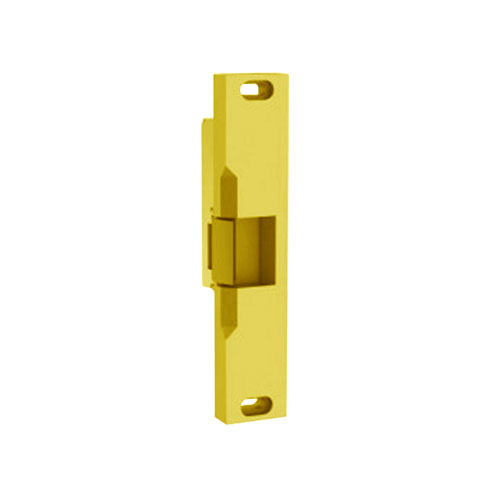
Folger Adam 310-2, 310-3, 310-4 and 310-6 Strikes
Posted by Kent on 15th Oct 2026
One 310 series, four different jobs
The Folger Adam 310 line is the heavy electric strike most people think of for detention and high abuse doors. It is all stainless steel, certified to ANSI/BHMA A156.31, Grade 1, with a 1,500 lb static strength, a 70 ft-lb dynamic strength and a 500,000 cycle endurance rating. Every part in it is non-handed, fail secure as standard, and plug-in.
The dash numbers after 310 are where people get lost. 310-2, 310-3, 310-4 and 310-6 are four different strikes built around four different locks. The number tells you what is on the door.
310-2: a latchbolt, no deadbolt
The 310-2 family is for a lock with a latchbolt and no deadbolt, on single doors and pairs. The 310-2-3/4-12D-605 is the 3/4" throw version, with a 3/4" keeper depth. The catalog lists a second variant for a 1/2" or 5/8" throw latchbolt with a 1/2" keeper depth. It is used with cylindrical locks, mortise locks and mortise exit devices. This is the default strike when the lock is a standard function and nobody put a deadbolt on it.
310-3: latchbolt plus a 1" deadbolt
The 310-3-1-12D-605 is for a lockset with both a 3/4" throw latchbolt and a 1" throw deadbolt. The keeper depth is 1" standard. The block in the cavity can be repositioned for right hand or left hand applications. One line in the listing is easy to miss: the deadbolt must be retracted manually. The strike releases the latchbolt. It does not pull the deadbolt back. If a door is meant to be released from a distance, a lock with a deadbolt will not do it on this strike alone.
310-4: rim exit device
The 310-4-12D-605 is for up to 3/4" pullman style latchbolts on single doors, and the catalog calls out 1/2" or 3/4" fire rated rim exit devices. Two features set it apart. The first is a 3/4" faceplate with an integrated 1/4" base shim, removable in the field to suit a 1/2" or 3/4" throw. The second is a wider 1-3/4" faceplate with set screws for horizontal lockdown.
310-6: concealed vertical rod
The 310-6-8-12D-612 is the listing for concealed vertical rod exit devices. The catalog says it is for the active leaf of a pair, designed for heavy duty applications on single or double doors. It accommodates rim exit devices with a swinging or pullman style latchbolt. As on the 700 series, the listing says the latchbolt must be the pullman or beveled type and the bottom rod must be removed or made inoperative. If a pair of doors has vertical rods top and bottom, read that last line twice before ordering.
Side by side
| Part | Built for | Keeper or depth | Note |
|---|---|---|---|
| 310-2 | Latchbolt, no deadbolt | 1/2" or 3/4" depth by variant | Single doors and pairs |
| 310-3-1 | 3/4" latchbolt and 1" deadbolt | 1" depth | Deadbolt retracted manually |
| 310-4 | Rim exit device, up to 3/4" pullman latchbolt | PK keeper, removable shim | Single doors, 1-3/4" faceplate |
| 310-6 | Concealed vertical rod exit device | PK keeper | Active leaf of a pair |
Fire rating: read the fine print
The 310-2, 310-3 and 310-4 listings say UL 10C 3 hour fire-rated, for fail secure only. A fail safe part in the same family does not carry that rating. The 310-6 listing does not state a fire rating in its text, so do not assume one. If the door is a rated opening, ask us to confirm the rating on the exact part number before it is ordered.
What a mistake looks like
Ordering by the series number alone is the usual error. "310" on the schedule is not enough. A 310-2 on a door whose lock has a 1" deadbolt leaves the deadbolt to be dealt with by hand, which is what the 310-3 listing warns about. A rim device wants the 310-4 and a vertical rod wants the 310-6. Match the strike to the hardware on the door, not to the series on the drawing.
What the 310 listings share
Every listing in this group says the same thing about the build. The strike is constructed entirely of stainless steel for strength and corrosion resistance, and the catalog calls it tamper-resistant, heavy duty construction. It carries a UL 1034 burglary-resistant listing and draws .51 Amps at 12 VDC on the 12D parts. Because the build is common, the difference between parts is never quality. It is fit.
That is why the part number matters more than the brand name. Two strikes with 310 on the box can be wrong for each other's doors.
How to read your door
Look at the lock edge of the door. If you see a latchbolt only, the 310-2 family applies, and you pick the 1/2", 5/8" or 3/4" throw to match. If you see a latchbolt and a separate deadbolt above or below it, you are in 310-3 territory, and you have to decide how the deadbolt will be handled, because the strike will not retract it. If the door carries a surface mounted rim exit device, it is a 310-4. If the door is half of a pair with rods running to the head and floor, it is a 310-6, with the bottom rod dealt with as the listing requires.
When a door has been retrofitted more than once, the hardware on it does not always match the drawing. Go with what is on the door.
Common questions
Does the 310-3 release the deadbolt?
No. The listing states the deadbolt must be retracted manually.
What does the shim on the 310-4 do?
It lets one part serve a 1/2" or 3/4" throw. The 1/4" base shim comes off in the field.
Is the 310-6 for a pair of doors?
It is for the active leaf of a pair, and the listing says it suits single or double doors with concealed vertical rod devices.
Can I monitor the door?
Yes. There are 310 listings with a latchbolt and locking cam monitor. We have a guide on the detention door latch monitor.
All of these are on our Folger Adam hardware page. For monitoring, read the 310 LCBMA latch monitor guide, and for the overall series see the 310 detention door guide. Tell us the lock on the door and we will pick the dash number.