
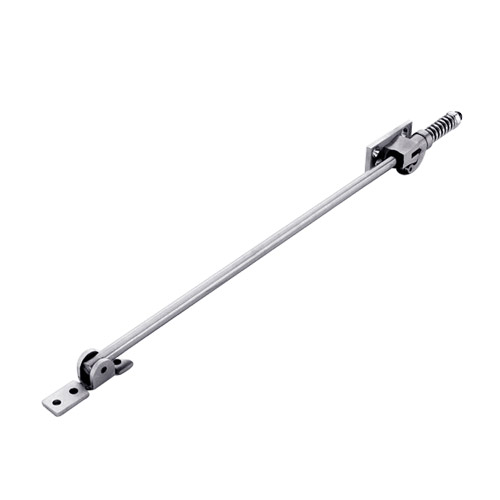
Glynn-Johnson 702H vs 706H: Sizing the 70 Series to Your Door Width
Posted by Kent on 28th Sep 2026
An overhead stop that's sized wrong for the door doesn't fail politely. Order a unit built for a narrow leaf and hang it on a wide door, and the arm runs out of travel before the door reaches its intended hold-open position, so the roller never seats and the stop just bangs metal-on-metal every time someone walks through. Order one built for a wide leaf and put it on a narrow door, and the arm never reaches full extension, so the hold-open tension never engages and the door drifts shut on its own. Either way, you're pulling the unit back off the door and reordering. The Glynn-Johnson 70 Series solves the sizing question with five separate models, each built for a specific door-width band, and the model number is the only thing that changes. Get the number right and the rest of the install is the same five-minute job.
Why the 70 Series comes in five widths, not one
Glynn-Johnson builds the 70 Series as a heavy-duty, surface-mounted overhead holder and stop for single-acting commercial doors that take real traffic: stairwell doors, mechanical room doors, corridor doors that get propped open all day. The body and the shock-absorbing mechanism are the same across the line. What changes model to model is the length of the arm and slide channel, because that length has to match the door width or the unit either bottoms out short or never locks into its hold-open position. Glynn-Johnson solved it by building five arm lengths instead of one adjustable one, and numbering them so the width band is built into the model.
Glynn-Johnson 70 Series door-width chart
Every model below is non-handed and surface-mounted, and every one uses the same adjustable hold-open tension, set incrementally by turning the nut at the end of the bar, plus a stop angle range of 85 to 110 degrees. The number is the only variable that matters when you're specifying:
- 702H: door openings 23-1/16" to 27"
- 703H: door openings 27-1/16" to 33"
- 704H: door openings 33-1/16" to 39"
- 705H: door openings 39-1/16" to 45"
- 706H: door openings 45-1/16" to 54"
Measure the actual clear door opening, not the leaf's nominal size off a spec sheet, before you order. A door listed as a "3-0" door doesn't always clear out at exactly 36 inches once you account for the frame and any applied stop, and a half-inch either side of a break point is the difference between two model numbers.
Glynn-Johnson 702H: the narrow-door end of the line
The 702H covers the narrowest commercial openings the 70 Series is built for, 23-1/16" to 27". That's a size you run into on mechanical closets, single-toilet restrooms, and narrow utility doors where a full-width overhead stop would look oversized and cost more than it needs to. It ships in satin chrome (US26D) along with satin bronze, bright chrome, bright brass, satin brass, black, and two powder-coat finishes, so matching existing hardware on the frame isn't a problem.
Glynn-Johnson 706H: the wide-door end of the line
The 706H is the model to reach for on a wide single leaf, 45-1/16" up to 54", which is exactly the range a lot of oversized single stairwell or mechanical-room doors fall into once you get past standard 3-0 and 3-6 openings. It's the same 70 Series body and the same shock-absorbing stop function as the 702H, just built with the longer arm this width band needs. Don't guess at 706H because "wide door, biggest number." If the actual opening measures under 45 inches, a 705H or 704H is the correct fit and will hold tension properly, where a 706H would be riding loose in its channel.
What the hold-open function actually does for you
Every 70 Series unit is a selective hold-open holder, meaning the door can be held open at whatever angle you set, up to the unit's 110-degree limit, or run as a plain stop with no hold-open at all. Switching between the two modes is a simple 90-degree rotation of the roller mechanism, no tools and no disassembly. That matters on doors where the hold-open function needs to come out entirely, like a corridor door on a fire-rated opening that has to self-close and latch every time, where holding it open mechanically is a code violation regardless of how convenient it is for whoever's hauling equipment through that day.
Common questions
Can I use a hold-open overhead stop on a fire-rated door?
Not with the hold-open function engaged. A fire door has to self-close and positively latch on every cycle, and mechanically pinning it open defeats that. Rotate the roller mechanism to disable hold-open and run the 70 Series as a stop only, or use a magnetic hold-open device tied into the building's fire alarm system so it releases automatically on alarm.
What happens if I install a 703H on a door that actually measures 704H width?
The arm runs out of travel before the door reaches the angle where the roller seats into its hold-open detent. You'll get a stop function but not a reliable hold-open, and the arm and slide channel take more stress at the end of travel than they're built for over thousands of cycles. Measure the actual clear opening and order to the chart, not the nearest size on hand.
Do I need to special-order a finish to match existing hardware?
Usually not. The 70 Series ships in satin chrome, satin bronze, bright chrome, bright brass, satin brass, black, and two powder-coat options across every model in the line, so matching an existing door's lever or closer finish is normally a catalog pick, not a special order.
Is the 70 Series the right choice for a door that only closes a few times a day?
It'll work, but it's built and priced for high-traffic industrial use. A lighter-duty concealed or surface overhead stop is usually the better fit for low-traffic doors where the heavy-duty build isn't buying you anything. Talk to us about the traffic count and door weight before you spec the heavier unit by default.
Not sure which width band your opening actually falls in, or whether the door needs hold-open at all? Call 877-365-5625 with the measured clear opening and we'll confirm the exact model before you order. Swapping a wrong-size overhead stop after it's drilled and mounted costs a lot more than a five-minute phone call up front. See the full line on the Glynn-Johnson hub, and if a slamming door is the actual complaint rather than one that won't stay open, read Glynn-Johnson 450: Overhead Stop for a Door That Slams Into a Wall.