
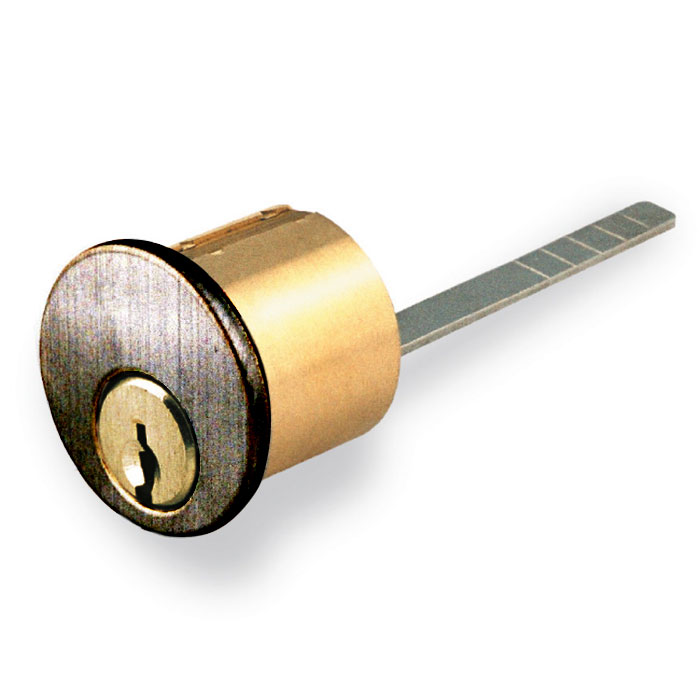
GMS R118: A Rim Cylinder for a Kwikset-Keyed Night Latch
Posted by Kent on 22nd Sep 2026
The rim cylinder outlived the night latch it came with
A rim cylinder is the part that actually wears out on a surface-mounted night latch. The latch body, the vertical rod hardware, the strike, all of that can outlast the building. The cylinder is the one piece with moving pins getting worked by a key every day, and after enough years the plug drags, the key sticks halfway, or the whole thing just stops turning cleanly. Most of the time the fix isn't a new night latch. It's a new cylinder.
GMS builds a 1-1/8" rim cylinder to OEM pinning specs across several brand-matches, which means a locksmith can swap the worn cylinder without touching the latch body that's still doing its job fine.
Sizing the cylinder before you order
Rim cylinders are sold by the tailpiece length and the mounting diameter, and 1-1/8" is the size that fits the vast majority of commercial night latch bodies still in service. Pull the old cylinder and measure before ordering a replacement sight unseen, especially on a building old enough that nobody's sure what brand went in originally. A cylinder that's the wrong length either won't seat flush or won't reach the cam that throws the latch.
Matching the keyway to what the building already has
The GMS R118-KW-10B-A2 ships in a Kwikset keyway, which is the practical choice when a property wants the storefront night latch keyed to match residential-style hardware already in use elsewhere on the property, or when the existing system was cut on Kwikset blanks and the owner doesn't want to add a second blank type to the key ring. GMS builds these to match the exact pinning specifications of the original systems they're replacing, so it's a genuine drop-in on GMS-compatible hardware carrying Schlage, Yale, Corbin, or Best cylinder housings, built to the original pinning rather than a rough approximation of it.
Solid brass, not stamped
The cylinder body is solid brass, finished here in oil rubbed bronze. That matters more than it sounds: a stamped or pot-metal cylinder body flexes under a stiff key or a rough twist, and flex is what throws pins out of alignment over time. Solid brass holds its shape through years of daily use, which is the whole reason a rim cylinder swap should last as long as the latch body it's paired with.
The retaining cap is the part that makes this a fast job
GMS uses a screw-on retaining cap design on the back of the cylinder, which is what actually holds it into the door and connects it to the latch mechanism's cam. That design is why this is a same-visit repair rather than a full latch teardown: back the cap off, pull the worn cylinder, drop in the new one, thread the cap back on, and check that the cam still lines up with the latch's actuating arm.
Rim cylinder or mortise cylinder: know which one you're pulling
A rim cylinder mounts through a hole in the door face and is held by a cap on the inside; a mortise cylinder threads directly into a lock body pocketed into the door edge. They are not interchangeable, and it's an easy mistake on a service call where the customer just says "the lock cylinder is bad" without specifying which type. If you're staring at a night latch or an exit device with a separate keyed cylinder mounted flat on the door face, that's rim. If the cylinder screws into the edge of a mortise lock case, that's a different part entirely.
Twenty-one keyways means this covers more than Kwikset jobs
GMS cuts the R118 body across 21 keyways, with Kwikset being one of the more commonly ordered configurations for retrofit work. If a building's operating keys are already cut to a different system, GMS almost certainly stocks the matching keyway rather than forcing a re-key of the whole door to fit one cylinder. Confirm the keyway stamp on the old cylinder, or the key itself, before ordering — a Kwikset-keyway replacement won't turn a Schlage-cut key no matter how close the two blanks look on a rack.
Pro tip from the counter: keep a couple of 1-1/8" cylinders in a second, less common keyway on the truck if you cover a service area with older buildings. The call that needs it never comes with advance warning. If the door in front of you turns out to need the keyway matched a different way, our Ilco rim cylinder keyway guide walks through that matching process in more detail.
Common questions
Can I put a mortise cylinder in a rim cylinder housing?
No. They mount differently and the cam geometry doesn't match. A rim cylinder is held by a retaining cap through the door face; a mortise cylinder threads into a lock body. Ordering the wrong type means it won't seat, let alone turn.
How do I know if my night latch needs a new cylinder or a whole new latch?
If the latch bolt throws and retracts fine when you operate it by hand, but the key sticks, drags, or won't turn the cylinder, the cylinder is the failure point. If the bolt itself hangs up or won't retract, the latch body needs attention, not just the cylinder.
Will a Kwikset-keyway GMS cylinder take my existing Kwikset keys?
Yes, provided the pinning matches your existing system. GMS builds to OEM pinning specs for the keyway, but a locksmith should still verify or re-pin on-site if the building's key system was previously modified.
What size rim cylinder do most commercial night latches use?
1-1/8" is the common commercial size and covers most surface-mounted night latch bodies still in service. Always measure the cylinder you're pulling before ordering, since older or import hardware can run a different length.
Does the oil rubbed bronze finish match other GMS hardware finishes?
Oil rubbed bronze on the R118 is a standard commercial finish and pairs visually with most oil-rubbed-bronze door hardware, but always confirm against a finish sample if the replacement needs to match existing trim exactly.