
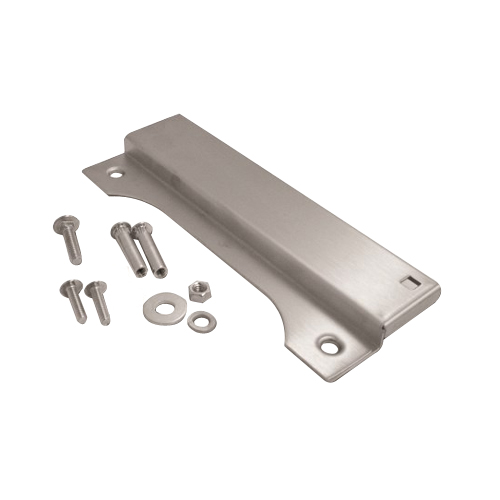
HES 150 vs RCI 930-LG Latch Guard
Posted by Kent on 12th Oct 2026
The strike is only as strong as the gap in front of it
An electric strike holds the latch the same way a regular strike does. If someone can get a tool between the door and the frame, they can push the latch back and walk in. It does not matter that the strike is wired and fail-secure. The weak point is the latch itself, sitting in a gap you can see from the outside.
A latch guard closes that gap. It is a plate fastened to the door edge that covers the latch and the strike so there is nothing to pry against. We stock two: the HES 150, made to go over an HES strike, and the RCI 930-LG, a standard profile guard made for mortise and cylindrical locks. They do the same job in different ways, and which one fits depends on the door.
The two guards
- HES 150 Strike Latch Guard: bolted through at the edge of the door, it covers the lock and the electric strike, protecting against someone prying and pushing the latch back. Stainless steel only. All hardware is included.
- RCI 930-LG-32D Standard Profile Latch Guard: a tamper-resistance guard for perimeter doors that helps protect the latch from a prying attack. It fits mortise and cylindrical lock strikes. Satin stainless steel. The catalog notes radius cuts that make it easier to install around lockset roses.
I have the catalog descriptions for both. I do not have the manufacturer's dimensioned drawings in front of me, so I will not give you plate heights, thicknesses or hole spacing. Those are the numbers you confirm against your own door before you order. The sections below cover what I can stand behind.
Which one for which job
The HES 150 is the match when the strike on the opening is an HES. The catalog says it is bolted through at the door edge and covers both the lock and the electric strike, and it is sold as the HES guard. It ships with its hardware and comes in stainless only. If you are installing a new HES strike on an outswing or a door with a visible gap, order the guard with it, because it is easier to fit during the install than after the door is in service.
The RCI 930-LG is the match when the opening has a mortise or cylindrical lockset with a rose that gets in the way. The radius cuts are there so the guard fits around the lock rose without you filing it. The catalog calls it ideal for added tamper resistance on perimeter doors, which is where a pry attack happens: the exterior door at the back of the building, the loading dock door, the door nobody watches at night.
If you are on another strike brand, the RCI is the more general choice. If you are on an HES strike, the HES 150 is built for it. When in doubt, send us a photo of the door edge and we will say which one lines up.
Where a latch guard matters most
A guard is worth the money on a door where the latch is exposed and the door is not watched:
- Outswing exterior doors. On a door that swings out, the gap faces the person outside. That is the case where a pry bar finds the latch. Our guide to the Don Jo latch protector goes through that attack in detail.
- Back and service doors. Where the only protection is the lock.
- Doors with an electric strike on a long unattended run. The strike is secure only as long as the latch stays in it.
A guard also does not fix a frame problem. If the frame is spread or the door is bowed, the gap will be wide enough to defeat any plate. Fix the door and frame first, and then add the guard.
Installing one without breaking the opening
- Dry fit first. Hold the guard against the closed door and look at how it sits against the lock rose, the strike and the frame. It should clear the strike and not rub the frame at any point in the swing.
- Check the door swing. A plate that is a hair too thick will bind the door. Close it slowly before you drive the screws.
- Use the hardware that ships with the HES 150. It is bolted through the edge of the door, so a tight fit matters.
- Test the strike after. Cycle the strike from the access control, and check that the latch still drops cleanly and the door still releases when it should.
That last step catches the install mistake that matters. A guard that sits a little off can bind the latch or the door, and then a door that should release on a valid credential does not. For more on setting up a strike in the first place, see our guide to the HES 9400 surface mount strike.
What a latch guard does not do
It does not stop an attack on the hinge side. It does not replace a good door and frame. And it does not make an unlocked door locked. It makes one common, quiet attack, pushing the latch back with a tool, much harder. For the price, it is among the best upgrades on a perimeter door.
Common questions
What is the difference between the HES 150 and the RCI 930-LG?
The HES 150 is bolted through the door edge and covers both the lock and an HES electric strike. The RCI 930-LG is a standard profile guard for mortise and cylindrical locks, with radius cuts to clear lockset roses.
Do I need a latch guard if I have an electric strike?
If the latch is exposed in a gap, yes. The strike secures the latch. The guard keeps a tool from pushing it back.
What finish are they?
The HES 150 is stainless steel only. The RCI 930-LG-32D is satin stainless steel.
Is the hardware included?
The catalog says all hardware is included with the HES 150.
See our HES electric strikes and RCI pages, or send us a photo of the door edge and we will match the guard to it.