
Ives DP2-US26D: Fix a Flush Bolt That Won't Drop Clean
Posted by Kent on 20th Sep 2026
The Callback You Keep Getting on the Same Pair of Doors
You've been out to this pair of doors before. Inactive leaf, held top and bottom by flush bolts, and now the bottom bolt won't drop all the way, or it drops but won't retract clean when someone throws the lever. Nine times out of ten on an older install, the flush bolt itself is fine. The problem is what it's dropping into.
Why a Standard Floor Strike Fails
A standard floor strike is just an open pocket in the floor. Grit, carpet fiber, ice-melt salt tracked in over the winter, mop-water residue — all of it lands in that pocket and packs down over months. The bolt starts riding on debris instead of seating fully, or it seats but drags coming back out. That's the binding you're chasing on the service call, and cleaning the pocket out buys a few months before it's back on the schedule.
What "dust proof" actually means on the job
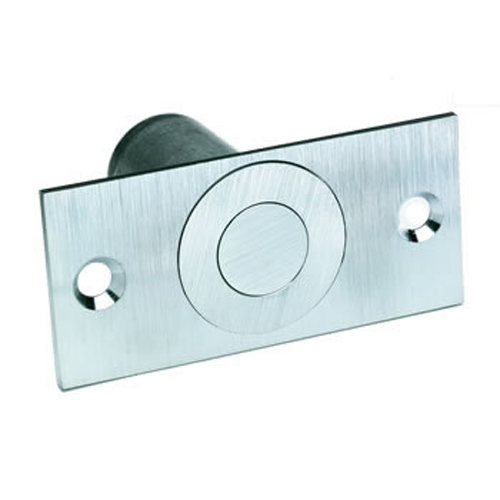
The Ives DP2-US26D Dust Proof Strike in satin chrome solves this a different way than cleaning does. It's a spring-loaded plunger that sits flush with the floor or threshold. Every time the flush bolt retracts, the plunger returns to floor level on its own — there's no open pocket sitting there collecting whatever tracks across the floor between service calls. That's the whole fix: nothing to clean out, because there's nowhere for the debris to settle in the first place.
DP2-US26D Specs You Need to Match on the Door
This strike is designed for the bottom bolt of a flush bolt, and it's built to work with flush bolts generally, not tied to one manufacturer's proprietary bolt profile. Before you order, check these dimensions against the existing floor prep on a retrofit, or against your flush bolt spec on a new install. The DP2 is part of Ives' full line for these openings: everything else Ives makes for this kind of hardware lives on our Ives hub.
Face Plate and Strike Hole
The face plate measures 1-5/8" wide by 3-1/2" long, and it's 1/8" thick. The strike hole itself is 3/4" diameter and 1-1/8" deep, which is the opening the plunger mechanism sits behind once the plate is set in the floor.
Body Dimensions and Rating
Below the face plate, the body runs 1-3/16" diameter by 1-7/8" deep, so confirm you've got that clearance in the floor before you cut in a retrofit. The unit meets ANSI/BHMA 156.16, L14011, the commercial hardware standard this category gets tested against, and it ships in satin chrome (US26D) to match the rest of a satin chrome door package.
New Install vs. Retrofit
On a new pair of doors, spec the dust-proof strike from the start and you skip this whole callback pattern before it ever begins. On an existing pair where a standard strike is already cut into the floor, check the body dimensions above against the existing pocket. If the floor prep is close, this is usually a straight swap: pull the standard strike, confirm depth and diameter, set the DP2 in its place. If the existing prep is undersized or the concrete's been patched around the old strike, that's a job for a site visit rather than a guess made from the truck. Confirm with us before you order if the fit is anything but obvious.
Pairing It With the Right Flush Bolt
The strike does nothing on its own. It's the companion piece to whatever flush bolt is already in the door, or whatever you're speccing for a new pair. If you're replacing the bolt at the same time, the Don-Jo 1555 Flush Bolt for Metal Doors is a UL-rated option sold alongside this strike, built for hollow metal doors, which is the most common substrate you'll see this problem show up on. If you're speccing the whole pair of doors, top bolt, bottom bolt, and coordinator, see our flush bolt and coordinator guide for pairs of doors before you write the order. It walks through how the top and bottom hardware need to work together on an inactive leaf, and the coordinator that keeps the active leaf from closing into it wrong.
Either way, the diagnosis on this service call is usually quick once you know what to look for. Pull the bottom bolt, look at the strike, and if it's an open pocket packed with grit instead of a self-clearing plunger, you've found the reason this door keeps coming back on your list. Swap the strike, not the bolt, and it stays fixed.
Common questions
Will the DP2-US26D fit any flush bolt, or does it need to match the brand?
It's built for the bottom bolt of a flush bolt generally, not tied to one manufacturer's bolt profile. Confirm your bolt's throw lines up with the strike hole dimensions before you order, and if you're not sure, confirm with us before you order.
Do I need to replace the flush bolt too, or just the strike?
Just the strike, in most cases. If the flush bolt itself is retracting and extending fine and the binding is happening down at the floor, swapping the standard strike for the dust-proof strike usually clears it without touching the bolt at all.
What finish does this strike come in?
This listing is satin chrome, US26D, which is the standard finish on most commercial door hardware packages. Confirm with us before you order if you need to match a different finish elsewhere on the opening.
How deep does the floor need to be cut for this strike?
Plan for 1-7/8" of depth below the face plate for the body, plus the 1-1/8" deep strike hole itself. Measure the existing pocket before you retrofit. If it's shallower than that, you're cutting new floor prep, not dropping this in as a direct swap.
Is this strike rated for commercial use?
Yes. It meets ANSI/BHMA 156.16, L14011, which is the standard this category of hardware is tested and certified against for commercial openings.