
Keedex Gate Boxes: Mounting a Lockset on a Steel Gate
Posted by Kent on 21st Aug 2026
A steel gate has nothing to mount a lock to
You are standing at a steel tube-frame gate with a commercial lockset in your hand. Pool enclosure, equipment yard, loading area, rooftop stair. No door leaf to bore, no jamb to mortise into, nothing on that frame thick enough to hold a lock. That is the whole problem, and the fix is a weldable gate box.
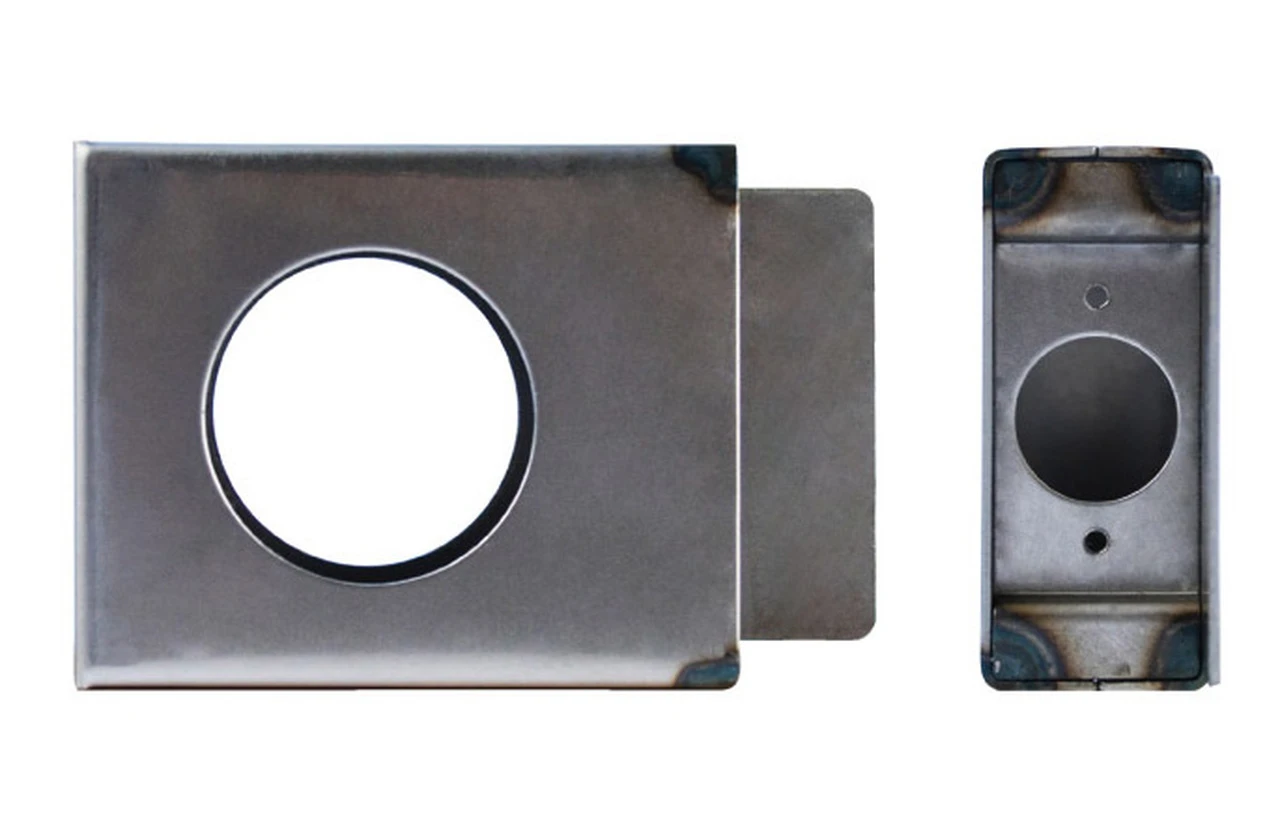
A gate box is a steel box, prepped at the factory with the cutouts a specific lock family needs, that a welder tacks onto the gate frame. The box becomes the door leaf. The lockset lives in it, the latch throws out of it, and the gate gets a real lock instead of a chain and a padlock. We stock the Keedex line.
How to mount a lockset on a steel gate
The box arrives with the prep cut: the opening for the lock body, the trim and cylinder holes on the faces, the latch cutout on the edge. Your welder sets it on the frame at the height you want, tacks it, checks it square and plumb, then welds it out. Once the steel is cool, install the lockset like you would into a door.
Then the strike side. The receiving post needs something for the latch to catch, and the gate has to close to a hard stop. A gate that racks under its own weight will not latch, no matter how well the box is set.
Pick the gate box to match the lock, not the gate
You pick the gate box to match the lock you are installing, not the gate. The frame only decides whether a box fits the tube. Every hole in that box is set by the lock. Work backwards and you own a box prepped for a lock you did not buy.
1. What lock is going in?
Answer that first, with a model number in front of you. A cylindrical lockset, a mortise lock, an electric strike, and a small-format-core lock each need a differently prepped box.
- Best-cored locks. The Keedex K-BXSGL234-BEST Best Lock weldable gate box is prepped for a Best lock. Look at it when the gate has to key into a building already running small-format interchangeable cores, because the gate then rekeys with a control key and no drilling. If that system is new to you, read how a Best SFIC core gets rekeyed without a locksmith first.
- Schlage FE. The Keedex weldable gate box for the Schlage FE is prepped for that lock specifically. Buy the box that names your lock when one exists.
- Electric strike. The Keedex K-BXES3A electric strike weldable gate box is the pick when the gate goes on access control. Budget the wire run while you quote it; power out to a free-standing gate is usually the expensive half of that job.
- General-duty boxes. The K-BXSGL234, the K-BXSGL, and the K-BXSIM round out the line, and their preps differ. I will not publish a chart telling you which one fits your lock; a wrong line in that chart is a wasted trip. Send us the lock model and we confirm the box.
2. Trim and cylinder holes, or a blank
One box is sold deliberately unprepped: the K-BXMOR4 gate box with no trim or cylinder holes. That blank shell is right in two cases. When the lock matches no stock prep and never will. Or when you have a shop, a mag drill, and a real template from the lock manufacturer.
It is the wrong buy when you end up in the field with a hole saw, cutting a prep somebody already sells finished. A hole a hair off center is how a lock binds, and steel does not forgive a second try.
3. Steel or aluminum
The line carries an aluminum version of the standard box, the K-BXSGL234-AL, alongside the steel K-BXSGL234. Match the box to the gate, because you do not weld aluminum to steel. An aluminum gate needs the aluminum box and a welder with a TIG rig or a spool gun, often a different guy than the one who welds your steel. Sort it out during the quote.
4. Put a guard ring on the cylinder
On a gate the cylinder sticks out in the open where anybody can put a pipe wrench on it. No vestibule, no camera, usually nobody watching. A guard ring is a collar that spins freely so a wrench cannot get a bite. We stock the K-24-26D cylinder guard ring and the K-24L-26D large cylinder guard ring, both in 26D satin chrome.
A ring costs a fraction of the lock it protects. Same instinct as bolting a latch protector over an exposed latch: cover the part an attacker can reach.
Three ways a gate box job goes wrong
Ordering the box before you pick the lock
Most common failure, and the most expensive. Somebody orders a box because the gate needs a lock, then picks the lockset a week later off whatever the supply house has. Now the prep does not line up and the box is welded on.
Welding the box with the lock in it
Weld the empty box. Let it cool. Then install the lockset. Welding heat travels through steel and will cook a cylinder, a plastic bushing, or the wiring on an electric device, and burn the finish off trim you paid for.
Forgetting that the gate lives outside
A gate box is a metal box with holes in it, mounted outdoors, and water gets in and sits there. Whatever goes inside has to be an outdoor lock, specified that way from the start, not the interior lever left over from the last job. Watch orientation and drainage so water runs out instead of pooling around the lock.
What to measure before you order
- The gate frame tube dimension. The box has to sit on the frame member. Measure it.
- The exact lock model. Model number, function, and trim. That is what selects the box.
- Welded steel or aluminum. It changes the box you buy and what your welder can do.
- A photo of the gate and the latch side. With the other three, that is enough to confirm the package.
Browse the gate box selection, or send us the lock model and the frame dimension and we will tell you which box to weld on.
Common questions
Will my lockset fit a Keedex gate box?
Tell us the exact lock model and we will confirm it before you order. These boxes are prepped for specific lock families, and the difference between a fit and a miss is a set of holes in the wrong place. Send a photo of the gate frame with it.
Can I weld a gate box onto an aluminum gate?
Only with the aluminum box, the K-BXSGL234-AL, and a welder set up for aluminum. Steel does not weld to aluminum. If your welder only runs steel, line up the right person first.
Do I need a gate box with no trim or cylinder holes?
Buy the blank only if your lock matches no stock prep, or you have the tooling and a real template and would rather cut it yourself. The K-BXMOR4 blank exists for openings the catalog does not cover.
Should the lock go in before or after welding?
After. Weld the empty box, let it cool completely, then install the lockset. Welding heat carries through the box and ruins cylinders, plastic parts, wiring, and finish.
Is a cylinder guard ring really necessary on a gate?
On an exposed outdoor gate, yes. The cylinder sits where somebody can get a wrench on it, and a guard ring spins so the wrench cannot grab.