
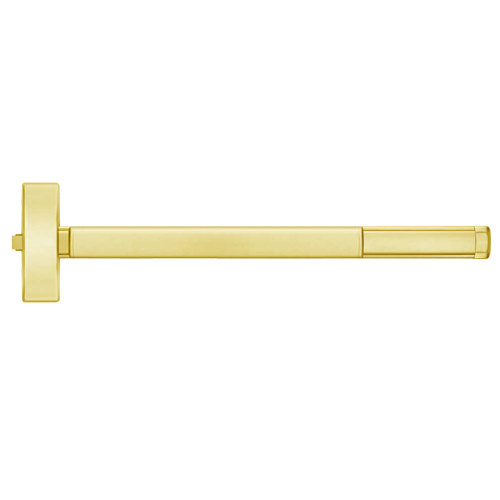
PHI 2100 ELR, MLR, DE or TS: Electric Options Sorted
Posted by Kent on 26th Nov 2026
Four letters in front of the model number
You find a PHI Apex 2100 rim exit device in the catalog and the part number starts with ELR, MLR, DE or TS. Those letters are the electric option on a device that otherwise looks like every other 2100. They are not interchangeable and they do not do the same job. This guide sorts the four, using what the listings say, for the 36 inch non-fire-rated device in the bright brass finish.
If you have not picked the base device yet, read our PHI 2101, 2102, 2103 and 2105 function prep guide first. The prep number after the letters is the same one explained there. For where the 2100 sits in the market, see our PHI Apex 2100 as an alternative to the Von Duprin rim device.
What the base device is
All four listings carry the same body text. The Apex 2100 is a rim exit device for single doors and for double doors with a mullion. It is UL listed for panic hardware and certified to ANSI A156.3 Grade 1. The specs from the listing:
- Door size 36 inch, which the listing gives as 2 foot 7 inches to 3 feet of door width.
- Non handed.
- Non fire rated in these four versions.
- Latchbolt stainless steel, deadlocking, with a 3/4 inch throw.
- Strike is the S300, an investment cast stainless steel strike, black powder coated, furnished standard.
- Dogging is a 1/4 inch turn hex key, standard.
- Built for the wide stile door.
- Touchbar height of 39-15/16 inches from the floor.
- Cylinder and trim are not included. These are prepped for exit only, with a cover plate.
The common thread is the cover plate prep. It means the outside of the door has nothing on it. The door is exit only. Whatever the electric option does, it does it behind that plain face.
ELR: electric latch retraction
The ELR2101-605-36 carries electric latch retraction, and the listing says it requires an ELR150 series power supply. In the trade, electric latch retraction is the option you want when an access control system should be able to pull the latch back so the door opens without anyone touching the bar. Here is the catch: the listing does not describe how the retraction works or how long it holds, and I will not guess. Ask for the wiring diagram before you pull cable.
Note the power supply: it is a separate purchase and it is named in the listing. If you order the device and forget the supply, you have a very expensive door that does not do what you bought it to do.
MLR: motorized latch retraction
The MLR2101-605-36 carries motorized latch retraction. The listing names no power supply for this one, and that is itself useful to know. It gives no current draw either. The practical difference between electric and motorized retraction, as the trade uses the terms, is in the mechanism that pulls the latch. The listings do not spell out that difference, so confirm the voltage and current with us or the spec sheet and size your supply to it before you order. Do not assume the ELR supply works here.
DE: delayed egress
The DE2101-605-36 is the delayed egress device. The listing says 15 seconds and names the PS161-6 power supply. Delayed egress is a code item more than a hardware item. When someone pushes the bar, the latch stays held for the delay period and an alarm sounds. After the delay, the door opens. It is used where you want a pause before an exit door releases, typically to deter walk-outs from a place like a memory care unit or a retail back door.
The delay is the small part of the job. Whether you may install a delayed egress device at all, and what has to happen when the fire alarm goes off, is a decision for the authority having jurisdiction. Call your fire marshal before you order. I have seen one come back off a job because nobody asked.
TS: touchbar monitoring switch
The TS2101-605-36 includes a touchbar monitoring switch. This does not change how the door opens. It tells a panel when the bar has been pressed. That is the one you want when security needs to know someone has used an exit, or when you want a camera to cue on a push. The listing says the switch is included and says nothing more. It does not give contact type, rating or wiring. Get that from the spec sheet.
Which one to buy
- Card reader needs to open the door without a person touching the bar: ELR or MLR.
- You want a pause before the door lets go: DE, after clearing it with the fire marshal.
- You want a record that the bar was pushed: TS.
- You need none of that and only want a plain exit: the base 2101 without a letter, which our function guide covers.
Two of these cannot be combined in the catalog. Each device carries one option. If you need retraction and a monitoring switch on the same door, ask us before you order, because the listing does not show a part number that does both.
Fire-rated doors are a different list
Everything above is non fire rated. The fire-rated versions use a different prefix and drop the dogging feature. We cover those in a separate guide to the fire-rated electric options. The rest of the line lives on the PHI exit device page.
What the listings do not say
No voltage, no current draw, no wiring, no weight and no retraction time is given for any of the four. I have not described the ELR150 series or the PS161-6 beyond their names. Send us the door, the frame, the access control panel and the code situation, and we will match the right letters before you order.