
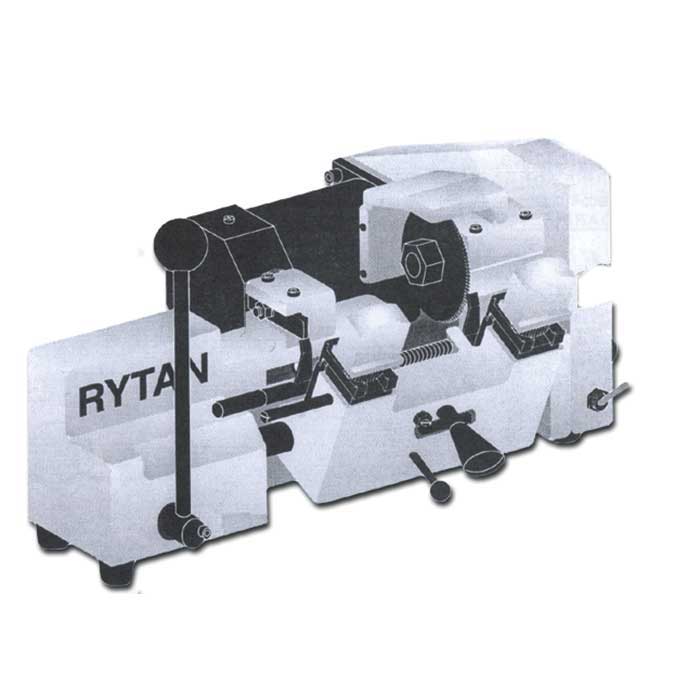
Rytan RY100 vs RY200 vs RY2000: A Key Machine for a Van
Posted by Kent on 13th Sep 2026
A locksmith running calls out of a van has a problem a shop counter doesn't: no guaranteed wall outlet, no bench to bolt a machine to, and a customer standing there while the cutting happens. Rytan builds three machines that solve different pieces of that problem, and the one that's wrong for a mobile setup isn't a bad machine, it's just built for the wrong job.
RY100: the electric workhorse for most calls
The RY100 Semi-Automatic High Speed Key Duplicating Machine cuts all cylinder keys: residential, commercial, and automotive, including Ford and Best/Falcon specialty profiles. It runs on 115V, 60Hz AC power, which means it needs an outlet or an inverter running off the van's electrical system, but in exchange it delivers the speed and repeatability a duplicator built for shop volume is supposed to have. This is the machine to run when the van has reliable power and the job mix is broad — a little of everything, cut fast, one key or twenty.
RY200: the same electric format, tuned for GM and Kwikset Titan
The RY200 Universal Semi-Automatic Key Duplicating Machine is Rytan's flagship duplicator, same 115V AC power requirement as the RY100, same all-cylinder-key capability across residential and automotive work including GM. What sets it apart is the 4-way jaw design, built to handle key profiles that give simpler jaw setups trouble, Kwikset Titan among them. If the regular call volume leans toward vehicles and locksets that a basic jaw configuration fumbles, the RY200 earns the step up from the RY100. If the work is mostly straightforward residential and commercial cylinder keys, the RY100 does the same job for less machine.
RY2000SCH/KW: no outlet, no inverter, no problem
No electricity needed at all is the whole point of the RY2000 Extreme Dual Key Punch Machine, built specifically for the van-with-no-power scenario as a hand-powered punch machine with Schlage on the right side (Classic, Everest, and Reverse profiles) and Kwikset KW1 on the left. Factory-preset spacing and depth settings mean it punches a factory-original key at duplicator speed without a motor, a battery, or an inverter. It's a narrower tool than the RY100 or RY200 by design: two specific keyway families, not "all cylinder keys," and it explicitly does not cut KW10. But for the two most common residential keyways in the country, cut on the tailgate with the engine off, it does a job neither electric machine can do at all in that setting.
Picking by van setup, not by price
Match the machine to how the van is actually equipped rather than asking which one is best in the abstract. A van with a running inverter or a habit of parking near an outlet on most calls gets full value from the RY100 or RY200, since both cut a broader range of keys than the RY2000's two-keyway focus. A van that runs calls in parking garages, rural routes, or anywhere power isn't a safe assumption needs the RY2000 as the fallback that still gets a Schlage or Kwikset key cut when the alternative is telling the customer to come back. Several techs run an electric duplicator as the primary machine and keep an RY2000 as the no-power backup rather than choosing one over the other outright.
Cutters and wear parts aren't an afterthought
Both electric machines use a replaceable standard cutter and cutter wheel that wear with volume and need swapping before cuts start drifting out of spec, not after a customer calls back with a key that doesn't turn. Keep a spare cutter and wheel in the van rather than finding out mid-route that the one in the machine is worn past its useful life. The RY2000's punch mechanism carries its own wear part, a tip stop assembly specific to the Extreme Punch Machine, worth the same spare-on-hand treatment for a route that can't afford a dead machine mid-day.
What "hand-powered" actually feels like on a service call
Techs who haven't run a punch machine before sometimes assume it's slower or less precise than an electric duplicator because there's no motor. It isn't, for the two keyways it covers. The RY2000's factory-preset spacing and depth settings do the same job an electric machine's cam and cutter geometry do, just driven by hand pressure on a lever instead of a motor. The learning curve is short: most of what changes versus an electric machine is technique, seating the blank fully before the punch stroke, rather than any loss of accuracy in the finished key. A tech used to a duplicator should expect an hour or two of practice cuts before running it in front of a customer, the same break-in any new machine gets.
Common questions
Does the RY2000 cut KW10 Kwikset keys?
No. It's built for standard Kwikset KW1 on the left side and Schlage Classic, Everest, and Reverse on the right. KW10 is explicitly not supported.
Can I run the RY100 or RY200 off a van without a built-in outlet?
Yes, with a power inverter sized for a 115V, 60Hz AC load. Neither machine runs without that AC power source; the RY2000 is the option for a van with no power setup at all.
What's the actual difference between the RY100 and RY200 if both cut all cylinder keys?
The RY200's 4-way jaw design is built to handle key profiles that give a simpler jaw configuration trouble, GM and Kwikset Titan specifically. The RY100 covers the same broad key range without that jaw upgrade.
How often do the cutter and cutter wheel need replacing?
There's no fixed interval; it tracks with cutting volume. Keep spares in the van and swap before cuts start drifting rather than after a customer reports a key that won't turn.
Is the RY2000 a good primary machine or only a backup?
It works as either, but its two-keyway focus (Schlage and Kwikset KW1) makes it narrower than the RY100 or RY200. Most vans running it alongside an electric duplicator use it as the no-power fallback rather than the only machine on board.
For another piece of hardware installers keep in the van stock, mounting a lockset on a steel gate with no wood core to screw into, see Keedex Gate Boxes: Mounting a Lockset on a Steel Gate. The full Rytan key machine and parts line is on the Rytan hub.