
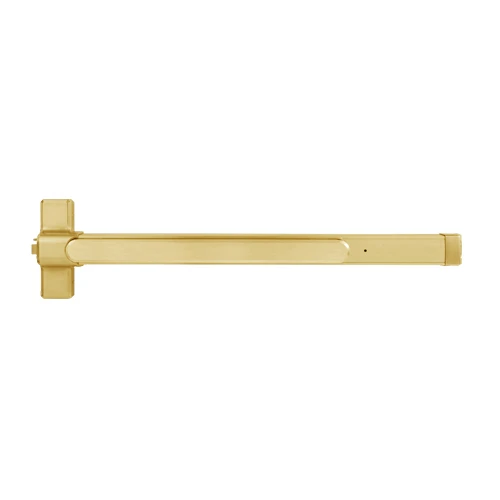
Stanley QED100: X, LR, or ED Electrified Exit Device
Posted by Kent on 17th Sep 2026
An integrator hands you a spec sheet that says "electrified exit device" and expects you to know which electrified option they mean. Stanley's QED100 rim device comes in three electrified options off the same Grade 1 chassis, and they do three completely different jobs. Order the wrong letter suffix and the access control panel either can't do what it needs to, or you've paid for a feature nobody asked for.
Stanley QED100: X, LR, or ED, and what each one actually does to the door
All three share the same base device: a Grade 1 rim exit device certified to ANSI/BHMA A156.3, hex key dogging, non-fire-rated, 36" device length, stainless steel 3/4" throw latchbolt, standard 2-7/16" backset. What changes is the electrical function built onto that chassis:
- X, Request to Exit. An SPDT switch that monitors the push bar. It doesn't unlatch anything, it signals. Depress the bar and the switch trips, which can activate a door alarm, shunt a door contact so the alarm doesn't sound on a legitimate exit, or tell the access panel someone just left. Use this when the door needs to report activity, not be remotely controlled.
- LR, Electric Latch Retraction. A continuous-duty solenoid that pulls the latch back on command from the access control system, momentarily or held, depending on how the panel is programmed. This is what you spec when a card reader or a button on the secure side needs to unlock the door remotely without anyone touching the push bar.
- ED, Electrified Dogging. Holds the push bar retracted continuously once activated, converting the door to push-open free access. When power drops or is cut, the latch extends and the bar releases back to normal panic function. This is the one you spec for a door that needs to sit unlocked during business hours and lock itself the instant power is lost, a fail-safe hold-open, not a remote unlock.
Picking the right one for the panel you're wiring to
The question that decides this isn't whether the door needs to be electrified. It's what the access control system needs to DO to this door. If the panel just needs to know when someone exits, that's QED111X-36-605, the cheapest of the three, with no unlatch capability at all. If the panel needs to unlock the door remotely on a signal, say a receptionist buzzing someone out, or a card read on the inside, that's QED111LR-36-605. If the door needs to run as free-access push-open during set hours and fail secure to normal panic operation on a power cut or fire alarm signal, that's QED111ED-36-605.
These three don't stack. You're not ordering an LR and adding dogging later. Each letter is a different internal mechanism built into the device at the factory, so pick the function before you order, not after the panel programmer asks why the door won't do what the drawing says it should.
What doesn't change no matter which you pick
Trim is not included on any of the three, so order it separately to match what the outside face needs. All three are non-handed, so one part number works regardless of swing. Door thickness is 1-3/4" standard, and mounting is thru-bolt, with wood screws, machine screws, and sex bolts included. None of the three are fire-rated. If the opening is on a rated door, you need Stanley's fire-rated QED line, a different part number entirely, and you should confirm that with us before ordering rather than assuming a non-rated device will pass a rated-opening inspection.
A word on the wiring, not just the hardware
ED and LR both need continuous or momentary power delivered to the device, which means a power transfer hinge, an electrified hinge, or a door loop, routed from the frame. If this door is also getting one of Stanley's electrified hinges, size the transfer capacity to the device's draw before you order. An undersized transfer is a service call waiting to happen, not a wiring problem you'll catch on day one, and by the time it shows up the drywall's already closed.
Worth flagging for the GC on the job too: none of these three devices come with a power supply. The building's access control contractor typically sources that separately, sized to every electrified opening on the panel combined, not just this one door. Confirm that math gets done before the devices show up on site, because a device that arrives before its power source is a device sitting in a box for a month.
Common questions
Can I convert an X device to LR or ED later?
No. The electrical mechanism is built into the device at the factory. X, LR, and ED are not field-upgradable to each other. Decide the function before you order.
Does ED lock the door or just hold it unlocked?
ED holds the latch retracted for free push-open access while powered. It doesn't add security, it removes the panic function temporarily. When power is cut, the device returns to standard panic operation and the door locks and latches normally on close.
Which one do I need for a simple exit alarm, no access control panel involved?
If all you need is to know a door was used, the X option's request-to-exit switch alone can drive a standalone alarm circuit without a full access control system. Confirm your alarm module can accept a dry contact signal before wiring it.
Is the Grade 1 rating the same across all three?
Yes. The electrical option changes the function, not the mechanical grade. All three are certified to the same ANSI/BHMA A156.3 Grade 1 standard as the base chassis.
Wiring an access-controlled opening and not sure which letter your panel needs: see the full Stanley Hardware lineup, and if this door also needs an electrified hinge for the power run, the Stanley CEFBB179 piece covers sizing that separately. Call 877-365-5625 with the panel spec sheet in hand and we'll confirm the right suffix before you order.