
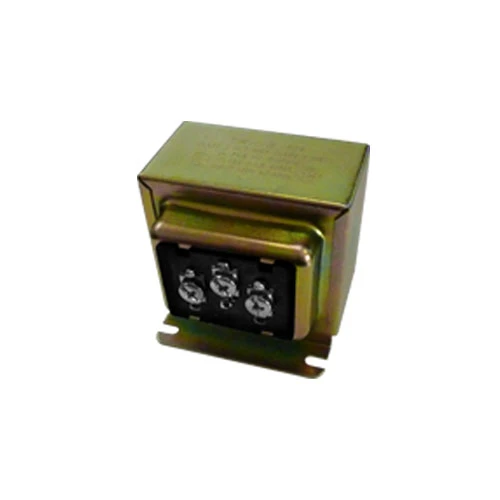
Trine 598 vs 5205: Clamp-On or Plug-In Strike Power
Posted by Kent on 22nd Sep 2026
The strike is fine. The power feeding it isn't.
An electric strike that won't release almost never means the strike is bad. Nine times out of ten on an older storefront it means the transformer feeding it has failed, or somebody grabbed whatever transformer was in the truck box without checking whether the job called for a hardwired unit behind the frame or something that just plugs into a wall outlet. Trine makes both, and picking the right one comes down to one question: is there already low-voltage wiring run to this door, or are you starting from a wall outlet with nothing pulled yet?
Clamp-on: for a door that already has wiring in the frame
The Trine 598 is a clamp-on transformer, built to mount directly to conduit or a junction box near the door rather than sitting in a wall outlet. It's the right call on a storefront or commercial door where low-voltage wire is already run from a panel to the strike location, and the job is a straight swap of a dead transformer for a working one. The 599 covers the same clamp-on mounting style as a companion SKU in the line.
Clamp-on units disappear into the ceiling or behind the frame trim, which matters on a storefront where the customer doesn't want a wall-wart transformer visible near the door. If you're pulling a failed unit off existing conduit, match the mounting style first — a plug-in transformer has nowhere to clamp, and a clamp-on has no cord to plug in.
Plug-in: for a retrofit with no wiring run yet
The Trine 5205 and 5204 are plug-in transformers, meant to go straight into a standard wall outlet near the door. This is the practical choice on a retrofit job where nobody wants to open a wall to pull new low-voltage wire for a single electric strike, or where the strike and its power source both need to be self-contained for a tenant space that might move the hardware later. Plug-in units are also the faster install when a customer needs the door working same-day and running conduit isn't in the budget or the schedule.
Tri-Volt AC — why that matters when you're matching a strike
Both the clamp-on and plug-in lines here are built as Tri Volt AC transformers, which gives some flexibility across different strike input requirements. Even with that flexibility, always match your transformer's voltage output to the specific strike's input requirement before wiring it in. Running a strike rated for a higher AC input on a lower-voltage tap won't generate enough force to release the keeper, and pushing higher voltage than the strike expects can burn the coil out early. Check the strike's own spec plate or documentation, not just the transformer's rating, before final hookup.
UL listing isn't optional on a life-safety opening
Both transformer families here carry a UL listing, which matters on any door tied into access control or life-safety egress. An unlisted or off-brand transformer might power the strike just as well on the bench, but it's the wrong part to leave wired into a door that has to perform reliably and pass inspection. Stick with a listed unit, full stop, on anything beyond a bench test.
The failure that looks like a bad strike but isn't
If a strike buzzes but won't fully release, or releases weakly and the door drags across the keeper, check the transformer output before condemning the strike. A tired transformer can still show continuity and still hum when powered, while no longer putting out enough clean voltage to fully retract the keeper against spring pressure. Swapping in a known-good transformer of the correct type is a five-minute test that saves ordering a whole new strike on a part that was never the problem.
Pro tip from the counter: label the transformer with the strike's voltage requirement and the install date when you mount it. The next tech on that door, whether it's you in three years or somebody else, won't have to guess what's feeding it. If the strike itself is the unknown, our guide on a Trine strike with unknown voltage covers the other half of that troubleshooting call, and the Trine intercom entry strike piece has more on matching a strike to an existing power source.
Common questions
Can I use a plug-in transformer where the old one was clamp-on?
Only if you're willing to run a new cord to an outlet, since the clamp-on unit was likely fed from hardwired conduit with no outlet nearby. It's usually simpler to replace a clamp-on with another clamp-on unless you're already opening up the install for other reasons.
What happens if I put a 24V strike on a 12V tap?
It won't generate enough pull to fully retract the keeper, so the strike will buzz or partially release without letting the door open cleanly. Match the transformer's voltage output to the strike's rated input every time.
Does a Tri-Volt transformer mean it works with any strike voltage?
Tri-Volt gives you multiple output taps to choose from, not automatic compatibility. You still have to select and wire the correct tap to match the specific strike's input requirement.
Why does my strike buzz but not release?
A buzzing strike that won't fully release is a classic sign of a weak or failing transformer rather than a bad strike body. Test with a known-good transformer of the correct voltage before replacing the strike itself.
Is a non-UL-listed transformer okay for a back office door?
Stick with UL-listed hardware on any opening tied into access control or code-required egress, even a low-traffic back door. It's the part that keeps the install inspectable and reliable, and the cost difference isn't worth the risk.