
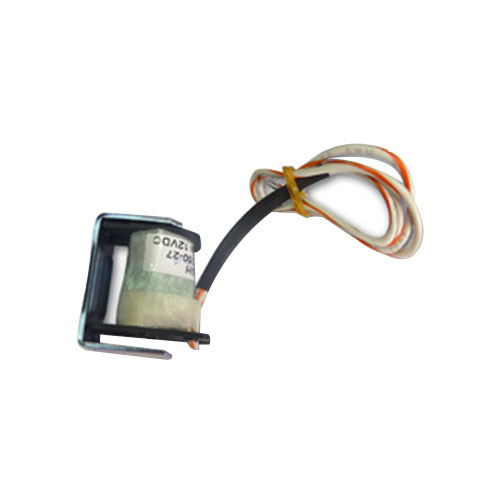
Trine EN-CA-12DC vs 24AC: Matching Coil Voltage to Your Strike Wiring
Posted by Kent on 29th Sep 2026
An electric strike that suddenly buzzes, chatters, or stops retracting cleanly usually isn't a bad strike. It's a bad coil, and on Trine's EN Series electric strikes, the coil is a separate, replaceable part rather than something you replace the whole strike body to fix. The catch is that the coil has to match the power feeding it exactly, both the voltage and whether that power is AC or DC, and Trine sells the EN-CA coil assembly in four combinations to cover it. Order the wrong one and you either get a coil that won't pull the keeper back reliably or one that overheats and fails again in a matter of weeks.
Why the coil has to match voltage and current type exactly
A solenoid coil is built to a specific number of windings and wire gauge for a target voltage and current type. Feed it less voltage than it's built for and the magnetic field it generates is too weak to pull the keeper back fully every time, which shows up as a strike that occasionally doesn't release even though the access-control panel fired correctly. Feed it more voltage than it's built for, or feed a DC coil with AC current, and the coil draws more current than its windings are rated to dissipate as heat, which shortens its life dramatically and can take it out in weeks instead of years. AC and DC coils aren't interchangeable even at the same nominal voltage, because an AC coil is built to handle the constantly-reversing current of alternating power, and a DC coil isn't.
Trine EN-CA-12DC: for a 12-volt DC access-control output
The EN-CA-12DC is built for a 12VDC supply, which is the most common output on standalone access-control panels, standard power supplies, and battery-backed systems feeding a single door. If your existing strike wiring traces back to a 12VDC-labeled output on the panel or power supply, this is the coil that matches it.
Trine EN-CA-24AC: for a 24-volt AC transformer
The EN-CA-24AC is built for a 24VAC supply, the output you'll find on a doorbell-style transformer or an intercom system feeding the strike directly rather than through a DC-regulated access-control panel. A 24VAC-fed strike will hum audibly when energized, a normal characteristic of an AC coil under load, not a sign of a problem, whereas a DC-fed strike stays silent.
All four combinations exist because both variables matter
Trine also stocks the EN-CA-24DC and EN-CA-12AC configurations, covering every practical combination of the two voltages and two current types this strike series sees in the field. Before ordering any of the four, trace the wire back to its actual source, whether that's a labeled terminal on an access-control panel, a transformer nameplate, or a multimeter reading taken at the strike itself with the door held so it doesn't fire mid-test. Guessing based on "it's probably 12 volts like the last job" is exactly how the wrong coil ends up on the truck.
Signs the coil, not the whole strike, is the actual failure
A strike body rarely wears out on its own. If the keeper still moves freely by hand when you push it, the mechanical parts are fine, and a coil that buzzes louder than normal, runs hot to the touch after a few cycles, or has visibly darkened or melted insulation is telling you the coil failed, not the strike frame or keeper. Replacing just the coil assembly is a fraction of the cost and labor of swapping the entire strike, provided the replacement matches the original's voltage and AC/DC type.
Keep the old coil until the new one is confirmed working
Before you throw out a failed coil, check it for a stamped voltage and current-type marking; manufacturers usually print this directly on the coil housing or an attached label, and matching that marking is more reliable than reconstructing the spec from memory of what the job called for originally. If the marking has worn off or was never legible, that's when tracing the supply side, the transformer or panel output actually feeding the strike, becomes the only reliable path. Hold onto the old coil until the replacement is installed and tested through a few full cycles, in case the new part turns out to be the wrong one and you need to go back to the original for reference.
Common questions
How do I tell if my existing strike runs on AC or DC power?
Check the power supply or transformer feeding it first. A transformer with a single AC output labeled in volts (12VAC, 24VAC) is feeding AC current. A regulated power supply or access-control panel with a DC output, usually labeled clearly on the unit, is feeding DC. When in doubt, a multimeter reading at the strike wiring will confirm it, but always test with the door propped so the strike doesn't fire while you're working on it.
What happens if I put a 12VDC coil on a 24VAC circuit?
The coil will draw far more current than it's built for and typically fails quickly, sometimes within the first few cycles, and in some cases can trip a fuse or breaker on the supply side. Never assume a coil will "just work" at the wrong voltage or current type even briefly for testing.
Is it normal for an AC-powered strike to hum?
Yes. An AC coil under load produces an audible hum from the alternating current cycling through it, which is normal operation, not a defect. A DC-powered strike stays essentially silent when energized, so a hum from a strike that's supposed to be DC-fed is worth investigating.
Can I replace just the coil, or do I need the whole strike body?
On the EN Series, the coil assembly is a separate replaceable part from the strike body and keeper. If the mechanical parts of the strike are still in good working order, replacing only the coil, matched to the correct voltage and current type, is the correct and far less expensive fix.
Not sure which of the four coil configurations matches your setup? Call 877-365-5625 with what's feeding the strike, a transformer, a panel output, or a power supply, and we'll confirm the exact part before you order. See the rest of the line on the Trine hub, and if the strike itself is the question rather than the coil, read Trine 2012 vs 2012C: A Strike Before You Know the Voltage.