
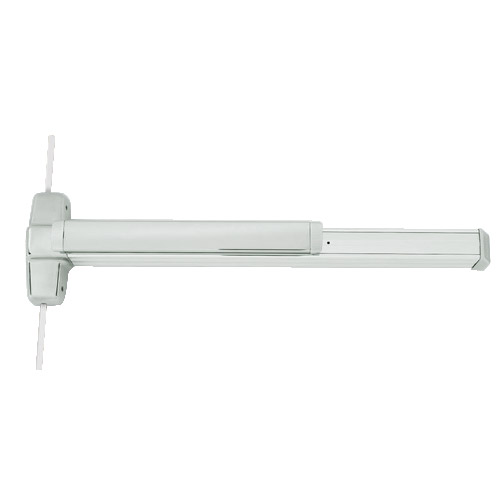
Von Duprin 98, 9847, 9857, 9875 Exit Only: Pick the Latching
Posted by Kent on 5th Oct 2026
Same push bar, five different doors
A Von Duprin exit-only device does one job. The push bar retracts the latch from the inside, and there is no trim on the outside, so nobody pulls the door open from the street side. What changes from one model to the next is how the door gets held shut. That is what the series number tells you: the 98, 9847, 9848, 9857 and 9875 are all exit-only, all Grade 1, and each one latches the door a different way. Pick by door, not by price.
Every exit-only listing in our catalog below is ANSI/BHMA A156.3 Grade 1, non fire-rated, with hex key dogging standard, and field reversible handing. Here is how the five split.
The five, by how they latch
- 98EO: rim. A horizontal latch bolt on the push bar strikes into the frame on the lock side. Most surface-mounted, one-point exit hardware you see on a single door is this one.
- 9847EO: concealed vertical rod. Top and bottom rods run inside the door, with no latch hardware showing on the face.
- 9848EO: also concealed vertical rod. The catalog lists it in the same style as the 9847, so read the two spec sheets side by side before you swap one for the other.
- 9857EO: surface three-point latch. A rim latch plus top and bottom bolts, all on the surface of the door.
- 9875EO: mortise lock exit device. A mortise body recessed into the door edge, which means the door has to be prepped for it.
All five in the listings above are the 3 foot size in Satin Chrome (US26D/626). Other widths and finishes are in the same product families.
Start with what the door already has
Hollow metal door, single leaf, no prep needed: 98EO
The 98 is the simplest to mount. It is a rim device, so it bolts to the face of the door and the latch catches a strike on the frame. If you are replacing a rim device on a standard hollow metal door, start here. The Pro-Tip in the catalog is worth repeating: hex key dogging is standard on non fire-rated 98 devices. That means staff can hold the latch retracted during business hours so the door runs as a push/pull, then dog it back at night. Fire-rated models drop dogging under code, which is a reason to know the rating before you order. If you ever need outside trim on one of these, see our guide to the 990 trim series.
Clean face on the door, rods hidden: 9847 or 9848
Concealed vertical rod devices put the rods inside the door. From the room, the door looks like a push bar and nothing else. The catalog notes for the 9848: when one will not latch, check the top bolt first. Concealed rods rely on precise alignment, and a building that has settled can throw off the top bolt engagement. A small strike adjustment often fixes what looks like a failed device. These are not cheap, so do the adjustment before you condemn the hardware. Related reading: the 3547A for a stairwell door.
Door that has to resist prying, not just latch: 9857
The three-point device adds a top bolt and bottom bolt to the rim latch. The catalog's own note says the rim latch handles the primary latching while the top and bottom bolts keep the door from warping and resist forced entry. If you are specifying an exit door where a pry bar is a realistic worry, this is the mounting style that answers it. Whether a given door needs it is a call for whoever owns the risk.
Door already cut for a mortise body: 9875
The 9875 is the mortise-lock exit device. The catalog note is blunt: it is the most complex exit device in the Von Duprin lineup, with the most moving parts and the most precise door prep. When you quote one, add time for verifying the mortise pocket and possible adjustment. Done right, the note says, it is bulletproof. Rushed, you come back. The right use is a door that is already prepped for a mortise lock, or a new door ordered for one.
What they all share, so you can stop worrying about it
- The same touch bar mechanism, which is why they feel alike in use.
- Exit only: free egress from the inside, no outside trim, and no cylinder required for this function.
- Hex key dogging standard in the listings above.
- Field reversible handing, so you do not have to know the swing when you order.
Before you order, three checks
- Measure the door width. All five listings are 3 foot, so check the leaf, not the opening.
- Look at the face and edge of the door. Surface rods, hidden rods and a mortise pocket are three different jobs. Figure out which you have.
- Check the fire rating of the opening. All five listings above are non fire-rated. If the door is on a rated opening, you need the rated version of the same family.
For the exit-only device on a plain hollow metal door with nothing fancy on it, see the 22 series exit-only guide. It answers the same question one tier down.
Common questions
What does EO mean on a Von Duprin exit device?
Exit Only. The push bar works from the inside and there is no outside trim, so the door cannot be opened from the outside with a key or a lever.
Which Von Duprin exit-only device has hidden rods?
The 9847 and 9848 are concealed vertical rod devices. The top and bottom bolts hide inside the door.
Which one has three latch points on the surface?
The 9857, a surface three-point latch device with a rim latch plus top and bottom bolts.
Is the 9875 hard to install?
It needs the most precise door prep of the group, since the mortise body sits inside the door edge. Plan for extra time to verify the mortise pocket.
Can I dog these devices down?
The listings above all carry hex key dogging as standard. Fire-rated models delete dogging under code, so confirm the rating first.
Browse the full line on our Von Duprin page. Send us the door type and we will point you to the right series before you buy.