
Von Duprin 99L: LHR vs RHR, XP99L and QEL99L Lever Trim
Posted by Kent on 14th Oct 2026
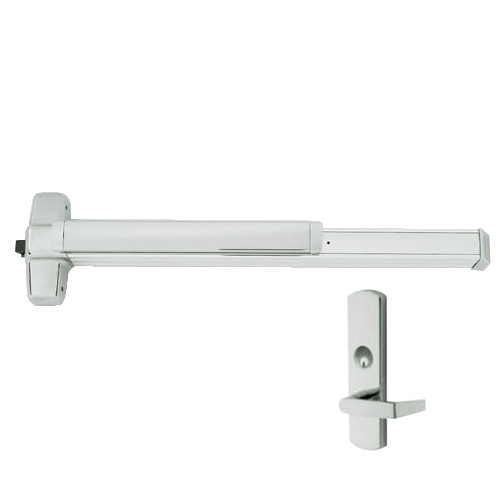
The 99L is a classroom lock on a panic bar
The Von Duprin 99L is one of the exit devices we get asked about most, and the question is nearly always the same: which hand? The L is the lever trim, the 99 is the grooved case 99 Series rim exit device, and the part number ends in LHR or RHR. This is what those letters decide, and what they do not.
The listing gives the function as Classroom: the outside lever is locked until it is unlocked by key, and it relocks automatically when the door closes. The inside is always free for egress. It is a Grade 1, ANSI/BHMA A156.3 rim device with hex key dogging standard. The 99L listings are satin chrome (US26D) for a 3 foot door.
LHR and RHR: what the letters mean
The listing spells it out: Left Hand Reverse and Right Hand Reverse. That is the standard hardware convention for a door that swings out toward the person leaving. Stand on the outside of the door, the side where the lever goes, and look at where the hinges are. Hinges on your left, the door is a left hand reverse. Hinges on your right, a right hand reverse.
Two listings show the pair: the 99L-US26D-3-LHR and the 99L-US26D-3-RHR. The listing for the LHR says the device is factory set LHR, field reversible. That is the important line. The hand is a factory setting that can be changed in the field, so ordering the wrong one is a bad afternoon, not a dead device. I still want it right at the order desk, because the person who finds out is the installer on a ladder.
Why the lever has a hand at all
The lever trim is the part of the set that carries the hand, which is why the lever part numbers end in LHR or RHR while the exit only versions have no hand on the end. If you read our write-up on the Von Duprin 990 series trim, this is the same logic: the trim is what picks up the hand.
XP99L: when the door takes abuse
The XP99L-US26D-3-LHR is the Extra Protection version. The listing says it features a reinforced shield over the mechanism case for high-abuse environments where standard exit devices take damage. The lever trim is the same. One install note from that listing: check that the tailpiece guide is horizontal before you tighten, because a slightly rotated guide is named there as the number one cause of stiff key operation. It also says the L-06 is the most common lever for commercial projects and the L-17 offers a more ergonomic pull angle for ADA compliance.
The right hand pair is the XP99L-US26D-3-RHR. For the same upgrade on the 98 body, see our guide to the 98, 9847, 9848, 9857 and 9875 exit only devices.
QEL99L: quiet electric latch retraction
The QEL99L-US26D-3-LHR adds Quiet Electric Latch Retraction to the same classroom lever. The listing calls it motor-driven latch retraction that provides quiet, ADA-compliant remote unlocking, and says 24 VDC power is required. The right hand version is the QEL99L-US26D-3-RHR. If you are wiring one in, our write-up on request to exit on a 99 with QEL covers it.
Why a rim device is the retrofit answer
The 99L listing gives the reason this device sells: it mounts entirely on the inside surface of the door with no door prep required. On an apartment building or a rental property where you cannot modify the door, you specify a rim device. The QEL listing says the same thing a different way. Rim devices mount on the surface without mortise or internal routing, so they are the easiest to install where door prep is limited.
Strike and dogging
Two practical notes carry over from the 98 listings, since the 98 and 99 are the same device under the case. The first is the strike. The 98 listing says the device uses a standard rim strike, but on hollow metal frames you may need a longer lip strike if the frame rabbet is deeper than standard, and it says most callbacks on rim devices are strike alignment. Get the strike right at install and you avoid the second visit.
The second is dogging. Hex key dogging is standard, which means you can hold the latch retracted during business hours so the door works as a push and pull, and let it latch at close. That is what a classroom or an office suite usually wants during the day.
Cylinder: read the listing
All of these ship less cylinder. The 99L and QEL99L listings say to order a rim cylinder to match the keyway. The XP99L listing says mortise cylinder. That is a difference in the listing text and I would not guess which is right for your door. Tell us the device and the keyway, and we will confirm the cylinder before we ship.
Which one do I order?
- A classroom or office door on a retrofit: the 99L, in the hand you read from outside.
- A door that gets kicked, pried or abused: the XP99L, same hand.
- A door tied to access control, where a click at every badge would be a complaint: the QEL99L.
Common questions
How do I tell LHR from RHR?
Stand outside on the lever side. Hinges on your left is left hand reverse, on your right is right hand reverse.
Can I change the hand later?
The 99L listing says factory set, field reversible.
What does classroom function mean?
The outside lever is locked until unlocked by key and relocks automatically when the door closes. The inside is always free.
Does the 99L ship with a cylinder?
No. It ships less cylinder.
Does the QEL99L need power?
Yes. The listing calls for 24 VDC.
The full range is on our Von Duprin page. Send us the door, the swing and the keyway and we will name the part number.