
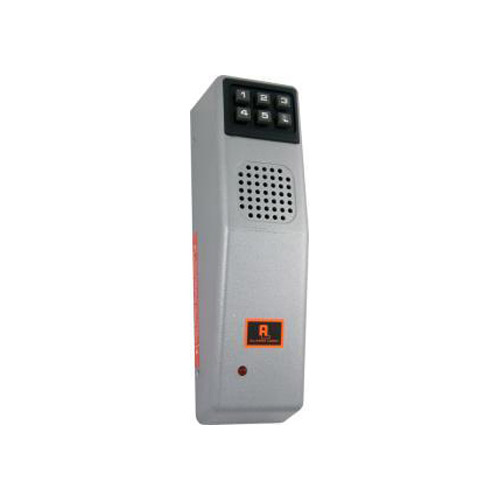
Alarm Lock PG21 vs PG30 vs PG30KPD Door Alarm
Posted by Kent on 8th Oct 2026
An alarm that clips on the push bar and needs no electrician
The call usually goes the same way. A restaurant, a warehouse or a small retail store has a rear exit with a panic bar on it. The door is legal, it is required and nobody is supposed to use it except in an emergency. People use it anyway. They prop it for a smoke break, they carry the trash out and forget to shut it, or someone walks out with a case of product. The owner asks what it takes to make the door tell on whoever pushes it.
A full access control job with wiring, a power supply and a panel is a lot to ask for a back door. The Alarm Lock PG series is the cheap and quick answer. It is a battery door alarm that goes on the push bar. There are two models and one keypad accessory, and picking between them comes down to one question: should any of your own people ever use this door?
What the PG series is, per the catalog
- A battery-operated door alarm that mounts directly on the push bar of an exit device.
- A 100 dB siren that sounds the moment the bar is pushed.
- No wiring, no panel, no electrician.
- Runs on a single 9 volt battery.
- Fits any standard push bar, and the listing says it installs in minutes.
That is the whole product. It does not talk to a building system and it does not log anything. When the bar moves, it screams. For a door whose only job is to be an emergency exit, that is the right amount of technology.
PG21: every push is an alarm
The PG21-MS is the basic model. The listing says every push triggers the siren and there is no bypass. The catalog describes it as the one you want on emergency-only exits where nobody should be going through during business hours.
That is a good fit for a side door of a gym, the far end of a warehouse, a stairwell door that opens to the outside. Anyone who touches the bar sets it off, including a manager, so your staff has to know the door is not a shortcut. The sound is the training. After the first time somebody sets it off at 10 in the morning, the door tends to stay shut.
PG30: a keypad so your own people can go through
The PG30MS is the same alarm with a built-in bypass keypad. Enter the code, push through quietly. The catalog's own note recommends it for restaurants, retail and warehouses, where employees need to exit that door now and then without waking up the neighborhood.
The bypass keypad rides on the push bar, so it covers the exit side. Getting back in is still a job for your lock or exit trim. The alarm has no say in that.
PG30KPD: the keypad on the outside
The PG30KPD is an exterior keypad. The listing says it is used with the PG30 only. Employees punch the code on the outside before pushing, and the alarm stays silent. It is the add-on for a back door where staff goes out and in all day, like a kitchen door or a loading dock, and silencing the alarm from the inside would be a hassle.
It will not work with a PG21, so decide this up front. If there is any chance you will want the outside keypad later, buy the PG30 now rather than swapping the alarm.
How to choose in one minute
- Nobody should use this door except in a real emergency: PG21.
- Staff uses the door sometimes and you want them to go through without a scene: PG30.
- Staff uses the door all day and needs to silence the alarm from outside: PG30 plus PG30KPD.
The listings also show a second finish option for the PG21 and PG30, so look at the exit device finish you have and choose the match.
What it does not do
I want to be straight about the limits, because owners sometimes expect an alarm to do more than it does.
- It does not lock the door. The exit device does that job and it must stay compliant.
- It does not call anyone. It makes noise in the building. If the building is empty at 2 a.m., the siren is a deterrent, not a dispatch.
- It depends on the battery. The catalog's pro-tip says the battery lasts about a year and recommends keeping a spare 9 volt in the manager's desk. I would go further: put the change date on the calendar the day you install it. A dead alarm looks exactly like a working one from the outside.
If you need a loud alarm built into the exit device itself, with the lock and the alarm in one unit, look at the Von Duprin Guard-X exit alarm lock instead. It is a heavier solution for a door that gets constant abuse,. For the plain exit-only side with no alarm, see our Von Duprin 22 Series write-up. And if your problem is a door that does not hold a code lock well, our piece on Alarm Lock PDK3000 may be closer to your need.
Common questions
What is the difference between the PG21 and the PG30?
The PG30 has a built-in bypass keypad. The PG21 does not, so every push sounds the alarm.
Can I use the PG30KPD keypad with a PG21?
No. The listing says the PG30KPD is used with the PG30 only.
Does the PG alarm need wiring?
No. It runs on one 9 volt battery and mounts on the push bar.
How loud is it?
The catalog lists a 100 dB siren.
How long does the battery last?
The catalog says about a year. Mark the install date and swap it on schedule.
The full line is on our Alarm Lock page. Tell us the exit device on the door and who needs to use it, and we will pick the model.