
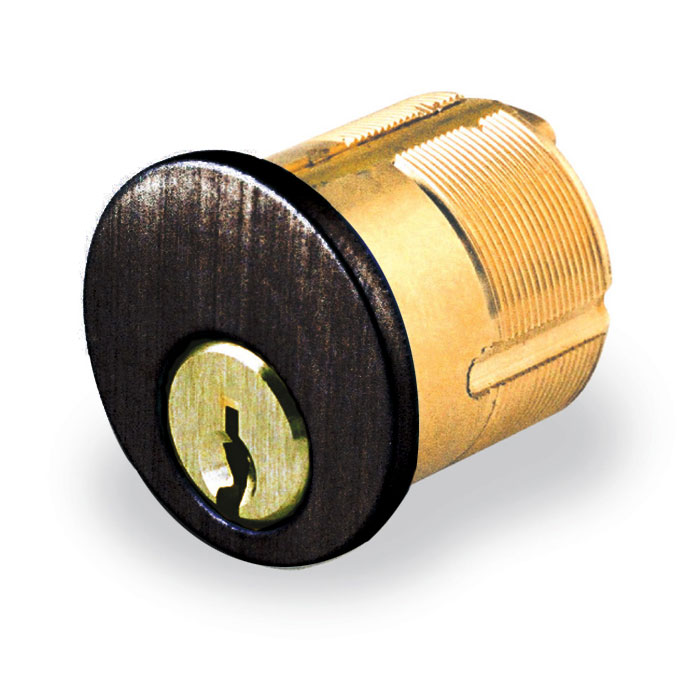
GMS Mortise Cylinder: A Same-Day Fix for a Dead Storefront Lock
Posted by Kent on 14th Sep 2026
GMS Mortise Cylinder: A Same-Day Fix for a Dead Storefront Lock
A tenant calls the property manager at 8am because the mortise lock on the aluminum storefront door is grinding, the key won't turn all the way, and the store opens at 10. Nobody has three days to wait on a factory-branded cylinder from the original hardware manufacturer, and nobody wants to re-key the whole building's Kwikset system just because one door's cylinder wore out. That's exactly the job a GMS mortise cylinder is built for.
It's a drop-in, not a rebuild
A mortise cylinder is the small threaded part that actually turns when the key rotates, screwed into the mortise lock body from the outside. It isn't the whole lock, and replacing it doesn't mean pulling the door hardware or re-cutting a prep. GMS builds its cylinders to OEM pinning specs, meaning the pin stack and cam geometry match what the original manufacturer's cylinder used, so it threads into the same mortise prep and drives the same cam without modification. That's the difference between a 20-minute service call and an afternoon spent waiting on a backordered part number that only the original brand stocks.
The M118-KW-10B-AR-A2 is a 1-1/8" mortise cylinder built with an Adams Rite cam, which is the cam profile most narrow-stile aluminum storefront locks use. If the door in question is an Adams Rite-style mortise deadlock or deadlatch, this cylinder is sized and cammed for it out of the box.
Keyed to what the building already has, not a new system
The part that actually saves the service call is the keyway. This cylinder runs a Kwikset (KW1) keyway, five-pin, drilled six. If the property already standardizes on Kwikset for its storefront and office doors, which a lot of strip malls and small commercial buildings do because Kwikset blanks are cheap and everywhere, this cylinder keys straight into that existing system. You're not asking the tenant to carry a second key, and you're not re-pinning every other door on the property to match one new lock. The drilled-six construction also leaves room to work a master key into the cylinder later if the building ever moves to a keyed-alike or master system, instead of locking you into a standalone key from day one.
Rim cylinder for the doors that use one instead
Not every storefront door uses a mortise lock. Some use a surface-mounted rim cylinder paired with a rim exit device or a rim latch, and for those the same logic applies with a different part: the R118-KW-10B-A2 rim cylinder, built to the same OEM pinning standard and the same Kwikset keyway, sized for a 1-1/8" rim application. Check which style is actually in the door before ordering. A mortise cylinder threads into a mortise lock case; a rim cylinder mounts through the door face with a tailpiece on the inside. They're not interchangeable, and the fastest way to turn a 20-minute fix into a second trip is showing up with the wrong one.
What this doesn't fix
A worn or damaged cylinder is a different problem from a worn latch, a misaligned strike, or a mortise lock body that's actually failed internally. If the key turns fine in the cylinder but the door still won't latch or the deadbolt won't throw, the problem is downstream of the cylinder and swapping it won't help. For a storefront door that won't latch even with good hardware, see our piece on fixing an Adams Rite deadlatch that won't catch before ordering parts. Confirm the cylinder is actually the failure point (key won't turn, key turns but doesn't retract the cam, or the cylinder spins freely in the housing) before you replace it.
GMS carries this same OEM-spec approach across its whole cylinder and rekeying line, including other keyways and cam types for lock bodies beyond Adams Rite. Worth a look before assuming a factory-branded backorder is the only option.
Common questions
Will a GMS cylinder work in a name-brand mortise lock body like Adams Rite or Corbin?
GMS builds these to OEM pinning specs specifically so they drop into standard mortise preps used across brands. Confirm the cam type (Adams Rite cam, in this case) matches what the existing lock body needs before ordering, since the cam is what actually engages the lock's internal mechanism.
Do I need to re-key the rest of the building if I put in a Kwikset-keyway cylinder?
No, if the rest of the building is already on a Kwikset system. This cylinder is meant to key into that existing system, not replace it. If the building runs a different keyway entirely, talk to whoever manages the master key system before ordering a mismatched cylinder.
How do I know if my storefront door uses a mortise cylinder or a rim cylinder?
A mortise cylinder threads into a pocket cut into the door's edge or face as part of a mortise lock case. A rim cylinder mounts through a hole in the door with a separate tailpiece and mounting screws on the inside, paired with a surface-mounted lock or exit device. If you're not sure, pull the inside trim and look for a tailpiece and two mounting screws; that's a rim cylinder.
What does "drilled six" mean on the cylinder spec?
It means the cylinder has six chambers cut for pins, even though it ships pinned for a standard five-pin key. That extra chamber is what lets a locksmith add a master pin later without swapping the whole cylinder, if the building ever needs a master key added to the system.
Can I install this myself or does it need a locksmith?
Swapping a mortise cylinder is a straightforward mechanical job for anyone comfortable with basic hand tools, but getting the cam orientation and depth right on the first try matters, and a cylinder installed wrong can bind the lock or fail to retract the latch at all. If the door is a paying tenant's only entrance, it's worth the service call to get it right the first time.