
Pemko 1715AK vs 345ANB: Threshold or Sweep First
Posted by Kent on 24th Sep 2026
A drafty commercial door usually has two leaks, not one
Facilities calls about a drafty exterior door almost always name one problem and have two. The saddle underfoot is worn slick and letting in water at the sill, and the door bottom is riding high enough over it that daylight shows through. Fixing only one of those rarely stops the draft. Here's how to tell which one to order first, and when you actually need both.
Start at the floor: Pemko 1715AK threshold
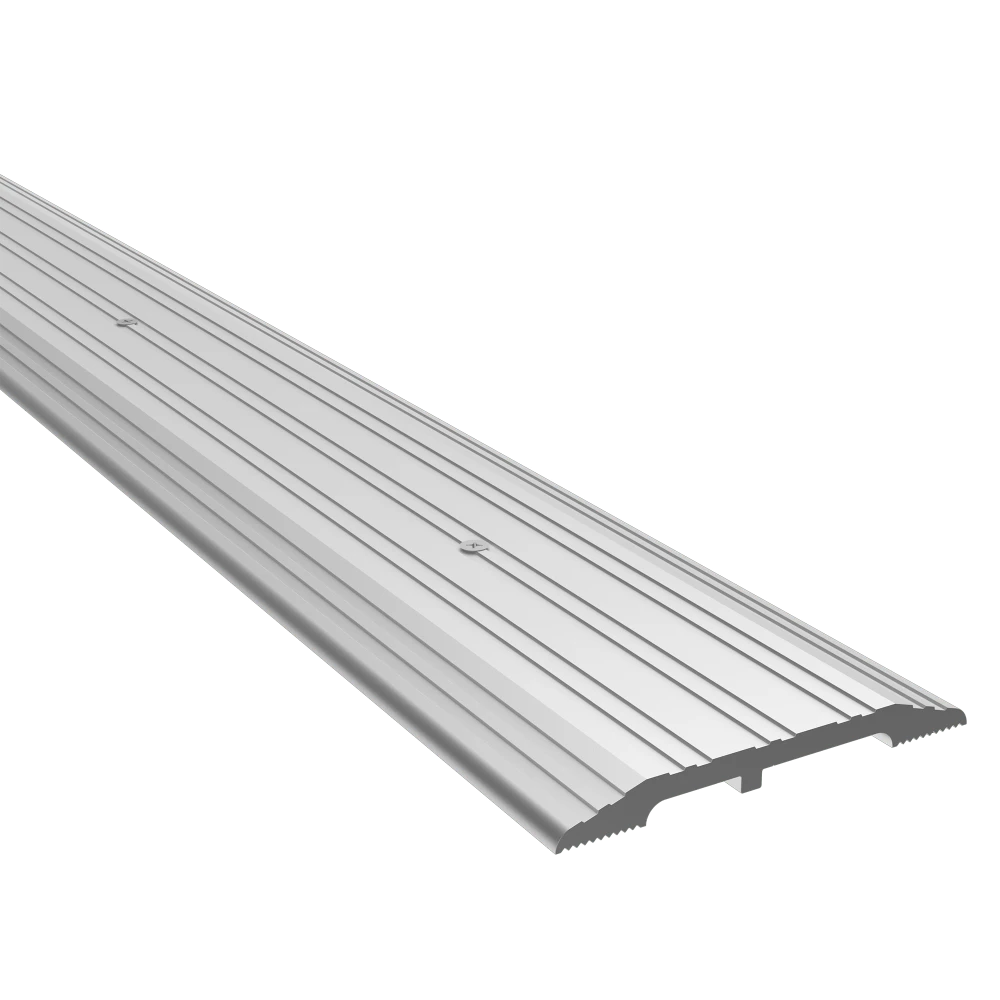
The Pemko 1715AK is a heavy duty 5" wide, 1/2" high saddle threshold in PemKote skid-resistant aluminum, the same 1715 profile as the standard 1715A but with the abrasive-free anti-slip surface baked into the extrusion instead of bolted on as a separate strip. That matters most on an entry that sees wet shoes, mop water, or winter salt, where a bare mill-aluminum threshold gets slick fast and turns into a slip-and-fall claim. It's ADA access rated at the barrier-free 1/2" profile and fire rated, so it clears code on a rated opening as well as a plain commercial door. Pemko specs 5/8" of door clearance for the 1715 series, so measure the swing before ordering, not after.
Then the door bottom: Pemko 345ANB sweep
If the threshold underneath is sound but daylight still shows under the door, the gap is in the door bottom, not the sill. The Pemko 345ANB is a surface-applied sweep with a dense gray nylon brush insert that flexes to follow an uneven or sloped floor better than a rigid vinyl blade does, plus a built-in rain drip flange so water pooling at the sill doesn't wick back up under the door on a driving rain. It's UL10C / UL1784 fire and smoke rated and meets ANSI/BHMA A156.22, a real spec sheet a rated door needs, not a hardware-store afterthought. A worn or missing sweep is the single most common reason a newly replaced threshold still leaks air, the new sill stops the water and the abrasion, but the top of the gap between the door bottom and the saddle is still wide open above it.
Do you need both, or just one
Order the threshold alone when the existing sill is worn, cracked, or missing entirely and the door bottom itself seals fine against it. Order the sweep alone when the threshold is sound but the door has sagged or the floor underneath has settled, leaving a gap only at the top of the saddle. Order both when the whole opening has been neglected for years, which is the most common call: a bare mill-aluminum threshold worn glass-smooth alongside a door bottom that's never had a sweep at all. Buying the pair together also means the sweep is sized to the exact threshold height you're installing, instead of guessing at the gap after the fact.
What about the top of the door
A threshold and sweep only address the bottom two-thirds of a leaky opening. Wind-driven rain at the head of the door is a separate problem, and Pemko builds a separate piece for it: the 346C door top weatherstrip, a frame-mounted rain drip and top seal in one clear anodized aluminum extrusion. It throws water clear of the door face instead of letting it run straight down and find its way in around the frame head. It's rated UL10C positive pressure and worth adding on any storefront or lobby entry that's taken water complaints at the top of the opening, not just the bottom.
Reading the SKU before you order
Pemko's part numbers spell out the configuration if you know how to read them. On the 1715AK, the series number sets the profile and height, the AK suffix adds the PemKote finish, and the trailing number is the door width. On the 345ANB, the letters after the series number stack up the retainer material, the insert type, and whether a rain drip flange is built in. Two sweeps that look identical in a photo can differ by insert material alone, gray nylon brush versus a solid vinyl blade, and that difference decides whether the sweep actually conforms to an out-of-level floor or just bridges over the low spots and leaves the gap.
Ordering notes that save a return trip
Pemko sizes these by door width, and the listed length isn't always the cut length. The 346C weatherstrip ships four inches longer than the door width to build in overlap, so a "36-inch" listing is actually a 40-inch piece, that's normal, not a packing error. The 1715AK and 345ANB are both cut to the stated door width. Measure the actual opening, not the rough frame, before ordering any of the three.
All three are in stock and ship from the weatherstripping and thresholds line. If the door is sagging enough that the gap keeps coming back after a new sweep, the hinges are worth checking too, see the Hager BB1191 piece on ball-bearing hinges for a sagging commercial door. And if the bottom of the door is also taking abuse from carts or foot traffic, a kick plate sized right is covered in the Ives 8400 kick plate sizing guide.
Common questions
Do I need the threshold and the sweep, or just one?
Depends on where the gap actually is. A worn or cracked sill needs the threshold. A sound sill with daylight still showing at the top of the saddle needs the sweep. A long-neglected opening usually needs both.
Is the 1715AK threshold ADA compliant?
It is. The 1715 profile is a barrier-free, ADA access-rated threshold at 1/2" height out of the box, no separate ramp or bevel kit needed.
Will the 345ANB sweep seal over an uneven or sloped floor?
It will, better than most rigid alternatives. The dense nylon brush filaments flex to follow floor irregularities the way a stiff vinyl or silicone blade sweep can't.
Why does the 346C weatherstrip ship longer than the door width?
Pemko builds in overlap on purpose. A listing for a 36-inch door ships a 40-inch length so you have material to work with at both jambs.
Are these rated for a fire door?
Yes, all three carry fire ratings, the 1715AK threshold is fire rated, the 345ANB sweep is UL10C/UL1784 rated, and the 346C weatherstrip is UL10C positive pressure rated.