
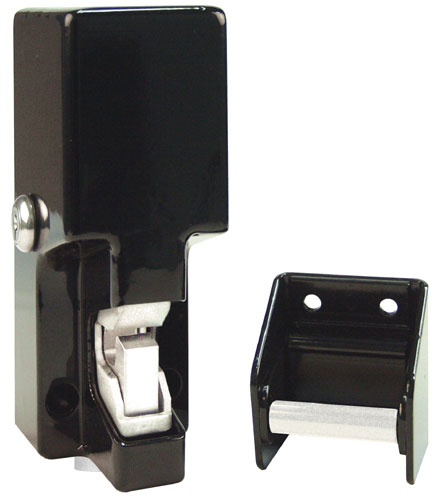
Securitron GL1 Gate Lock: Fail Safe or Fail Locked
Posted by Kent on 30th Sep 2026
A gate lock that has to hold under preload, not at rest
A pedestrian gate or a sliding vehicle gate sags, gets leaned on, or gets pushed against by a crowd waiting to get through, and a standard electric strike built for a door frame isn't built to take that kind of sideways load. Securitron's GL1 is an electromechanical gate lock built specifically for that preload problem, rated for 2,000 pounds of holding force and able to operate under up to 100 pounds of preload without binding. The part number that actually gets ordered depends on one decision: what does the gate do when the power drops?
Fail safe or fail locked: the question that has to get answered first
Every electrified locking device on a gate has to fail in a known state, and the GL1 line splits into fail locked and fail safe versions specifically so the installer picks the right one instead of guessing. The GL1-FL stays locked when power is cut, which is the right call for a perimeter security gate where an outage shouldn't be an open invitation. The GL1-FS releases when power is cut, which is the code-driven choice for a gate that sits on an egress path where people need to get out during a power failure or a fire alarm event. This isn't a preference call on a life-safety path: local code and the authority having jurisdiction typically dictate fail safe on an egress gate, and getting it backward means a lock that traps people in exactly the situation it should release them from.
Monitored versions add a supervised contact
The GL1-FLM and GL1-FSM are the same fail-locked and fail-safe mechanisms with a monitoring contact added, so an access control panel can confirm the gate is actually locked rather than just assuming it after sending the command. That matters on a gate an operator can't see from the guard shack, or one on a system that logs lock status for an audit trail. If nothing downstream reads a monitoring input, the standard GL1-FL or GL1-FS does the same locking job without paying for a feature the panel won't use.
Built for outdoor abuse, not just outdoor weather
All four versions share the same core hardware: 12/24VDC operation with automatic dual-voltage detection (no field jumper to set), a black crinkle powder-coated finish for weather resistance, a hardened steel latch and pin, and a tamper-resistant cast housing. The self-aligning receiver compensates for up to 1/2 inch of horizontal misalignment, which is the detail that matters most on a gate that isn't a door: gates sag on their hinges and rollers over time in a way a door frame doesn't, and a receiver with zero tolerance for that drift will bind or fail to latch within a season. The GL1 accepts a standard mortise cylinder with an Adams Rite MS cam for manual key override, sold separately, so a guard or maintenance tech can open it by hand if the access control system is down.
Picking the right one before the gate ships
Start with fail safe versus fail locked, decided by whether the gate sits on an egress path, not by installer preference. Add monitoring only if a panel or a logging system will actually read the contact. Confirm the gate itself, swinging or sliding, pedestrian or vehicle, can take a surface-mounted unit and has enough structure to anchor the hardened receiver. All four Securitron GL1 versions mount the same way and accept the same optional solar power supply for remote gates with no line power nearby, so the mechanical install doesn't change based on which electrical behavior gets specified.
Site power is worth checking early on a remote gate. A gate at the back of a parking lot or the entrance to a stock yard doesn't always have line power run to it, and trenching conduit across gravel or asphalt adds real cost to a quote. The GL1's compatibility with Securitron's BPSS solar power supply is the detail that turns those jobs from an electrical contractor problem into a self-contained install: panel, battery, and lock, no trench required. Worth raising with the customer before pricing the job if the gate location looks like it might be a long conduit run from the nearest panel.
Keyswitch or card-reader activation is a separate decision from which GL1 to order, and it's easy to conflate the two. The GL1 itself only handles the locking mechanism; something upstream still has to trigger it, whether that's a keypad, a card reader, or a simple keyswitch at the gate post. The Securitron keyswitch guide covers picking between a momentary and maintained switch for exactly this kind of gate or door trigger, and it's a companion decision to make at the same time as the fail-safe-versus-fail-locked call, not an afterthought once the lock's already on order.
Common questions
Which GL1 version do I need for an egress gate?
Fail safe. The GL1-FS or the monitored GL1-FSM releases when power is lost, which is generally what code requires on a gate along a path people need to exit through during an outage or alarm. Confirm the requirement with the local authority having jurisdiction before ordering.
How much force can the GL1 hold under preload?
2,000 pounds of holding force, and it's rated to operate under up to 100 pounds of preload without binding, which covers a gate being leaned or pushed on rather than sitting perfectly at rest.
Do I need the monitored version?
Only if an access control panel or logging system is set up to read a lock-status contact. If nothing downstream uses that signal, the standard GL1-FL or GL1-FS locks the gate the same way without the added contact.
Can the GL1 be opened manually if the power or access system fails?
Yes. It accepts a standard mortise cylinder with an Adams Rite MS cam, sold separately, for manual key override.
Does the GL1 work on a sliding gate or only a swinging one?
Both. It's built for swinging or sliding vehicle, pedestrian, or stock gate applications, indoors or outside.