
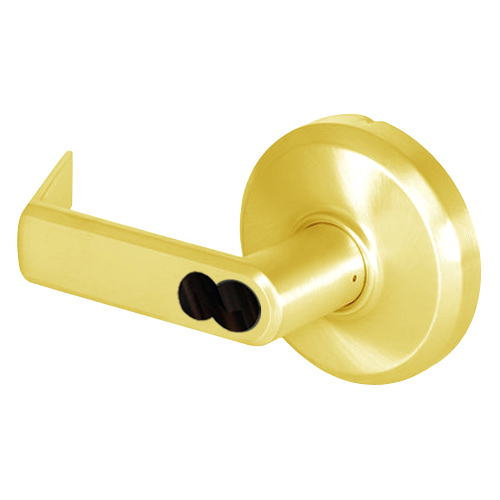
Stanley QCL255 vs QCL260 vs QCL261: Corridor or Classroom Lock
Posted by Kent on 16th Nov 2026
Stanley QCL255, QCL260 and QCL261: the second half of the key-operated line
Stanley's QCL200 cylindrical line splits into locks that need no key and locks that do. We covered the QCL250, QCL251 and QCL254 already. This article is the next three: the QCL255, the QCL260 and the QCL261. One is a corridor lock. Two are classroom locks. Every one of them is sold less cylinder, so you supply the keying.
All three are certified to ANSI/BHMA A156.2 Grade 2 as standard-duty cylindrical locks for light commercial use, and all three share the same door prep. The decisions are function and core.
QCL255: the corridor lock, prepped for SFIC
The QCL255 with the Sierra lever in bright brass is listed as a less cylinder corridor lock, prepped for SFIC. SFIC stands for small format interchangeable core. That is the only difference from the QCL254, which is the same corridor function sold for a conventional cylinder.
The function, as the catalog lists it: a deadlocking latch bolt operated by the lever from either side, except when the outside lever is locked by a key in the outside lever or by the push button on the inside. The key in the outside lever locks or unlocks it. Operating the inside lever releases the push button, and so does closing the door. The inside lever always operates the latch bolt.
A person can lock himself in for privacy, the door resets when it closes, and nobody is ever stuck inside. That fits a hallway office, a clinic exam room, a back office that faces a public corridor.
QCL260 and QCL261: the classroom lock
A classroom lock behaves differently. The listing says: a key is required to lock or unlock the outside lever, and the inside lever is always unlocked and free for immediate egress.
The reason that matters is who holds the control. On a corridor lock, a person inside can lock the door. On a classroom lock only the key holder can. A teacher, a custodian or a manager with a key decides whether the door is locked, and everyone inside can always leave. The listing also notes a clutch feature that disengages the outside lever from the latch when it is locked, to prevent vandalism.
The two part numbers differ in the same way the 250 and 251 do:
- QCL260: classroom lock, less cylinder. You supply a standard cylinder.
- QCL261: classroom lock, less cylinder, prepped for SFIC. You supply a small format interchangeable core.
When the core is the right call
A classroom lock is a good fit for a removable core. Schools and offices lose keys, rekey for staffing changes and sometimes need to change a lock on short notice. A core can be pulled with a control key and replaced without disassembling the lock. The old key is dead and the new one works.
If your facility already runs interchangeable cores, take the SFIC-prep model so the lock matches what you own. If it does not, the QCL260 and a standard cylinder will do the job for less setup. The guides to the BEST SFIC core and the KSP core explain how those systems differ. Send us the brand and keyway before you order, because the lock is only half of the match.
Corridor or classroom
Choose by who needs to be able to lock the door.
- The person inside should be able to lock it: corridor, the QCL254 or QCL255.
- Only the key holder should lock and unlock it: classroom, the QCL260 or QCL261.
The classroom function is the one with the clearest rule: the inside lever is always free, and the outside lever needs a key. The corridor function adds a push button for the occupant. Order the wrong one and you either deny the occupant a way to secure the room, or hand a roomful of people a way to lock the door that the manager did not want. Be sure which you need before you order.
Door prep and finish
From the catalog specs, all three listed locks share the same prep: door thickness 1-3/8 in. to 2 in., 2-3/4 in. backset, a 2-1/8 in. cross bore, a 3/4 in. latch throw and an ANSI 4-7/8 in. by 1-1/4 in. strike. They are non-handed.
The classroom locks come with the Sierra lever in bright brass, oil rubbed bronze, satin nickel and bright chrome in the listings we checked. The QCL255 is shown in bright brass in the listing we use as reference, and other finishes may be available; ask us. Match the finish to the other hardware in the corridor.
Retrofit notes
If you are swapping out an older cylindrical lock, measure two things before you order: the door thickness and the backset. Then look at the bore. The catalog lists a 2-1/8 in. cross bore as the standard prep, which matches most commercial doors and is why the QCL200 works as a retrofit. If the bore is odd or damaged, tell us what you see and we will say whether it fits.
Common questions
What is the difference between the QCL260 and the QCL261?
Both are classroom locks sold less cylinder. The QCL261 is prepped for a small format interchangeable core. The QCL260 takes a standard cylinder.
What is the difference between the QCL254 and the QCL255?
Both are corridor locks with a deadlocking latch bolt. The QCL255 is prepped for SFIC. The QCL254 is for a conventional cylinder.
Can someone inside a classroom lock lock the door?
No. The listing says a key is required to lock or unlock the outside lever, and the inside lever is always unlocked.
Does the cylinder come with the lock?
No. All three are listed as less cylinder.
Are these locks handed?
No. The listings say non-handed.
See the full range on our Stanley hardware page. For the passage, communicating and privacy functions, see the QCL230, QCL235 and QCL240 guide.