
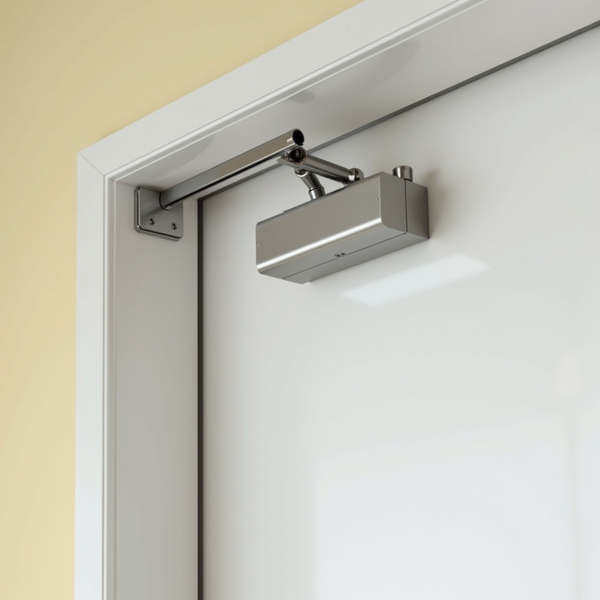
LCN 4040XP: Stop a Heavy Commercial Door From Slamming
Posted by Kent on 8th Jul 2026
A door that slams is not a door problem. It is a closer problem, or a closer that was never there. And nine times out of ten the fix a facility manager reaches for, crank the closer down till it stops banging, is the exact move that leaves the door failing to latch on a windy day. There is a right closer for a heavy commercial door. There is a right way to set it. Here is both.
Why heavy doors slam
A closer is a spring fighting a piston full of hydraulic fluid. The spring pulls the door shut. The fluid, bleeding through two tiny valves, controls how fast. Put a light-duty closer on a heavy, wide, or wind-loaded door and the spring is undersized for the load. It can't hold the door back in the last few inches, so the latch slams home. Owners hear the bang and blame the door. It's the closer, sized wrong.
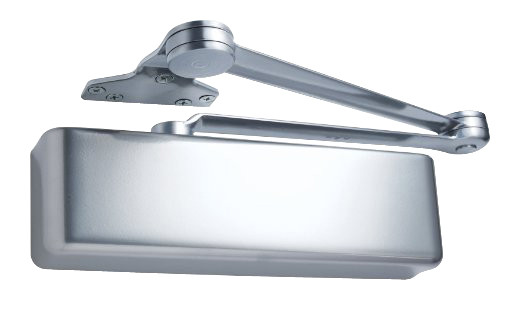
The answer on almost any commercial opening is the LCN 4040XP. Workhorse of the trade, and it earned the name. It is Grade 1, with an adjustable spring in size 1 through 6, built to take a beating on an exterior hollow-metal door for twenty years. Among LCN commercial door closers it is the one a locksmith reaches for by default. When someone says "just put a 4040 on it," this is the closer he means. I've pulled twenty-year-old ones off school corridors still closing clean.
Size it to the door, not the doorway it reminds you of
The 4040XP is adjustable, so one closer covers a wide range. Adjustable does not mean guess. Spring size runs 1 to 6. Size 1 is an interior door barely wider than your shoulders. Size 6 is a heavy exterior door out in the wind. Most commercial exterior doors land at size 4 to 6; interior fire doors and offices, size 2 to 4. You set it with an adjustment screw on the closer body, no swapping units. Undersize it and the door won't latch. Oversize it and nobody with a cane can pull it open. Match the spring to the actual door: width, weight, and whether the wind gets at it. This is the whole reason to buy a real heavy duty door closer instead of the residential unit off the big-box shelf, the spring range is there to be dialed in.
Regular Arm, Parallel Arm, or Hold-Open
The arm is the part people get wrong. Same closer body, three different jobs, and the choice changes how the door behaves and where the arm sits. Here is how to pick.
Regular arm
The standard 4040XP with the regular arm mounts on the pull side and gives you the strongest closing power for the least effort. That's the arm you want on a heavy door if the geometry allows it. Regular arm always beats parallel for raw force.
Parallel arm
Parallel-arm mounting tucks the arm flat against the door on the push side. You go parallel when the door swings into a corridor and a projecting arm would be a hazard or an eyesore, and you eat a small efficiency hit for it. Same 4040XP underneath, mounted the other way.
Hold-open arm
A back-of-house door, a stockroom, a loading dock, somewhere you want the door propped while carts roll through, then closing on command. The 4040XP-H hold-open arm has a shoe you slide along its track; set it and the door parks open at that angle. One catch, and it matters: never a hold-open closer on a fire door. A fire door has to close and latch on its own, every time. Hold-open on a rated opening is a code violation and a life-safety failure. If the door carries a fire label, it gets a regular closer and nothing that pins it open.
Tuning it so it stops slamming: two valves, in order
Once the closer is on and sized, you tune it with the valves. This is the LCN 4040XP adjustment that fixes most slam complaints without a new part. Two valves matter. Sweep speed controls the door from full open down to about the last ten degrees. Latch speed controls that final push into the frame. The slam lives in the latch valve. Turn it clockwise a quarter turn at a time and the door eases into the frame instead of banging. Leave it fast enough that the latch actually throws, though. Too slow and the door drifts shut without latching, which on a locked exterior door means it looks closed and isn't. Set sweep first, then latch. Small turns. Test the door between each one. This is a five-minute job that most slamming complaints never needed a new part for, just somebody who knew which screw to turn.
The delayed-action cylinder for ADA and hospitals
Standard closing sweep is a couple of seconds. Fine for an able-bodied adult. Not fine for someone in a wheelchair, on crutches, or pushing a hospital bed through the opening. That's what delayed action is for. The LCN 4040 delayed-action cylinder adds a valve that holds the door near-open for up to a minute before it begins its normal sweep. It buys the slow-mover time to clear the doorway before the door starts moving at all. On an ADA-path door, a maternity wing, a nursing home, that's the difference between a door that helps and a door that clips people. It swaps into the 4040 body as a cylinder assembly. You are not buying a whole new closer.
Frequently asked questions
My door slams. New closer or a tune-up?
Tune first. If the closer is a 4040XP or any Grade 1 unit sized right for the door, turn the latch-speed valve clockwise a quarter turn and retest. Buy new only if the closer is undersized, worn, or leaking oil.
Regular arm or parallel arm for a heavy exterior door?
Regular arm if the swing allows it. More closing force for the same effort. Parallel only when a projecting arm is a hazard or the door swings into traffic.
Can I use a hold-open closer on a fire door?
No. Never. A fire door must self-close and latch on its own. A hold-open arm on a rated door is a code violation and a life-safety failure. If you need a rated door to stay open during the day, use an electrified hold-open tied to the fire alarm so it releases and closes the moment the panel trips.
What spring size do I need for the 4040XP?
Match it to the door. Most commercial exterior doors run size 4 to 6; interior fire doors and offices, size 2 to 4. The 4040XP adjusts across the full 1 to 6 range on the closer body, so you dial it in rather than guess.
What finish do I order?
Match the opening. Aluminum (AL/689) is the standard commercial default and the cheapest. Satin chrome (US26D) and the bronzes match nicer hardware. Same closer underneath; finish is cosmetic.
What to have in front of you before you order
Door width and rough weight. Interior or exterior. Fire label or not. Which way it swings and into what: corridor, wall, open air. Whether the path has to meet ADA. Five facts. With those, the closer picks itself. A 4040XP, spring sized to the door, regular arm unless the swing forbids it, delayed-action cylinder if the code path demands it. If you're not sure the door was slamming because of the closer at all, if the whole opening feels off, start with the field guide first: Buying Commercial Door Hardware Online.
Lock Depot stocks the LCN 4040XP line in every arm and finish this page walks through, plus the delayed-action cylinder and the arm and cover parts to service one you already own. Start at the LCN door closer hub, or call 877-365-5625 and read us the five facts. No phone tree. We'll tell you the exact spring size and arm before you spend a dollar.